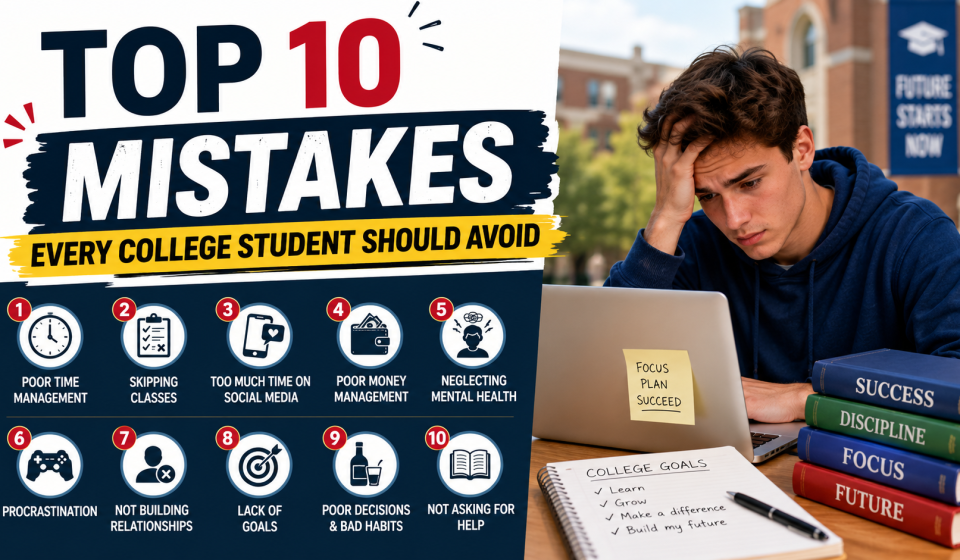

Discover the top 10 mistakes every college student should avoid to achieve academic success, build a strong career, and enjoy a balanced college life. Learn practical tips and solutions for students.
College life is one of the most exciting and transformative phases of a student’s journey. It is a time to learn new skills, make lifelong friends, explore career opportunities, and develop independence. However, many students unknowingly make mistakes that can affect their academic performance, personal growth, and future career prospects.
While making mistakes is a natural part of learning, avoiding common pitfalls can help students make the most of their college years. Whether you are a first-year student or nearing graduation, understanding these mistakes can save you time, stress, and missed opportunities.
In this article, we will discuss the top 10 mistakes every college student should avoid and provide practical solutions to stay on the right path.
1. Poor Time Management
One of the biggest challenges college students face is managing their time effectively. Unlike school life, college offers more freedom, which can easily lead to procrastination.
Many students wait until the last minute to complete assignments, prepare for exams, or work on projects. This often results in unnecessary stress and lower grades.
How to Avoid It:
- Create a weekly schedule.
- Use digital planners or calendar apps.
- Break large tasks into smaller goals.
- Set deadlines before actual submission dates.
Good time management not only improves academic performance but also allows time for hobbies, social activities, and self-care.
2. Skipping Classes Frequently
Many students believe they can study independently and do not need to attend lectures regularly. While occasional absences may be unavoidable, making a habit of skipping classes can have serious consequences.
Professors often share valuable insights, examples, and exam-related information during lectures that may not be available in textbooks.
How to Avoid It:
- Treat classes like professional commitments.
- Maintain a consistent attendance record.
- Sit near the front to stay engaged.
- Review lecture notes after each class.
Regular attendance helps students stay connected with course material and build positive relationships with professors.
3. Ignoring Academic Support Resources
Colleges provide numerous resources such as libraries, tutoring centers, career services, writing labs, and academic advisors. Unfortunately, many students fail to use them.
These resources are specifically designed to help students succeed academically and professionally.
How to Avoid It:
- Visit your college library regularly.
- Seek tutoring when struggling with a subject.
- Meet academic advisors for guidance.
- Use writing centers to improve assignments.
Taking advantage of these services can significantly improve academic performance.
4. Not Building Professional Networks
Many students focus solely on academics and forget the importance of networking. Building relationships during college can open doors to internships, job opportunities, mentorships, and career growth.
Networking is not just about finding jobs—it is about learning from others and expanding your professional circle.
How to Avoid It:
- Attend college events and seminars.
- Connect with professors and alumni.
- Join student organizations.
- Create a professional LinkedIn profile.
The connections you make in college can benefit you throughout your career.
5. Neglecting Physical and Mental Health
Academic pressure, deadlines, and social challenges can affect students’ health. Many students sacrifice sleep, eat unhealthy food, and ignore mental health concerns.
Poor health can negatively impact concentration, productivity, and overall well-being.
How to Avoid It:
- Get 7–8 hours of sleep daily.
- Maintain a balanced diet.
- Exercise regularly.
- Seek counseling when needed.
Remember, your health is just as important as your grades.
6. Spending Money Carelessly
For many students, college is the first experience of managing personal finances. Without proper budgeting, students may face financial difficulties.
Unnecessary spending on food delivery, entertainment, shopping, and subscriptions can quickly add up.
How to Avoid It:
- Create a monthly budget.
- Track expenses regularly.
- Avoid impulsive purchases.
- Save a small portion of your income or allowance.
Learning financial responsibility during college can help build a stable future.
7. Depending Entirely on Last-Minute Exam Preparation
Cramming before exams is a common habit among students. While it may help temporarily, it rarely leads to deep understanding or long-term retention.
Consistent study habits are much more effective than last-minute preparation.
How to Avoid It:
- Study a little every day.
- Review notes weekly.
- Practice previous exam papers.
- Form study groups.
Regular revision reduces exam stress and improves performance.
8. Choosing Friends Without Care
Friends can have a major influence on your college experience. Positive friendships can motivate and support you, while negative influences may distract you from your goals.
Students sometimes fall into unhealthy social circles that encourage poor academic habits.
How to Avoid It:
- Surround yourself with positive people.
- Build friendships based on mutual respect.
- Avoid peer pressure.
- Maintain a balance between social life and studies.
Good friends can inspire growth and success throughout college.
9. Missing Internship and Skill Development Opportunities
Many students focus only on earning a degree and ignore practical experience. In today’s competitive job market, employers value skills and real-world experience.
Internships, certifications, workshops, and projects can make a student stand out.
How to Avoid It:
- Apply for internships early.
- Learn industry-relevant skills.
- Participate in workshops and competitions.
- Build a portfolio of projects.
Practical experience increases employability and confidence.
10. Not Planning for the Future
Some students postpone career planning until graduation approaches. This can create confusion and limit opportunities.
Career planning should begin early so students can align their education with their goals.
How to Avoid It:
- Explore career options from the first year.
- Set short-term and long-term goals.
- Seek career counseling.
- Research industry trends.
Having a clear direction helps students make informed decisions throughout college.
Why Avoiding These Mistakes Matters
College is more than earning a degree. It is a period of personal development, professional preparation, and self-discovery. Avoiding these common mistakes can help students:
- Improve academic performance.
- Develop valuable life skills.
- Build strong professional networks.
- Maintain physical and mental well-being.
- Increase career opportunities.
- Enjoy a more balanced and fulfilling college experience.
Every decision made during college contributes to future success. Small positive habits practiced consistently can create significant long-term benefits.
Sources
https://sl1nk.com/ce6348h
https://l1nq.com/6aiov07
Conclusion
College life offers countless opportunities for learning, growth, and success. However, common mistakes such as poor time management, skipping classes, neglecting health, and ignoring career planning can prevent students from reaching their full potential. By recognizing these challenges early and taking proactive steps to avoid them, students can create a more rewarding and productive college experience.
Remember, success in college is not about being perfect. It is about making smart choices, learning from experiences, and continuously working toward personal and professional growth. The habits you develop during college can shape your future, so make every opportunity count.
FAQs
1. What is the most common mistake college students make?
Poor time management is one of the most common mistakes. It often leads to missed deadlines, lower grades, and increased stress.
2. Why is networking important during college?
Networking helps students build professional relationships, discover career opportunities, find mentors, and increase job prospects after graduation.
3. How can college students improve their study habits?
Students can improve study habits by creating a schedule, reviewing notes regularly, avoiding procrastination, and practicing active learning techniques.
4. Are internships important while studying in college?
Yes. Internships provide practical experience, improve skills, strengthen resumes, and increase employability after graduation.
5. How can students balance academics and personal life?
Students can maintain balance by managing their time effectively, setting priorities, practicing self-care, and maintaining healthy routines.