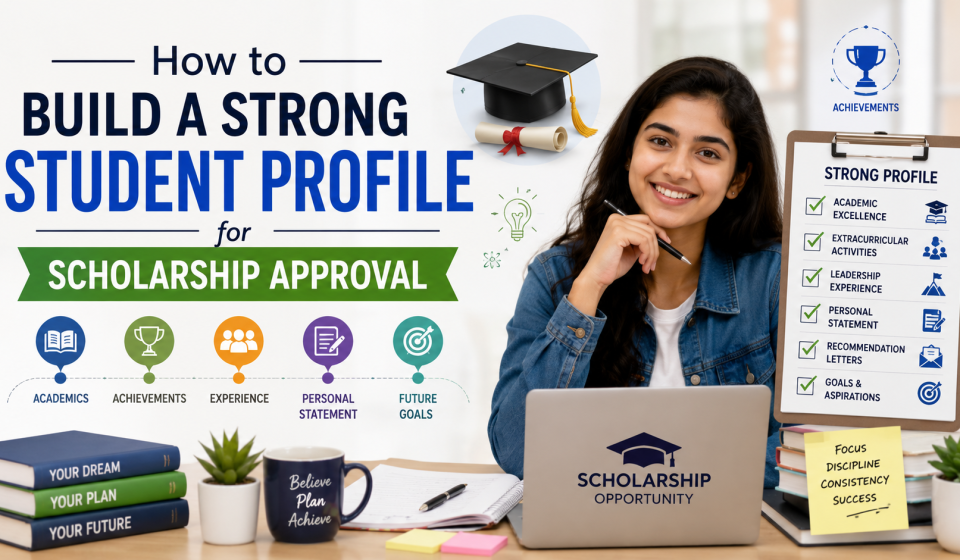

Learn how to build a strong student profile for scholarship approval. Discover practical tips on academics, extracurricular activities, leadership skills, volunteer work, and application strategies to improve your chances of winning scholarships.
Scholarships have become one of the most important ways for students to reduce the financial burden of education. With the rising cost of tuition fees, accommodation, books, and other educational expenses, scholarships provide valuable support that helps students focus on their studies rather than worrying about finances.
However, scholarship providers receive thousands of applications every year. Many students have good academic scores, which means grades alone are often not enough to stand out. To increase your chances of scholarship approval, you need a strong student profile that showcases your achievements, skills, leadership qualities, community involvement, and future goals.
In this guide, we will explore practical strategies to help you build a strong student profile that scholarship committees find impressive.
What Is a Student Profile?
A student profile is a complete picture of who you are as a student and individual. It includes:
- Academic achievements
- Extracurricular activities
- Leadership experience
- Volunteer work
- Skills and certifications
- Awards and recognitions
- Personal achievements
- Career goals
Scholarship providers evaluate these factors to determine whether you are deserving of financial assistance and capable of making a positive impact in the future.
Focus on Academic Excellence
Academic performance remains one of the most important factors in scholarship selection.
While you do not always need perfect grades, maintaining consistent academic performance demonstrates dedication, discipline, and commitment to learning.
Tips to Improve Academic Performance
- Attend classes regularly.
- Submit assignments on time.
- Participate actively in classroom discussions.
- Seek help when facing academic challenges.
- Develop effective study habits.
For example, a student who improves from average grades in Class 10 to excellent performance in Class 12 often impresses scholarship committees because it shows determination and growth.
Participate in Extracurricular Activities
Scholarship providers look for well-rounded students rather than those who only focus on academics.
Extracurricular activities help demonstrate teamwork, creativity, communication skills, and time management.
Examples of Valuable Activities
- Sports
- Music and dance
- Debate competitions
- School clubs
- Drama and theatre
- Photography
- Coding clubs
- Science exhibitions
Consistent participation in these activities can significantly strengthen your profile.
Develop Leadership Skills
Leadership experience can make your scholarship application stand out from hundreds of others.
Leadership does not necessarily mean becoming a school captain. It means taking initiative and helping others achieve common goals.
Leadership Examples
- Class representative
- Team captain
- Club president
- Event organizer
- Student mentor
- Project leader
Scholarship committees appreciate students who demonstrate responsibility and the ability to influence others positively.
Engage in Volunteer and Community Service
Community service shows compassion, social responsibility, and a willingness to contribute to society.
Many scholarship organizations specifically seek students who actively help their communities.
Volunteer Opportunities
- Teaching underprivileged children
- Environmental awareness campaigns
- Blood donation drives
- Animal welfare activities
- Community clean-up programs
- NGO participation
Even a few hours of volunteer work each month can create a positive impact on your application.
Build Strong Communication Skills
Good communication skills are essential for academic success, professional growth, and scholarship interviews.
Students who can clearly express their ideas often perform better during interviews and personal statement evaluations.
Ways to Improve Communication
- Read books regularly
- Participate in public speaking events
- Join debate clubs
- Practice writing essays
- Engage in group discussions
Effective communication helps you present your achievements confidently.
Earn Relevant Certifications
Online courses and certifications can strengthen your profile by showing a commitment to continuous learning.
Today, many platforms offer affordable or free certifications that scholarship committees value.
Popular Certification Areas
- Computer programming
- Artificial Intelligence
- Data analysis
- Graphic design
- Digital marketing
- Foreign languages
- Financial literacy
Choose certifications that align with your academic interests and future career goals.
Build a Strong Personal Statement
The personal statement is often the most influential part of a scholarship application.
It allows selection committees to understand your background, aspirations, challenges, and motivation.
What to Include
- Your educational journey
- Academic achievements
- Personal challenges overcome
- Career aspirations
- Reasons for applying
- How the scholarship will help you
Avoid copying templates from the internet. Authentic stories make a stronger impression than generic content.
Obtain Strong Recommendation Letters
Recommendation letters provide third-party validation of your abilities and character.
A strong recommendation can reinforce the achievements listed in your application.
Best People to Request Recommendations From
- Teachers
- Professors
- School principals
- Mentors
- Internship supervisors
Choose individuals who know you well and can provide specific examples of your strengths.
Maintain a Professional Online Presence
Many scholarship providers review applicants’ online profiles.
Your social media accounts should reflect professionalism and responsibility.
Tips for Online Reputation
- Remove inappropriate content.
- Share educational achievements.
- Highlight volunteer activities.
- Showcase projects and accomplishments.
- Maintain respectful interactions.
A positive online presence can enhance your credibility.
Participate in Competitions and Events
Competitions help demonstrate initiative, talent, and problem-solving abilities.
Useful Competitions
- Olympiads
- Science fairs
- Hackathons
- Essay competitions
- Debate contests
- Business competitions
Awards and recognitions gained through competitions can significantly strengthen your scholarship profile.
Gain Practical Experience
Internships, projects, and research activities help students gain real-world exposure.
Even short-term experiences can demonstrate curiosity, initiative, and practical skills.
Examples
- Research projects
- Internship programs
- Freelance work
- Startup participation
- Community projects
These experiences help distinguish your application from others.
Organize Your Documents Properly
Many students lose scholarship opportunities because of incomplete documentation.
Create a dedicated folder containing:
- Academic transcripts
- Certificates
- Recommendation letters
- Identity documents
- Income certificates
- Awards and achievements
- Volunteer records
Keeping documents organized ensures a smooth application process.
Apply Early and Apply Often
One common mistake students make is waiting until the last minute.
Early applications demonstrate seriousness and help avoid technical issues near deadlines.
Additionally, apply for multiple scholarships rather than relying on a single opportunity.
The more applications you submit, the greater your chances of receiving financial support.
Stay Consistent Over Time
Building a strong profile does not happen overnight.
The most successful scholarship recipients develop their profiles gradually through consistent effort over several years.
Focus on continuous improvement rather than trying to collect certificates at the last moment.
Remember, scholarship committees value genuine achievements and long-term dedication more than superficial accomplishments.
Common Mistakes to Avoid
- Ignoring extracurricular activities
- Submitting incomplete applications
- Missing deadlines
- Using generic personal statements
- Exaggerating achievements
- Applying without research
- Poor document organization
Avoiding these mistakes can significantly improve your scholarship success rate.
Sources
https://scholarships360.org
https://bigfuture.collegeboard.org
Conclusion
Building a strong student profile for scholarship approval requires much more than good grades. Scholarship providers look for students who demonstrate academic excellence, leadership, community involvement, communication skills, and a clear vision for the future. By participating in extracurricular activities, volunteering, earning certifications, gaining practical experience, and presenting your achievements effectively, you can create a profile that stands out from the competition. Start early, stay consistent, and focus on genuine personal growth. A well-rounded student profile not only increases scholarship approval chances but also prepares you for future academic and professional success.
Frequently Asked Questions (FAQs)
1. What is the most important factor for scholarship approval?
Academic performance is important, but most scholarship providers also consider leadership, extracurricular activities, volunteer work, and personal achievements.
2. Can I get a scholarship with average grades?
Yes. Many scholarships evaluate students based on overall achievements, leadership qualities, financial need, and community service rather than grades alone.
3. How many extracurricular activities should I include in my profile?
Focus on a few meaningful activities where you have shown commitment and achieved results instead of listing too many unrelated activities.
4. Are online certifications useful for scholarship applications?
Yes. Relevant certifications demonstrate initiative, skill development, and a willingness to learn beyond the classroom.
5. How early should I start building my scholarship profile?
Ideally, students should start developing their profiles during secondary school or the beginning of higher education to build strong achievements over time.