How to Prepare a Strong College Application That Stands Out in 2026: Ultimate Guide to Getting Accepted into Your Dream College

A strong college application can significantly improve admission chances, even in highly competitive institutions where selection criteria are rigorous and holistic.
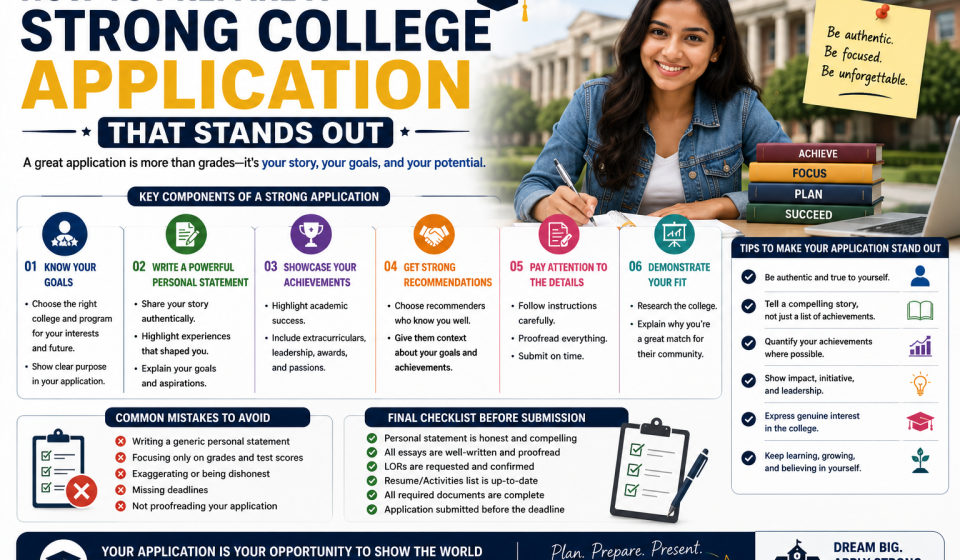
A college application is much more than a formality—it is your opportunity to showcase your academic achievements, skills, experiences, personality, and future aspirations to admission committees. With increasing competition for seats in top colleges and universities across India, students need to ensure that their applications stand out from thousands of others. Many students focus only on grades and entrance exam scores while overlooking other important aspects of the application process. Admission officers often evaluate multiple factors, including academic performance, extracurricular activities, leadership qualities, achievements, personal statements, and overall potential. Understanding how to build a compelling college application can help students present themselves effectively and create a positive impression on admission committees. This comprehensive guide explains every step involved in preparing a strong college application that stands out and increases the likelihood of securing admission to your preferred institution.
Why a Strong College Application Matters
Colleges receive thousands of applications every year. A well-prepared application helps admission officers understand who you are beyond your marks and scores.
Benefits of a strong application include:
- Increased admission chances
- Better scholarship opportunities
- Stronger first impression
- Greater credibility
- Improved chances at competitive institutions
- Enhanced career opportunities
A carefully prepared application reflects seriousness, dedication, and readiness for higher education.
Understanding the College Application Process
Before preparing an application, students should understand the typical admission process.
Most colleges evaluate:
- Academic performance
- Entrance exam scores (if applicable)
- Personal information
- Supporting documents
- Extracurricular achievements
- Personal statements
- Interviews (in some institutions)
Knowing what colleges look for allows students to prepare strategically.
Step 1: Start Planning Early
One of the biggest mistakes students make is waiting until the last minute.
Early preparation provides time to:
- Research colleges
- Gather documents
- Improve academic performance
- Participate in extracurricular activities
- Prepare personal statements
Students should ideally begin planning during Class 11 or the beginning of Class 12.
Step 2: Choose Colleges Carefully
Applying to colleges without proper research can reduce admission success.
Evaluate institutions based on:
- Accreditation
- Course quality
- Faculty expertise
- Placement records
- Infrastructure
- Fees
- Scholarships
Prepare a balanced list consisting of:
- Dream colleges
- Target colleges
- Safe colleges
This strategy maximizes opportunities.
Step 3: Maintain Strong Academic Performance
Academic records remain one of the most important components of any application.
Admission committees carefully review:
- Class 10 marks
- Class 12 marks
- Subject performance
- Academic consistency
Tips for improving academic performance:
- Create a study schedule
- Focus on conceptual understanding
- Practice regularly
- Seek help when needed
Strong academics demonstrate discipline and commitment.
Step 4: Perform Well in Entrance Exams
Many colleges consider entrance examination scores during admissions.
Popular exams include:
- JEE Main
- JEE Advanced
- NEET UG
- CUET UG
- CLAT
- NIFT Entrance Exam
Preparation strategies:
- Start early
- Solve previous year papers
- Take mock tests
- Analyze mistakes
- Improve weak areas
High scores strengthen applications significantly.
Step 5: Participate in Extracurricular Activities
Top colleges often seek well-rounded students.
Valuable activities include:
- Sports
- Cultural programs
- Debate competitions
- Science exhibitions
- Coding competitions
- Community service
- Student leadership roles
Extracurricular participation demonstrates initiative and personal growth.
Step 6: Develop Leadership Skills
Leadership experience helps distinguish applicants.
Examples include:
- School captain positions
- Club leadership roles
- Event organization
- Team management
Leadership qualities indicate responsibility, communication skills, and maturity.
Step 7: Build a Strong Achievement Portfolio
Keep a record of:
- Academic awards
- Sports achievements
- Competition certificates
- Volunteer activities
- Internship experiences
Organized documentation strengthens credibility and supports application claims.
Step 8: Write an Impressive Personal Statement
A personal statement allows students to explain:
- Academic interests
- Career goals
- Personal experiences
- Motivations
A strong personal statement should be:
- Authentic
- Clear
- Well-structured
- Error-free
- Relevant to the chosen course
Avoid copying content from the internet.
Key Elements of a Strong Personal Statement
Introduction
Introduce your interests and aspirations.
Academic Journey
Explain relevant educational experiences.
Achievements
Highlight significant accomplishments.
Career Goals
Describe future ambitions.
Conclusion
Explain why you are a suitable candidate.
A compelling narrative can leave a lasting impression.
Step 9: Gather Strong Recommendation Letters
Some colleges request recommendation letters.
Good recommenders include:
- Teachers
- Principals
- Academic mentors
Recommendation letters should:
- Highlight strengths
- Discuss achievements
- Demonstrate character
- Support academic potential
Choose individuals who know you well.
Step 10: Prepare a Professional Resume
A student resume may include:
- Personal details
- Academic achievements
- Skills
- Extracurricular activities
- Certifications
- Volunteer work
A concise and professional resume improves presentation.
Step 11: Showcase Relevant Skills
Modern colleges value practical skills.
Examples include:
- Communication
- Coding
- Public speaking
- Graphic design
- Data analysis
- Foreign languages
Skill development demonstrates initiative and readiness for future challenges.
Step 12: Complete Application Forms Carefully
Application errors can create serious problems.
Common mistakes include:
- Incorrect personal information
- Wrong marks entered
- Missing documents
- Incomplete sections
Always review applications thoroughly before submission.
Step 13: Organize Required Documents
Commonly required documents include:
- Class 10 Marksheet
- Class 12 Marksheet
- Transfer Certificate
- Aadhaar Card
- Passport-Size Photographs
- Entrance Exam Scorecard
- Category Certificate
- Income Certificate
Maintain both physical and digital copies.
Step 14: Meet Every Deadline
Missing deadlines is one of the most avoidable admission mistakes.
Track:
- Application deadlines
- Entrance exam registrations
- Counseling dates
- Scholarship deadlines
Use calendars and reminders to stay organized.
Step 15: Demonstrate Genuine Interest
Admission officers appreciate applicants who show genuine interest in their chosen field.
Ways to demonstrate interest:
- Relevant projects
- Internships
- Online courses
- Research activities
- Volunteer experiences
Such efforts indicate commitment and passion.
Step 16: Prepare for Interviews
Some colleges conduct admission interviews.
Common topics include:
- Academic interests
- Career goals
- Personal achievements
- Current affairs
- Course-related questions
Preparation tips:
- Practice speaking clearly
- Research the institution
- Maintain confidence
- Dress professionally
A strong interview can positively influence admission decisions.
Step 17: Apply for Scholarships
Scholarships enhance affordability and strengthen applications.
Common scholarship categories include:
- Merit-based
- Need-based
- Sports scholarships
- Minority scholarships
Apply early and submit complete documentation.
Common Mistakes to Avoid
Submitting Incomplete Applications
Always verify all sections before submission.
Copying Personal Statements
Originality is essential.
Ignoring Instructions
Follow every application guideline carefully.
Exaggerating Achievements
Provide accurate and verifiable information.
Missing Deadlines
Late submissions may not be considered.
Role of Parents in Building Strong Applications
Parents can assist by:
- Encouraging organization
- Supporting academic efforts
- Helping track deadlines
- Providing emotional support
However, students should remain the primary contributors to their applications.
Future Trends in College Applications
Modern admissions increasingly focus on:
- Holistic evaluation
- Digital portfolios
- Skill-based achievements
- Leadership experiences
- Innovation and creativity
Students should prepare for evolving admission expectations.
Source Links
https://www.education.gov.in
https://www.ugc.gov.in
https://www.nta.ac.in
https://www.aicte-india.org
https://www.nirfindia.org
Conclusion
A strong college application is built through careful planning, academic excellence, extracurricular involvement, leadership experiences, skill development, and effective presentation. Students who begin early, maintain strong academic records, participate in meaningful activities, prepare compelling personal statements, and submit accurate applications on time significantly improve their chances of admission. In an increasingly competitive educational environment, standing out requires more than just good grades—it requires a well-rounded profile that demonstrates potential, commitment, and readiness for higher education. By following a structured approach and avoiding common mistakes, students can create applications that leave a lasting impression and open doors to outstanding educational opportunities.
FAQ
1- What makes a college application stand out?
Strong academics, extracurricular achievements, leadership experience, and a compelling personal statement help applications stand out.
2- How important are academic marks in college admissions?
Academic performance remains one of the most important evaluation criteria for most colleges.
3- Do extracurricular activities matter?
Yes, extracurricular involvement demonstrates personal growth, initiative, and well-rounded development.
4- What should a personal statement include?
It should discuss academic interests, achievements, experiences, career goals, and motivations.
5- Are recommendation letters important?
Many colleges value recommendation letters because they provide insights into a student’s character and abilities.
6- How can students improve their application profile?
Students can improve through academics, leadership roles, internships, skill development, and extracurricular activities.
7- What documents are commonly required?
Marksheets, certificates, identification documents, photographs, and entrance exam scorecards are typically required.
8- Why is meeting deadlines important?
Missing deadlines can result in application rejection regardless of qualifications.
9- Should students apply to multiple colleges?
Yes, applying to multiple colleges increases admission opportunities and provides backup options.
10- Can scholarships strengthen a college application?
Scholarships primarily reduce financial burden, but academic achievements associated with scholarships can strengthen a student’s profile.