Complete Guide to Choosing the Right College After 12th: Smart Strategies for a Successful Future

A well-informed college decision can help students gain quality education, develop practical skills, build professional networks, and prepare for rewarding careers.
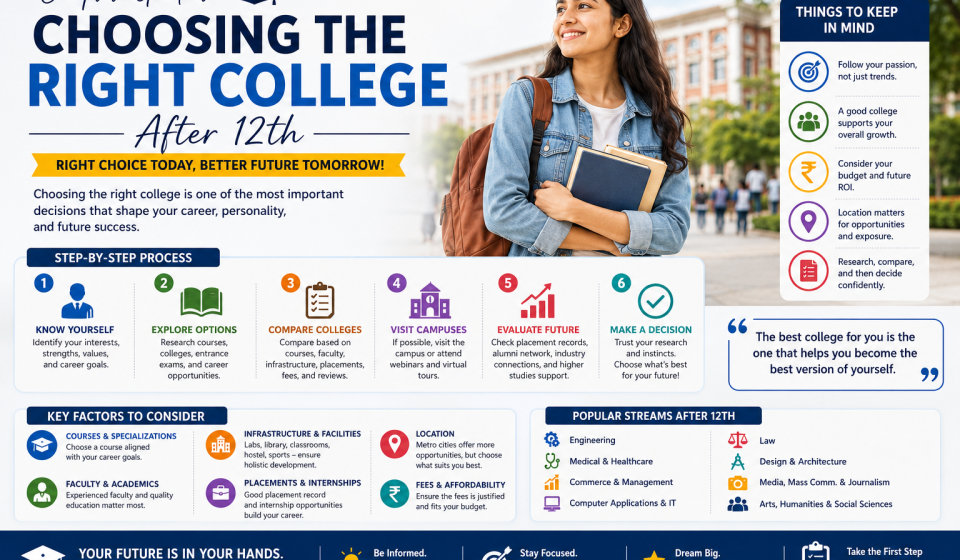
Choosing the right college after completing 12th grade is one of the most important decisions in a student’s life. The college you select can influence your academic growth, career opportunities, personal development, and future success. With thousands of colleges offering different courses, facilities, and learning environments, making the right choice can feel overwhelming. Many students focus only on rankings or peer recommendations, but selecting the right college requires careful consideration of multiple factors. Whether you are interested in engineering, medicine, management, arts, commerce, science, law, design, or any other field, understanding what to look for in a college is essential. This comprehensive guide will help students and parents make an informed decision while choosing the best college after 12th grade.
Why Choosing the Right College Matters
The college you attend impacts more than just your education. It influences your career prospects, personality development, networking opportunities, and overall life experiences. A good college provides:
- Quality education
- Experienced faculty
- Industry exposure
- Internship opportunities
- Placement support
- Modern infrastructure
- Skill development programs
- Networking opportunities
- Personal growth
Selecting the wrong college may lead to dissatisfaction, limited opportunities, and challenges in achieving career goals.
Step 1: Identify Your Interests and Career Goals
Before searching for colleges, students should understand their interests, strengths, and long-term career aspirations.
Ask yourself:
- Which subjects do I enjoy studying?
- What are my strengths?
- What career do I want in the future?
- Do I prefer practical learning or theoretical education?
- What industries interest me?
For example:
- Students interested in technology may choose engineering or computer science.
- Students passionate about healthcare may consider medicine, nursing, or pharmacy.
- Commerce students may pursue B.Com, BBA, CA, or finance-related programs.
- Creative individuals may explore design, media, animation, or fine arts.
Understanding your goals helps narrow down college options effectively.
Step 2: Choose the Right Course First
Many students focus on selecting a college before deciding on a course. However, choosing the right course should come first.
Popular Courses After 12th Science
- Engineering (B.Tech/B.E.)
- MBBS
- BDS
- Pharmacy
- Biotechnology
- Nursing
- Computer Science
- Data Science
- Artificial Intelligence
Popular Courses After 12th Commerce
- B.Com
- BBA
- CA
- CS
- CMA
- Economics
- Finance
- Banking
Popular Courses After 12th Arts
- BA
- Journalism
- Psychology
- Sociology
- Political Science
- Law
- Design
- Mass Communication
Selecting a course aligned with your interests ensures long-term satisfaction and career success.
Step 3: Check College Accreditation and Recognition
Accreditation ensures that the college meets quality standards established by educational authorities.
In India, students should verify:
- UGC Recognition
- AICTE Approval
- NAAC Accreditation
- NIRF Rankings
- Professional Council Approvals
A recognized and accredited college provides valid degrees and better employment opportunities.
Step 4: Evaluate College Rankings Carefully
College rankings can provide useful insights but should not be the only deciding factor.
Consider:
- Academic reputation
- Faculty quality
- Research opportunities
- Placement records
- Infrastructure
- Student satisfaction
Rankings help compare colleges but should be evaluated alongside other important factors.
Step 5: Analyze Faculty Quality
Faculty members play a critical role in shaping students’ academic experiences.
Look for:
- Educational qualifications
- Industry experience
- Research publications
- Teaching methods
- Student feedback
Experienced faculty can significantly enhance learning outcomes and career preparation.
Step 6: Examine the Curriculum
Modern industries require practical skills in addition to theoretical knowledge.
Check whether the curriculum includes:
- Industry-relevant subjects
- Internships
- Project-based learning
- Certifications
- Workshops
- Practical training
A regularly updated curriculum prepares students for evolving job market demands.
Step 7: Review Placement Records
Placement opportunities are a major consideration when choosing a college.
Important factors include:
- Placement percentage
- Average salary package
- Highest package offered
- Recruiting companies
- Internship support
Strong placement records indicate industry trust and career opportunities for graduates.
Step 8: Infrastructure and Campus Facilities
A well-equipped campus enhances the overall educational experience.
Evaluate:
- Classrooms
- Laboratories
- Libraries
- Computer centers
- Internet facilities
- Sports infrastructure
- Hostels
- Cafeterias
Modern infrastructure supports effective learning and student development.
Step 9: Consider Location
College location affects daily life, expenses, networking opportunities, and career exposure.
Benefits of metropolitan locations:
- Better internships
- Industry exposure
- Networking opportunities
- Diverse culture
Benefits of smaller cities:
- Lower living costs
- Less distraction
- Peaceful environment
Choose a location that aligns with your personal preferences and goals.
Step 10: Compare Tuition Fees and Costs
Education is an investment, but affordability is important.
Consider:
- Tuition fees
- Hostel fees
- Transportation costs
- Living expenses
- Additional academic expenses
Create a budget and compare colleges within your financial capacity.
Step 11: Explore Scholarships and Financial Aid
Many colleges offer scholarships to deserving students.
Common scholarship categories include:
- Merit-based scholarships
- Need-based scholarships
- Sports scholarships
- Minority scholarships
- Government scholarships
Scholarships can significantly reduce educational expenses.
Step 12: Assess Internship Opportunities
Internships provide real-world experience and improve employability.
Look for colleges with:
- Industry collaborations
- Internship programs
- Corporate partnerships
- Research opportunities
Practical experience often gives students an advantage during job placements.
Step 13: Student Reviews and Alumni Feedback
Current students and alumni can provide valuable insights.
Research:
- Student reviews
- Alumni success stories
- Social media groups
- College forums
Their experiences can reveal information not available in official brochures.
Step 14: Campus Culture and Environment
College life extends beyond academics.
Consider:
- Student clubs
- Cultural activities
- Sports events
- Leadership opportunities
- Diversity and inclusivity
A positive campus environment contributes to personal growth and networking.
Step 15: Industry Connections and Collaborations
Strong industry relationships enhance career opportunities.
Check whether colleges have partnerships with:
- Technology companies
- Healthcare organizations
- Financial institutions
- Research centers
- International universities
Industry collaboration often leads to internships, projects, and placements.
Step 16: Availability of Higher Education Opportunities
Students planning postgraduate studies should consider colleges that support academic advancement.
Look for:
- Research programs
- Academic counseling
- Competitive exam preparation
- International exchange programs
These opportunities can strengthen future educational pursuits.
Step 17: International Exposure
Global exposure helps students develop broader perspectives.
Features to look for:
- Student exchange programs
- International collaborations
- Foreign faculty visits
- Global certifications
Such experiences can enhance career opportunities in international markets.
Step 18: Technology and Digital Learning Resources
Modern education increasingly relies on technology.
Evaluate:
- Learning management systems
- Online resources
- Digital libraries
- Virtual labs
- Smart classrooms
Technology-enhanced learning improves academic flexibility and accessibility.
Step 19: Safety and Student Support Services
Student safety should never be overlooked.
Check for:
- Campus security
- Medical facilities
- Counseling services
- Anti-ragging measures
- Emergency support
A secure environment supports student well-being and academic success.
Step 20: Visit the Campus Before Finalizing
Whenever possible, visit shortlisted colleges.
Observe:
- Campus atmosphere
- Faculty interaction
- Classroom facilities
- Student engagement
- Infrastructure quality
Personal visits often provide valuable information beyond online research.
Common Mistakes to Avoid While Choosing a College
Many students make avoidable mistakes during the selection process.
Avoid:
- Following friends blindly
- Choosing based only on rankings
- Ignoring accreditation
- Overlooking placement records
- Selecting a course without interest
- Ignoring financial considerations
- Not researching thoroughly
Making informed decisions reduces the risk of future dissatisfaction.
How Parents Can Help
Parents play a crucial role in the college selection process.
They can help by:
- Providing guidance
- Supporting research
- Discussing financial planning
- Encouraging independent decision-making
- Evaluating long-term career prospects
Collaboration between students and parents often leads to better decisions.
Future Trends in Higher Education
The education landscape is evolving rapidly.
Emerging areas include:
- Artificial Intelligence
- Data Analytics
- Cybersecurity
- Renewable Energy
- Biotechnology
- Digital Marketing
- FinTech
- Cloud Computing
Students should consider future industry demand while selecting courses and colleges.
Source Links
https://www.ugc.gov.in
https://www.naac.gov.in
https://www.nirfindia.org
https://www.aicte-india.org
Conclusion
Choosing the right college after 12th is a critical decision that can significantly influence a student’s academic journey and professional future. Rather than focusing solely on rankings or popularity, students should evaluate factors such as course quality, accreditation, faculty expertise, placement opportunities, infrastructure, affordability, and career goals. Thorough research, campus visits, and consultation with mentors can help students make informed choices. By selecting a college that aligns with personal interests and future aspirations, students can build a strong foundation for lifelong success and growth.
FAQ
1- What is the most important factor when choosing a college after 12th?
The most important factor is choosing a college that offers a quality program aligned with your career goals, interests, and future aspirations.
2- Should I choose a college based only on rankings?
No. Rankings are useful, but factors such as course quality, placements, faculty, infrastructure, and affordability should also be considered.
3- How many colleges should I shortlist before applying?
It is generally recommended to shortlist at least 5 to 10 colleges that match your academic profile and career objectives.
4- Are private colleges better than government colleges?
Both can provide excellent education. The choice depends on course quality, faculty, placements, infrastructure, and personal preferences.
5- Why is accreditation important when selecting a college?
Accreditation ensures that the institution meets educational quality standards and provides recognized degrees valued by employers and universities.
6- How important are placement records?
Placement records are very important because they indicate the college’s ability to connect students with employment opportunities.
7- Should location influence my college choice?
Yes. Location affects living costs, internship opportunities, networking possibilities, and overall student experience.
8- How can I verify whether a college is recognized?
You can verify recognition through official bodies such as UGC, AICTE, NAAC, and NIRF websites.