How to Choose the Perfect Career After Graduation: The Ultimate Guide to Building a Successful Future

The pressure to make the right decision often leads to confusion, stress, and uncertainty among fresh graduates.
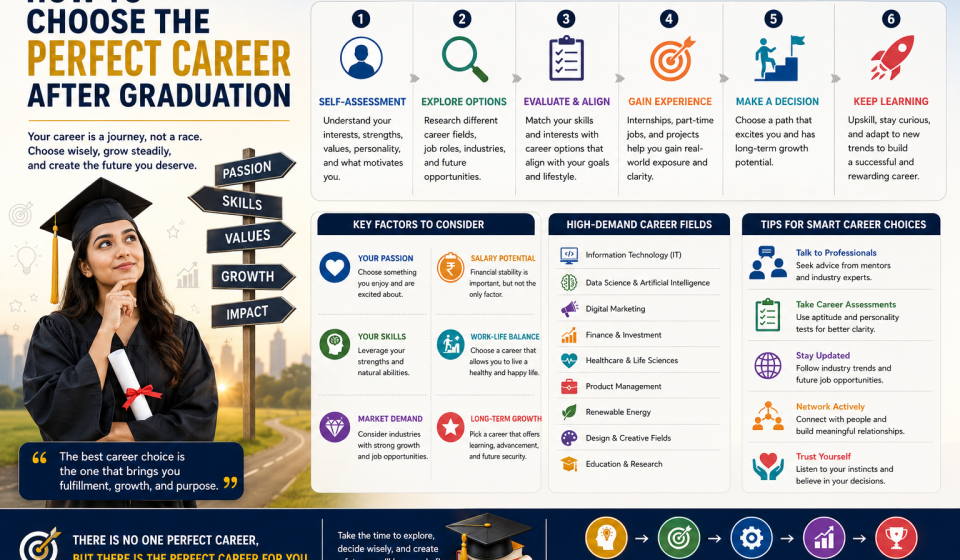
Graduation is a major milestone that marks the transition from academic life to the professional world. While earning a degree is an achievement in itself, many graduates find themselves facing an important question: “What should I do next?” With countless career paths, industries, and opportunities available, choosing the perfect career after graduation can feel overwhelming. The good news is that selecting the right career does not have to be a difficult process. By understanding your interests, skills, strengths, values, and long-term goals, you can make informed decisions that align with your aspirations. Whether you are considering a corporate job, entrepreneurship, higher education, freelancing, government services, or a specialized profession, this comprehensive guide will help you choose the perfect career after graduation and build a rewarding future.
Why Choosing the Right Career Matters
A career is more than just a source of income. It significantly influences your lifestyle, personal growth, job satisfaction, and future opportunities. Choosing a career that aligns with your abilities and interests can lead to long-term happiness and success.
Benefits of choosing the right career include:
- Higher job satisfaction
- Better financial stability
- Increased motivation
- Continuous personal growth
- Improved work-life balance
- Greater career advancement opportunities
- Stronger professional reputation
- Enhanced confidence and fulfillment
On the other hand, selecting a career solely based on salary or social pressure can lead to dissatisfaction and career stagnation.
Understand Yourself Before Choosing a Career
The first step toward finding the perfect career is understanding yourself.
Ask yourself:
- What are my strengths?
- What subjects did I enjoy studying?
- Which activities excite me?
- What type of work environment do I prefer?
- What motivates me?
- What are my long-term goals?
Self-awareness helps narrow down career options that match your personality and abilities.
Identify Your Skills and Strengths
Every individual possesses unique talents and capabilities. Identifying your strengths can help determine suitable career paths.
Common skill categories include:
Technical Skills
- Programming
- Data Analysis
- Engineering
- Graphic Design
- Digital Marketing
Communication Skills
- Public Speaking
- Writing
- Negotiation
- Customer Service
Analytical Skills
- Problem Solving
- Critical Thinking
- Research
- Decision Making
Leadership Skills
- Team Management
- Project Coordination
- Strategic Planning
Recognizing your strongest skills helps you focus on careers where you can excel.
Evaluate Your Interests
People perform better in careers they genuinely enjoy.
Consider:
- What hobbies do you enjoy?
- Which topics interest you most?
- What type of work would you do even without external pressure?
For example:
- Technology enthusiasts may enjoy software development.
- Creative individuals may thrive in design or media.
- People who enjoy helping others may pursue healthcare or counseling.
Passion often contributes to long-term professional success.
Define Your Career Goals
Having clear goals helps guide career decisions.
Short-term goals may include:
- Securing your first job
- Gaining industry experience
- Building professional skills
Long-term goals may include:
- Becoming a manager
- Starting a business
- Achieving financial independence
- Working internationally
A clear vision makes career planning more effective.
Explore Different Career Options
Graduates today have access to a wide range of opportunities.
Popular career paths include:
Corporate Careers
- Marketing
- Human Resources
- Finance
- Operations
- Sales
Technology Careers
- Software Development
- Artificial Intelligence
- Data Science
- Cybersecurity
- Cloud Computing
Healthcare Careers
- Nursing
- Pharmacy
- Medical Research
- Healthcare Administration
Creative Careers
- Graphic Design
- Content Creation
- Animation
- Photography
- Film Production
Government Careers
- Civil Services
- Banking
- Railways
- Defense Services
- Public Sector Enterprises
Entrepreneurship
- Startups
- Small Businesses
- Online Businesses
- Consulting Services
Researching multiple options broadens your perspective and reveals possibilities you may not have considered.
Understand Industry Trends
Career decisions should consider future job market demand.
Growing industries include:
- Artificial Intelligence
- Machine Learning
- Data Science
- Renewable Energy
- Healthcare Technology
- Cybersecurity
- FinTech
- E-commerce
- Digital Marketing
- Cloud Computing
Choosing a career in a growing industry can provide long-term stability and advancement opportunities.
Conduct a SWOT Analysis
A SWOT analysis helps evaluate career suitability.
Strengths
Identify your strongest abilities.
Weaknesses
Recognize areas requiring improvement.
Opportunities
Explore industry growth and market demand.
Threats
Consider challenges such as competition or technological changes.
This structured approach helps make informed decisions.
Gain Practical Experience
Real-world experience provides valuable career insights.
Options include:
- Internships
- Freelance projects
- Volunteer work
- Part-time jobs
- Industry workshops
Practical exposure helps determine whether a particular career suits your interests and expectations.
Seek Career Counseling
Professional career counselors can offer personalized guidance.
Benefits include:
- Career assessments
- Aptitude testing
- Industry insights
- Educational planning
- Skill evaluation
Career counseling helps graduates make objective decisions based on evidence rather than assumptions.
Consider Higher Education
Further studies can enhance career prospects.
Popular options include:
MBA
Ideal for management and leadership roles.
M.Tech
Suitable for engineering graduates.
Master’s Degrees
Available across various disciplines.
Professional Certifications
Examples include:
- PMP
- CFA
- CPA
- Google Certifications
- AWS Certifications
Higher education can increase expertise and earning potential.
Evaluate Salary Expectations
While passion is important, financial considerations also matter.
Research:
- Entry-level salaries
- Industry averages
- Long-term earning potential
- Career growth opportunities
Balancing passion with practical financial goals creates a sustainable career path.
Assess Work-Life Balance
Different careers offer varying lifestyles.
For example:
High-Pressure Careers
- Investment Banking
- Corporate Law
- Consulting
Balanced Careers
- Teaching
- Government Jobs
- Human Resources
Understanding work-life expectations helps ensure long-term satisfaction.
Build a Professional Network
Networking plays a critical role in career growth.
Ways to build connections:
- Industry conferences
- Alumni networks
- Professional associations
- Workshops and seminars
Strong professional relationships can open doors to opportunities and mentorship.
Create a Career Development Plan
A structured plan improves career success.
Include:
- Career goals
- Required skills
- Learning resources
- Networking activities
- Job search strategies
- Timeline for achievements
A clear roadmap increases confidence and direction.
Importance of Personal Values
Your values influence career satisfaction.
Consider factors such as:
- Purpose
- Stability
- Creativity
- Independence
- Financial rewards
- Social impact
A career aligned with personal values often leads to greater fulfillment.
Common Mistakes Graduates Should Avoid
Many graduates make avoidable errors when selecting careers.
Avoid:
- Following friends blindly
- Choosing based only on salary
- Ignoring personal interests
- Neglecting skill development
- Overlooking industry trends
- Making rushed decisions
- Avoiding networking opportunities
Careful planning reduces the likelihood of career dissatisfaction.
Entrepreneurship as a Career Option
Starting a business is increasingly popular among graduates.
Benefits include:
- Independence
- Unlimited growth potential
- Innovation opportunities
- Financial rewards
Challenges include:
- Risk
- Uncertainty
- Financial investment
- Responsibility
Entrepreneurship suits individuals who enjoy creativity, leadership, and problem-solving.
Importance of Continuous Learning
Modern careers require ongoing skill development.
Learning opportunities include:
- Online courses
- Certifications
- Workshops
- Industry conferences
- Professional training
Continuous learning helps professionals remain competitive in evolving industries.
Top Career Fields for Graduates in 2026
Some of the most promising career sectors include:
Artificial Intelligence
Rapidly expanding across industries.
Data Science
High demand for data-driven decision making.
Cybersecurity
Essential for protecting digital assets.
Healthcare
Growing demand due to global healthcare needs.
Renewable Energy
Expanding opportunities in sustainable development.
Digital Marketing
Increasing demand in the online business environment.
Financial Technology
Transforming banking and financial services.
Cloud Computing
Supporting digital transformation globally.
How to Make the Final Decision
When choosing a career:
- Analyze your interests
- Evaluate your skills
- Research opportunities
- Consider financial goals
- Gain practical experience
- Seek professional guidance
The best career is one that aligns with your strengths, interests, values, and future aspirations.
Source Links
https://www.linkedin.com
https://www.coursera.org
https://www.indeed.com
https://www.ncs.gov.in
https://www.shiksha.com
https://www.upgrad.com
Conclusion
Choosing the perfect career after graduation is one of the most significant decisions a person will make. Rather than following trends or external pressure, graduates should focus on understanding their interests, strengths, values, and long-term goals. Exploring career options, gaining practical experience, staying informed about industry trends, and continuously developing skills are essential steps toward professional success. With careful planning and informed decision-making, graduates can build rewarding careers that provide both personal fulfillment and financial stability. The right career choice can create a strong foundation for lifelong growth, achievement, and happiness.
FAQ
1- How do I know which career is right for me after graduation?
You can identify the right career by evaluating your interests, strengths, skills, values, and long-term goals while exploring different career options.
2- Should salary be the main factor when choosing a career?
No. While salary is important, career satisfaction, growth opportunities, work-life balance, and personal interests should also be considered.
3- Is higher education necessary after graduation?
Not always. It depends on your career goals. Some professions require advanced degrees, while others prioritize skills and experience.
4- What are the most in-demand careers in 2026?
Artificial Intelligence, Data Science, Cybersecurity, Cloud Computing, Healthcare, Renewable Energy, and Digital Marketing are among the fastest-growing fields.
5- How important are internships for career selection?
Internships provide practical experience and help graduates understand industry expectations, making them extremely valuable.
6- Can I change careers later if I make the wrong choice?
Yes. Many professionals successfully transition to new careers through additional education, training, and skill development.
7- How can networking help my career?
Networking provides access to mentors, job opportunities, industry insights, and professional relationships that support career growth.
8- What is the biggest mistake graduates make when choosing a career?
One of the biggest mistakes is selecting a career based solely on salary, social pressure, or popularity without considering personal interests and strengths.