How to Build a Strong College Resume: Complete Guide to Creating an Impressive Student Profile for Admissions and Career Success

A strong resume not only increases the chances of admission into prestigious institutions but also lays the foundation for future career opportunities.
A strong college resume is much more than a document listing academic achievements. It serves as a powerful representation of a student’s skills, accomplishments, leadership qualities, extracurricular involvement, community service, and personal growth. Whether applying for college admissions, scholarships, internships, campus leadership positions, or part-time jobs, a well-crafted resume can help students stand out from thousands of applicants. In today’s competitive academic environment, colleges and recruiters look beyond grades to identify candidates who demonstrate initiative, responsibility, creativity, and commitment.
Building a college resume is a gradual process that begins long before application deadlines. Students who actively participate in academic activities, extracurricular programs, volunteer work, competitions, and leadership opportunities can create compelling resumes that showcase their potential. This comprehensive guide explains how to build a strong college resume, what to include, common mistakes to avoid, and strategies for creating a profile that leaves a lasting impression.
What is a College Resume?
A college resume is a concise document that summarizes a student’s educational background, achievements, extracurricular activities, leadership experiences, skills, volunteer work, and other relevant accomplishments. Unlike professional resumes used by experienced employees, college resumes focus on showcasing a student’s academic potential and overall development.
Colleges, scholarship committees, and employers often use resumes to gain a quick overview of a student’s qualifications and achievements. A strong resume helps demonstrate commitment, responsibility, and readiness for future opportunities.
Why a Strong College Resume Matters
Many students believe grades alone determine admission outcomes. While academic performance is important, colleges increasingly use holistic evaluation methods that consider multiple aspects of a student’s profile.
Benefits of a strong college resume include:
Improved college admission prospects
Better scholarship opportunities
Enhanced internship applications
Stronger job applications
Increased leadership opportunities
Greater professional confidence
A well-developed resume helps students communicate their strengths effectively.
Key Components of a Strong College Resume
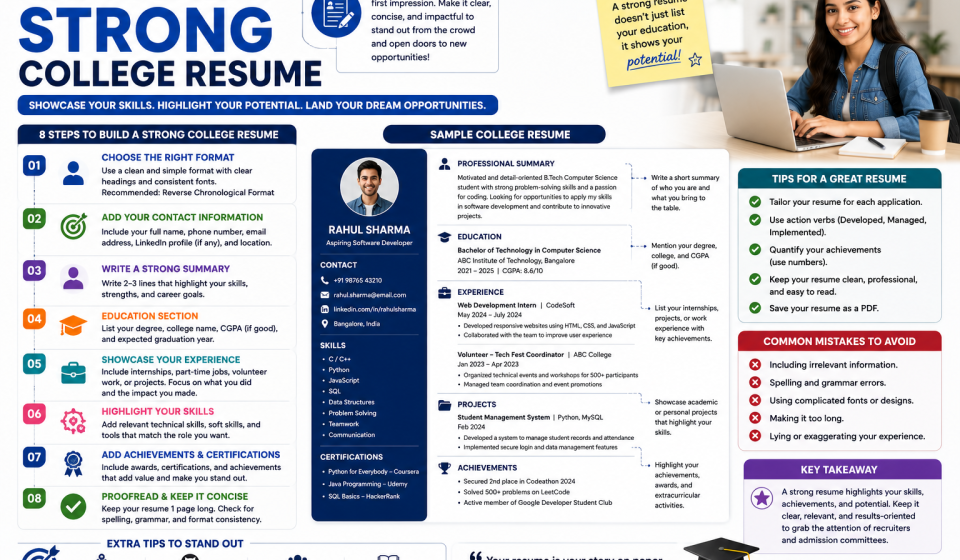
A college resume should be organized, professional, and easy to read. It should include several essential sections that provide a complete picture of the student’s achievements and abilities.
Personal Information
The resume should begin with basic contact details.
Include:
Full name
Phone number
Email address
City and state
LinkedIn profile (if available)
Avoid unnecessary personal information such as age, religion, or marital status.
Career Objective or Personal Statement
A brief objective statement can help explain academic interests and career goals.
Example focus areas:
Engineering
Medicine
Business
Computer Science
Arts and Humanities
Research
Keep this section concise and relevant.
Academic Achievements
Academic performance forms the foundation of a college resume.
Include:
School name
Expected graduation year
Grade Point Average (if strong)
Board examination scores
Academic awards
Merit scholarships
Subject-specific achievements
Highlight achievements that demonstrate dedication and academic excellence.
Importance of Extracurricular Activities
Colleges value students who contribute beyond the classroom.
Popular extracurricular activities include:
Sports
Music
Dance
Drama
Debate
Student government
Coding clubs
Science clubs
Art competitions
Cultural events
Participation in extracurricular activities demonstrates well-rounded development and time-management skills.
Leadership Experience
Leadership is one of the most valued qualities in college applicants.
Examples include:
Class representative
Club president
Team captain
Student council member
Event organizer
Project leader
Leadership positions demonstrate initiative, responsibility, and the ability to influence others positively.
Volunteer and Community Service Work
Community involvement reflects social responsibility and compassion.
Examples include:
Teaching underprivileged children
Environmental campaigns
Blood donation drives
Fundraising initiatives
NGO participation
Awareness programs
Volunteer work shows commitment to making a positive impact on society.
Internships and Work Experience
Even limited work experience can strengthen a college resume.
Possible experiences include:
Internships
Part-time jobs
Freelance projects
Family business involvement
Summer work programs
Research assistantships
These experiences demonstrate practical skills and workplace readiness.
Academic Projects
Projects help showcase subject knowledge and problem-solving abilities.
Examples:
Science projects
Research papers
Coding applications
Business plans
Engineering prototypes
Community initiatives
Students should describe project objectives, responsibilities, and outcomes clearly.
Skills Section
The skills section highlights competencies relevant to academic and professional success.
Technical Skills
Programming languages
Graphic design
Video editing
Microsoft Office
Data analysis
Web development
Research tools
Soft Skills
Communication
Leadership
Problem solving
Critical thinking
Creativity
Adaptability
Collaboration
Time management
A balanced mix of technical and soft skills creates a stronger profile.
Certifications and Online Courses
Certifications demonstrate a commitment to continuous learning.
Popular certifications include:
Google Career Certificates
Microsoft Certifications
Coursera Courses
edX Programs
LinkedIn Learning Certificates
Coding Certifications
Digital Marketing Certifications
Data Analytics Courses
Include only relevant certifications that support academic or career goals.
Awards and Honors
Recognition for achievements helps distinguish students from other applicants.
Examples include:
Academic excellence awards
Olympiad medals
Competition wins
Scholarships
Sports achievements
Leadership awards
Artistic recognition
Awards provide evidence of outstanding performance and dedication.
Research Experience
Students interested in academic and research-focused institutions should highlight research experience.
Possible examples:
Independent research projects
Laboratory work
Scientific investigations
Publication contributions
Conference presentations
Research experience demonstrates intellectual curiosity and analytical skills.
Building a Resume Throughout High School
Students should begin developing their resume early rather than waiting until application season.
Strategies include:
Participating in clubs
Volunteering regularly
Joining competitions
Seeking leadership roles
Building technical skills
Completing certifications
Pursuing meaningful projects
Consistent involvement over time creates a more authentic and impressive profile.
Common Resume Mistakes to Avoid
Many students weaken their resumes through avoidable errors.
Common mistakes include:
Spelling and grammar errors
Exaggerating achievements
Including irrelevant information
Using poor formatting
Providing inaccurate details
Creating excessively long resumes
Ignoring proofreading
Maintaining professionalism and accuracy is essential.
Resume Formatting Tips
A well-formatted resume improves readability and presentation.
Best practices include:
Use clear headings
Maintain consistent fonts
Keep formatting professional
Use bullet points
Limit unnecessary graphics
Keep information concise
Save as PDF format
Professional formatting creates a positive first impression.
How Colleges Evaluate Resumes
Admissions committees often assess resumes based on several factors.
Academic excellence
Leadership potential
Extracurricular involvement
Community impact
Consistency of participation
Personal initiative
Unique achievements
Quality matters more than quantity when evaluating activities.
Importance of Authenticity
Students should focus on genuine interests rather than participating in activities solely to strengthen applications.
Authenticity demonstrates:
Passion
Commitment
Personal growth
Long-term engagement
Colleges appreciate meaningful involvement more than superficial participation.
Digital Presence and Online Portfolio
Modern college applications increasingly benefit from a strong digital presence.
Students may create:
LinkedIn profiles
Personal websites
Coding portfolios
Art portfolios
Research portfolios
Professional online profiles help showcase accomplishments effectively.
Preparing a Resume for Scholarships
Scholarship committees often evaluate:
Academic achievements
Financial need
Leadership experience
Community service
Special talents
A targeted scholarship resume should emphasize relevant accomplishments.
Using a Resume for Internship Applications
Internships provide valuable experience before graduation.
A strong internship resume should highlight:
Relevant skills
Projects
Leadership experiences
Academic achievements
Career interests
Internships help students build professional networks and practical knowledge.
Long-Term Benefits of a Strong College Resume
A well-developed college resume continues to provide value beyond admissions.
Benefits include:
Internship opportunities
Scholarship eligibility
Campus leadership roles
Research opportunities
Graduate school applications
Employment prospects
Professional networking
Building a strong resume early creates long-term advantages.
Future Trends in College Admissions
As admissions processes become increasingly competitive, colleges are placing greater emphasis on holistic evaluation. Academic performance remains important, but institutions also seek students who demonstrate leadership, creativity, resilience, social responsibility, and initiative. A comprehensive and authentic resume helps students communicate these qualities effectively while showcasing their readiness to contribute to campus communities and future professional environments.
Source Links:
https://bigfuture.collegeboard.org
https://www.commonapp.org
https://www.coursera.org/articles/student-resume
https://www.princetonreview.com
Conclusion
Building a strong college resume requires careful planning, consistent effort, and meaningful engagement in academic, extracurricular, leadership, and community activities. A well-crafted resume allows students to present a complete picture of their abilities, achievements, and potential beyond classroom performance. By focusing on authentic experiences, developing valuable skills, seeking leadership opportunities, and maintaining professional presentation standards, students can create impressive resumes that strengthen college admissions, scholarship applications, internships, and future career opportunities. Investing time in resume development today can open doors to countless opportunities in the future.
FAQ
1. What is a college resume?
A college resume is a document that summarizes a student’s academic achievements, extracurricular activities, leadership experiences, skills, certifications, and accomplishments.
2. Why is a college resume important?
A strong college resume helps students stand out during admissions, scholarship applications, internships, and job opportunities.
3. What should be included in a college resume?
Students should include personal information, academic achievements, extracurricular activities, leadership roles, volunteer work, skills, certifications, and awards.
4. How long should a college resume be?
Most college resumes are one page, although highly accomplished students may require additional space.
5. Do colleges value extracurricular activities?
Yes, colleges often consider extracurricular involvement as part of holistic admissions evaluations.
6. Can volunteer work improve a college resume?
Yes, volunteer experiences demonstrate social responsibility, leadership, and commitment to community service.
7. Should high school students complete online certifications?
Relevant certifications can strengthen a resume by showcasing additional skills and initiative.
8. What is the biggest mistake students make when creating resumes?
Common mistakes include exaggerating achievements, poor formatting, grammatical errors, and including irrelevant information.