Complete Guide to Campus Placements: How to Prepare, Crack Interviews, and Secure Your Dream Job

Students who begin preparation early, develop relevant skills, and understand recruitment procedures are often better positioned to secure attractive job offers.
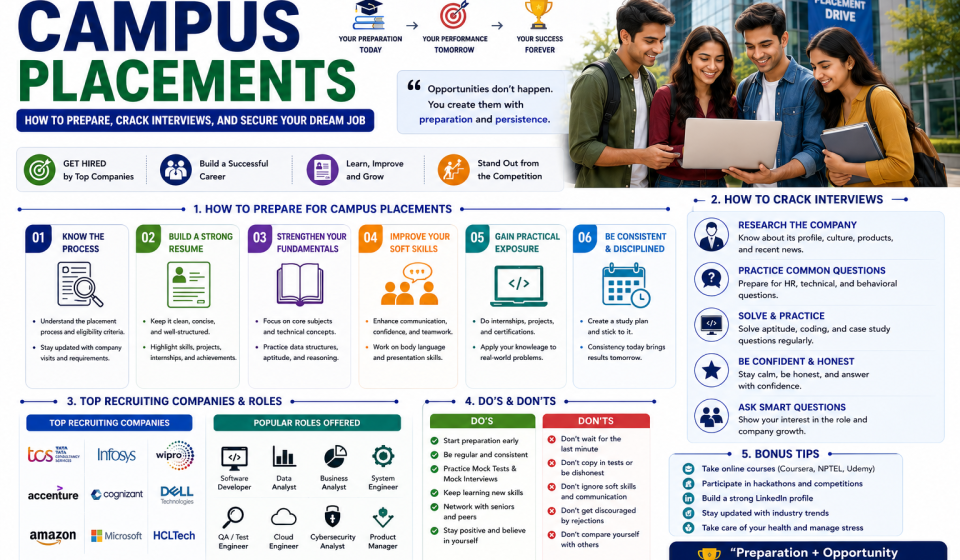
Campus placements play a crucial role in shaping the careers of college students by providing direct opportunities to secure employment before graduation. For many students, campus recruitment serves as the first step toward entering the professional world and building a successful career. Every year, companies from various industries visit colleges and universities to recruit talented graduates for entry-level positions, internships, and management trainee programs. With increasing competition in the job market, students must understand the campus placement process and prepare strategically to maximize their chances of success. A successful campus placement journey requires much more than strong academic performance. Employers look for candidates who possess technical expertise, communication skills, problem-solving abilities, leadership qualities, adaptability, and a positive attitude. This complete guide to campus placements covers every aspect of the recruitment process, including eligibility criteria, resume preparation, aptitude tests, group discussions, interviews, common mistakes, and effective strategies for landing a dream job.
What Are Campus Placements?
Campus placements refer to recruitment programs conducted by companies within colleges and universities to hire students before they complete their academic programs. These placement drives help organizations identify talented graduates while providing students with employment opportunities.
Campus placements generally include:
Pre-placement talks
Application screening
Aptitude tests
Technical assessments
Group discussions
Personal interviews
Final job offers
The process varies depending on the company, industry, and job role.
Importance of Campus Placements
Campus placements offer significant advantages to students and employers alike.
Benefits for Students:
Early employment opportunities
Reduced job search stress
Professional exposure
Competitive salary packages
Career growth opportunities
Industry networking
Benefits for Employers:
Access to fresh talent
Efficient recruitment process
Lower hiring costs
Campus placements create mutually beneficial outcomes for both parties.
Understanding the Campus Placement Process
The placement process generally follows a structured sequence of stages.
Pre-Placement Talk
Companies often begin recruitment by conducting pre-placement presentations.
Topics Covered:
Company overview
Work culture
Career opportunities
Compensation details
Selection process
Students should attend these sessions carefully to understand employer expectations.
Registration and Application
Eligible students submit applications through placement cells or online recruitment platforms.
Application Requirements:
Academic details
Resume
Personal information
Supporting documents
Accuracy and professionalism are essential during this stage.
Resume Screening
Recruiters evaluate resumes to shortlist candidates for further rounds.
Important Resume Sections:
Personal information
Education
Projects
Internships
Skills
Achievements
Certifications
Leadership experience
A strong resume creates a positive first impression.
How to Build an Effective Placement Resume
A well-crafted resume significantly improves selection chances.
Resume Best Practices:
Keep it concise
Highlight achievements
Include measurable results
Use professional formatting
Customize for specific roles
Proofread carefully
Students should focus on demonstrating skills and accomplishments rather than simply listing responsibilities.
Aptitude Tests
Many organizations conduct aptitude assessments as an initial screening stage.
Common Sections Include:
Quantitative aptitude
Logical reasoning
Verbal ability
Data interpretation
Analytical thinking
Preparation Tips:
Practice regularly
Improve speed and accuracy
Review previous questions
Take mock tests
Strong aptitude performance often determines progression to subsequent rounds.
Technical Assessments
Technical roles usually involve subject-specific evaluations.
Topics May Include:
Programming
Data structures
Algorithms
Database management
Computer networks
Operating systems
Engineering fundamentals
Candidates should strengthen core academic concepts and practical knowledge.
Coding Rounds for Technology Jobs
Technology companies frequently conduct coding assessments.
Popular Programming Languages:
Python
Java
C++
JavaScript
C
Preparation Areas:
Problem solving
Algorithms
Competitive programming
Coding efficiency
Debugging
Regular practice on coding platforms can improve performance significantly.
Group Discussions
Group discussions assess communication and interpersonal skills.
Recruiters evaluate:
Leadership
Teamwork
Confidence
Communication
Analytical thinking
Listening skills
Tips for Success:
Speak clearly
Respect others’ opinions
Present logical arguments
Maintain professionalism
Avoid dominating the discussion
Effective participation improves selection prospects.
Personal Interviews
The personal interview is often the most important stage of campus placements.
Interview Types:
HR interviews
Technical interviews
Managerial interviews
Behavioral interviews
Candidates should prepare thoroughly for all formats.
HR Interview Preparation
HR interviews evaluate personality, communication, and cultural fit.
Common Questions:
Tell me about yourself.
Why do you want this job?
What are your strengths?
What are your weaknesses?
Where do you see yourself in five years?
Preparation and confidence are key to success.
Technical Interview Preparation
Technical interviews assess subject knowledge and problem-solving abilities.
Areas of Focus:
Core concepts
Projects
Internships
Practical applications
Industry knowledge
Candidates should be able to explain their academic projects clearly.
Behavioral Interview Questions
Behavioral interviews examine past experiences and workplace competencies.
Common Topics:
Leadership experiences
Conflict resolution
Teamwork
Decision-making
Problem-solving
The STAR method helps structure effective responses.
STAR Framework:
Situation
Task
Action
Result
This approach provides clear and organized answers.
Importance of Communication Skills
Communication skills significantly influence placement outcomes.
Essential Areas:
Verbal communication
Written communication
Presentation skills
Active listening
Professional etiquette
Students should continuously improve communication abilities throughout college.
Soft Skills Required for Placements
Employers increasingly value soft skills alongside technical expertise.
Important Soft Skills:
Leadership
Adaptability
Critical thinking
Collaboration
Time management
Creativity
Emotional intelligence
These competencies contribute to workplace success.
Internships and Their Role in Placements
Internships strengthen placement profiles significantly.
Benefits Include:
Industry exposure
Practical experience
Professional networking
Skill development
Resume enhancement
Many companies prefer candidates with relevant internship experience.
Certifications That Improve Placement Opportunities
Professional certifications can enhance employability.
Popular Certifications:
Data Analytics
Cloud Computing
Cybersecurity
Digital Marketing
Artificial Intelligence
Project Management
Programming
Industry-recognized certifications demonstrate commitment to learning.
Common Placement Mistakes to Avoid
Many students lose opportunities due to avoidable errors.
Common Mistakes:
Poor resume preparation
Lack of research
Weak communication skills
Missing deadlines
Insufficient interview practice
Overconfidence
Negative attitude
Avoiding these mistakes improves placement outcomes.
Placement Preparation Timeline
First Year
Develop communication skills.
Explore interests.
Build foundational knowledge.
Second Year
Learn technical skills.
Participate in extracurricular activities.
Build projects.
Third Year
Complete internships.
Earn certifications.
Prepare for aptitude tests.
Final Year
Attend placement drives.
Practice interviews.
Refine resumes.
Maintain confidence.
Early preparation provides a significant advantage.
How to Research Companies Before Interviews
Candidates should research:
Company history
Products and services
Recent developments
Work culture
Industry position
Job descriptions
Demonstrating knowledge about the organization leaves a positive impression.
Importance of Networking
Professional networking can create valuable opportunities.
Methods Include:
LinkedIn engagement
Alumni interactions
Industry events
Professional communities
Networking often provides insights into recruitment processes and career opportunities.
Salary Packages and Expectations
Compensation varies based on:
Industry
Company size
Location
Role
Skills
Academic background
Students should focus on long-term growth rather than only initial salary figures.
Campus Placements for Different Streams
Engineering Students
Software development
Core engineering roles
Data science
Consulting
Management Students
Marketing
Finance
Operations
Human resources
Arts and Commerce Students
Banking
Content creation
Digital marketing
Business development
Opportunities exist across all academic disciplines.
Emerging Trends in Campus Recruitment
Artificial Intelligence recruitment tools
Virtual interviews
Skill-based hiring
Remote work opportunities
Hybrid recruitment models
Digital assessments
Students should adapt to evolving hiring practices.
Future of Campus Placements
Campus recruitment continues to evolve as organizations prioritize skills, adaptability, and practical experience. While academic performance remains important, employers increasingly focus on problem-solving abilities, communication skills, leadership potential, and technological proficiency. Students who embrace continuous learning, gain practical exposure, and develop both technical and soft skills will be well-positioned to succeed in modern campus placement processes and build rewarding professional careers.
Source Links:
https://www.naukri.com
ttps://www.indeed.com/career-advice
https://www.linkedin.com
https://www.geeksforgeeks.org
Conclusion
Campus placements provide valuable opportunities for students to begin their professional journeys and secure rewarding careers. Success in campus recruitment requires a combination of academic excellence, technical competence, communication skills, practical experience, and strategic preparation. By understanding the placement process, building strong resumes, practicing aptitude tests, preparing for interviews, and continuously developing relevant skills, students can significantly improve their chances of receiving job offers from leading organizations. Early preparation, confidence, and persistence remain the most important factors in achieving placement success.
FAQ
1. What are campus placements?
Campus placements are recruitment programs conducted by companies in colleges and universities to hire students before graduation.
2. How can I prepare for campus placements?
Students should focus on aptitude preparation, technical skills, communication abilities, resume building, and interview practice.
3. What is the most important stage of campus placements?
While every stage matters, personal interviews often have the greatest influence on final hiring decisions.
4. Do internships help in campus placements?
Yes, internships provide practical experience, strengthen resumes, and improve employability.
5. Which skills are most important for placements?
Technical expertise, communication skills, problem-solving abilities, teamwork, leadership, and adaptability are highly valued.
6. How can I improve my resume for placements?
Highlight achievements, internships, projects, certifications, leadership experiences, and measurable accomplishments.
7. Are certifications useful during campus recruitment?
Yes, relevant certifications demonstrate additional skills and commitment to professional development.
8. When should students start preparing for placements?
Ideally, preparation should begin during the first or second year of college to allow sufficient time for skill development.