Interview Preparation Guide 2026: Complete Strategy to Crack Any Job Interview Successfully

Employers use interviews to assess not only a candidate’s knowledge and abilities but also their attitude, personality, problem-solving skills, and cultural fit within the organization.
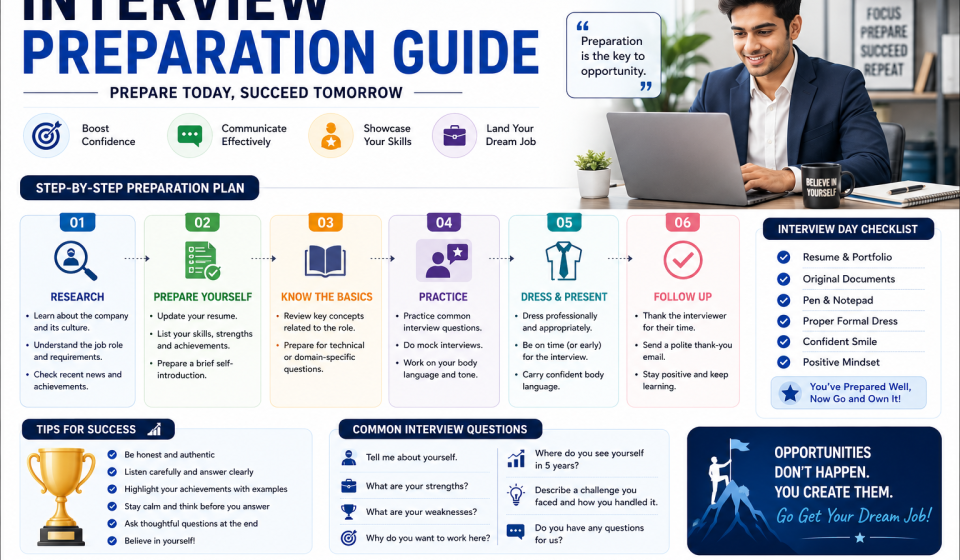
Job interviews are one of the most critical steps in the hiring process and often determine whether a candidate secures their desired position. Regardless of qualifications, experience, or technical expertise, performing well in an interview requires preparation, confidence, communication skills, and a professional mindset. As competition for quality jobs continues to increase, effective interview preparation has become more important than ever. Many candidates spend months building their resumes, earning certifications, and developing skills, yet fail to achieve success because they underestimate the importance of interview preparation. A well-prepared candidate can confidently answer questions, present achievements effectively, and demonstrate their value to potential employers. Whether you are a student attending campus placements, a fresher entering the workforce, or an experienced professional seeking career advancement, mastering interview preparation can significantly improve your chances of receiving job offers. This comprehensive guide covers everything you need to know about preparing for interviews and making a strong impression on recruiters.
Why Interview Preparation Is Important
Interviews allow employers to evaluate candidates beyond what is written on a resume.
Benefits of proper interview preparation include:
- Increased confidence
- Better communication
- Improved answer quality
- Reduced nervousness
- Strong first impression
- Higher success rate
- Better salary negotiation opportunities
Candidates who prepare thoroughly are often more successful than equally qualified applicants who appear unprepared.
Understanding the Interview Process
Different organizations use different interview formats.
Common interview stages include:
- Resume Screening
- Aptitude Assessment
- Technical Interview
- Group Discussion
- HR Interview
- Managerial Interview
- Final Selection
Understanding the process helps candidates prepare strategically.
Research the Company Thoroughly
One of the most common interview mistakes is failing to learn about the company.
Information to Research
- Company history
- Products and services
- Industry position
- Mission and values
- Recent achievements
- Leadership team
Benefits
Research demonstrates genuine interest and allows candidates to answer questions more effectively.
Understand the Job Description
Carefully analyze the job description before attending an interview.
Focus On
- Required skills
- Responsibilities
- Qualifications
- Technical requirements
- Desired competencies
Aligning your responses with job requirements increases your chances of success.
Prepare Your Self-Introduction
The “Tell me about yourself” question is one of the most frequently asked interview questions.
Structure
- Educational background
- Professional experience
- Key achievements
- Relevant skills
- Career goals
A concise and confident introduction creates a strong first impression.
Build a Professional Resume
Your resume serves as the foundation of many interview discussions.
Resume Essentials
- Clear formatting
- Accurate information
- Relevant skills
- Certifications
- Projects
- Achievements
Be prepared to explain everything mentioned on your resume.
Review Academic and Technical Knowledge
Technical interviews often assess subject-specific expertise.
Areas to Revise
- Core concepts
- Practical applications
- Industry tools
- Technical projects
- Problem-solving techniques
Strong technical knowledge improves interview performance significantly.
Prepare for Common HR Questions
HR interviews evaluate communication skills, attitude, and cultural fit.
Frequently Asked Questions
- Tell me about yourself.
- Why do you want this job?
- What are your strengths?
- What are your weaknesses?
- Why should we hire you?
- Where do you see yourself in five years?
- Why are you leaving your current role?
Practice clear and professional responses.
Master Behavioral Interview Questions
Behavioral questions assess past experiences and future performance potential.
Examples
- Describe a challenging situation.
- Tell us about a leadership experience.
- Explain a conflict you resolved.
- Share an example of teamwork.
STAR Method
Use the STAR framework:
- Situation
- Task
- Action
- Result
This structure helps provide organized and impactful answers.
Prepare for Technical Interviews
Technical interviews are common in engineering, IT, finance, healthcare, and other specialized industries.
Preparation Strategies
- Revise fundamentals
- Practice technical questions
- Review projects
- Solve case studies
- Practice coding challenges if applicable
Demonstrating practical understanding is often more important than memorization.
Improve Communication Skills
Communication plays a major role in interview success.
Key Areas
- Clarity
- Confidence
- Listening skills
- Professional language
- Eye contact
Improvement Methods
- Practice speaking regularly
- Participate in discussions
- Record mock interviews
- Seek feedback
Develop Strong Body Language
Non-verbal communication influences interviewer perception.
Positive Body Language
- Maintain eye contact
- Sit upright
- Smile naturally
- Use controlled hand gestures
- Avoid fidgeting
Professional body language reflects confidence and maturity.
Practice Mock Interviews
Mock interviews simulate real interview situations.
Benefits
- Build confidence
- Identify weaknesses
- Improve communication
- Reduce anxiety
Regular practice significantly enhances interview performance.
Prepare Questions for the Interviewer
Most interviews conclude with an opportunity to ask questions.
Good Questions to Ask
- What does success look like in this role?
- What are the team’s primary goals?
- What learning opportunities are available?
- What is the company culture like?
Thoughtful questions demonstrate interest and professionalism.
Dress Professionally
Appearance contributes to first impressions.
Interview Attire Tips
- Wear clean and professional clothing
- Maintain personal grooming
- Avoid excessive accessories
- Choose appropriate footwear
Professional appearance reflects seriousness and respect.
Manage Interview Anxiety
Many candidates experience nervousness before interviews.
Effective Techniques
- Thorough preparation
- Deep breathing exercises
- Positive visualization
- Mock interviews
- Adequate sleep
Confidence grows through preparation and practice.
Prepare for Virtual Interviews
Online interviews have become increasingly common.
Virtual Interview Checklist
- Stable internet connection
- Quiet environment
- Professional background
- Functional microphone and camera
- Updated software
Testing equipment beforehand prevents technical issues.
Highlight Achievements Effectively
Interviewers appreciate measurable accomplishments.
Examples
- Increased sales by 20%
- Led a team project successfully
- Developed a new process
- Completed a significant project
Quantifiable achievements strengthen credibility.
Demonstrate Problem-Solving Skills
Employers value candidates who can solve challenges effectively.
How to Showcase
- Explain your thought process
- Discuss real examples
- Focus on results achieved
Problem-solving ability is highly valued across industries.
Learn Salary Discussion Techniques
Salary discussions often occur during later interview stages.
Best Practices
- Research market salaries
- Be realistic
- Consider total compensation
- Remain professional
Preparation helps candidates negotiate confidently.
Common Interview Mistakes to Avoid
Arriving Late
Punctuality reflects professionalism.
Lack of Research
Failure to understand the company creates a negative impression.
Poor Communication
Unclear responses reduce credibility.
Negative Attitude
Avoid criticizing previous employers or colleagues.
Dishonesty
Always provide accurate information.
Overconfidence
Confidence should be balanced with humility.
Interview Preparation Timeline
One Week Before
- Research the company
- Review job description
- Practice questions
One Day Before
- Prepare documents
- Select interview attire
- Review key points
Interview Day
- Arrive early
- Stay calm
- Maintain confidence
Skills Employers Value Most
Modern employers seek candidates with:
- Communication skills
- Teamwork
- Leadership
- Adaptability
- Critical thinking
- Technical expertise
- Emotional intelligence
- Problem-solving ability
Demonstrating these skills increases hiring potential.
Importance of Follow-Up After Interviews
Following up professionally can leave a positive impression.
Follow-Up Benefits
- Reinforces interest
- Demonstrates professionalism
- Keeps communication active
A brief thank-you email can strengthen your candidacy.
Source Links
https://www.linkedin.com
https://www.indeed.com
https://www.glassdoor.com
https://www.naukri.com
https://www.monster.com
Conclusion
Interview success is not determined solely by qualifications or experience but by preparation, communication, confidence, and professionalism. Candidates who research companies, understand job requirements, practice common questions, strengthen technical knowledge, and refine interpersonal skills significantly improve their chances of securing job offers. Consistent preparation, positive body language, effective communication, and thoughtful follow-up can help candidates stand out in competitive hiring processes. By applying the strategies outlined in this guide, job seekers can confidently approach interviews and move closer to achieving their career goals.
FAQ
1.How long should I prepare for an interview?
Preparation should ideally begin several days before the interview, with focused practice and company research.
2.What is the most common interview question?
“Tell me about yourself” is one of the most frequently asked interview questions.
3.How can I reduce interview nervousness?
Mock interviews, preparation, deep breathing, and positive thinking can help reduce anxiety.
4.Is company research important before an interview?
Yes, researching the company demonstrates interest and helps answer questions effectively.
5.What should I wear to a job interview?
Professional attire appropriate to the industry and role is recommended.
6.How do I answer behavioral interview questions?
Use the STAR method to provide structured and impactful responses.
7.Should I ask questions during the interview?
Yes, thoughtful questions show engagement and interest in the role.
8.How important is body language during interviews?
Body language significantly influences interviewer perception and can impact overall performance.