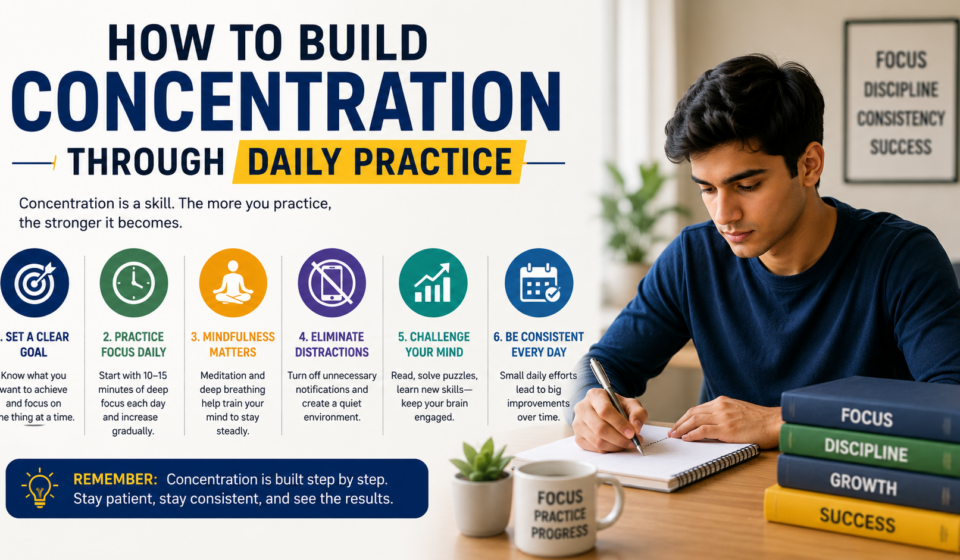

Learn how to build concentration through daily practice with simple habits, brain-training techniques, mindfulness, and productivity tips. Improve focus naturally and boost daily performance.
In today’s fast-moving digital world, staying focused has become one of the biggest challenges for students, professionals, and business owners alike. Constant notifications, social media scrolling, multitasking, and stress can weaken our ability to concentrate. The good news is that concentration is not a natural talent limited to a few people — it is a skill that can be improved with regular daily practice.
Building concentration helps improve productivity, memory, learning ability, decision-making, and overall mental performance. Whether you want to focus better during studies, complete office work faster, or improve your personal growth, practicing concentration daily can transform your life.
This guide explains practical methods to build concentration naturally through simple habits and proven techniques.
Understanding Concentration
Concentration is the ability to focus your mind on a single task without getting distracted. It allows the brain to process information efficiently and complete tasks with higher accuracy.
Good concentration helps you:
- Complete work faster
- Improve memory retention
- Reduce mistakes
- Increase productivity
- Lower mental stress
- Enhance learning capacity
Poor concentration, on the other hand, can lead to procrastination, anxiety, forgetfulness, and reduced performance.
Why Daily Practice is Important for Focus
Concentration works like a muscle. The more you train it consistently, the stronger it becomes. Daily practice creates neural pathways in the brain that support sustained attention and mental discipline.
Practicing focus every day helps:
- Strengthen mental endurance
- Improve attention span
- Increase self-control
- Train the brain to avoid distractions
- Develop long-term productivity habits
Even small daily exercises can bring significant improvements over time.
Start Your Day With Mindfulness
Mindfulness is one of the most effective ways to improve concentration naturally. It trains the brain to stay present instead of wandering toward distractions.
Simple mindfulness practices include:
- Deep breathing for 5 minutes
- Observing thoughts calmly
- Paying full attention to surroundings
- Practicing meditation
Morning mindfulness helps prepare your brain for focused work throughout the day.
Create a Distraction-Free Environment
Your surroundings directly affect your ability to concentrate. A cluttered and noisy environment makes focus difficult.
To improve concentration:
- Keep your workspace clean
- Turn off unnecessary notifications
- Use noise-canceling headphones if needed
- Avoid multitasking
- Maintain proper lighting
A calm environment helps the brain remain attentive and productive.
Practice Single-Tasking
Many people believe multitasking improves efficiency, but studies show it actually reduces focus and increases mistakes.
Single-tasking means focusing on one activity at a time until completion. This improves mental clarity and task quality.
Ways to practice single-tasking:
- Finish one task before starting another
- Use time blocks for different activities
- Avoid checking phones during work
- Keep only relevant tabs open on your device
Over time, single-tasking strengthens deep concentration.
Use the Pomodoro Technique
The Pomodoro Technique is a popular productivity method designed to improve concentration.
Here’s how it works:
- Work for 25 minutes with full focus
- Take a 5-minute break
- Repeat the cycle four times
- Take a longer 15–20 minute break
This method prevents mental fatigue while keeping the brain engaged and attentive.
Benefits include:
- Better focus
- Reduced burnout
- Improved productivity
- Increased motivation
Train Your Brain With Daily Reading
Reading is an excellent exercise for concentration. It forces the brain to maintain attention for longer periods.
To build focus through reading:
- Read physical books instead of scrolling online
- Start with 10–15 minutes daily
- Gradually increase reading duration
- Avoid distractions while reading
Reading improves imagination, comprehension, memory, and sustained attention.
Improve Sleep Quality
Poor sleep is one of the biggest reasons for low concentration. The brain needs proper rest to function efficiently.
Lack of sleep can cause:
- Mental fatigue
- Brain fog
- Forgetfulness
- Reduced productivity
- Mood swings
To improve focus, aim for 7–8 hours of quality sleep daily.
Healthy sleep habits include:
- Sleeping at a fixed time
- Avoiding screens before bedtime
- Reducing caffeine intake at night
- Keeping the room dark and cool
Good sleep significantly boosts mental clarity and concentration.
Exercise Regularly
Physical activity improves blood circulation to the brain and supports cognitive function.
Regular exercise helps:
- Increase mental alertness
- Reduce stress
- Improve memory
- Boost energy levels
- Enhance focus
Best exercises for concentration include:
- Walking
- Yoga
- Meditation
- Stretching
- Cardio workouts
Even 20–30 minutes of daily exercise can improve attention span.
Eat Brain-Healthy Foods
Nutrition plays an important role in mental performance and concentration.
Foods that support brain health include:
- Nuts and seeds
- Green vegetables
- Fruits
- Fish rich in omega-3
- Dark chocolate
- Whole grains
Avoid excessive sugar, junk food, and energy drinks because they may reduce focus and energy stability.
Hydration is also essential. Drinking enough water improves brain performance and alertness.
Practice Meditation Daily
Meditation is scientifically proven to strengthen concentration and reduce mental distractions.
Benefits of meditation include:
- Better emotional control
- Increased attention span
- Reduced stress
- Improved self-awareness
- Enhanced memory
Beginners can start with:
- 5 minutes of breathing meditation
- Guided meditation apps
- Silent mindfulness sessions
Consistency matters more than duration.
Set Clear Daily Goals
Having unclear goals can confuse the brain and reduce concentration.
Instead:
- Write daily priorities
- Break large tasks into smaller steps
- Use checklists
- Set realistic deadlines
Clear goals help the mind stay focused and organized.
Reduce Digital Distractions
Smartphones and social media are major concentration killers.
To reduce distractions:
- Turn off non-essential notifications
- Limit social media usage
- Use focus apps
- Keep the phone away during work sessions
- Schedule screen-free time
Digital discipline is essential for improving modern-day concentration.
Build a Consistent Routine
A consistent daily schedule trains the brain to focus during specific hours.
Your routine should include:
- Fixed wake-up time
- Dedicated work or study hours
- Exercise
- Healthy meals
- Relaxation time
Consistency creates mental discipline and improves productivity naturally.
Take Short Breaks
Working continuously for long hours reduces concentration levels.
Short breaks help refresh the brain and restore attention.
Good break activities include:
- Stretching
- Walking
- Deep breathing
- Drinking water
- Looking away from screens
Balanced work and rest improve long-term focus.
Practice Focus Exercises
Daily concentration exercises can strengthen mental stamina.
Popular exercises include:
- Solving puzzles
- Memory games
- Sudoku
- Chess
- Counting exercises
- Observation activities
These activities challenge the brain and improve cognitive abilities.
Stay Positive and Patient
Building concentration takes time. Many people expect instant results and become frustrated quickly.
Remember:
- Progress happens gradually
- Daily practice matters most
- Small improvements lead to long-term success
A positive mindset keeps you motivated throughout the journey.
Common Mistakes That Reduce Concentration
Avoid these habits if you want stronger focus:
- Excessive multitasking
- Lack of sleep
- Poor diet
- Constant phone usage
- Working without breaks
- Stress and anxiety
- Cluttered workspace
Identifying these issues can help improve mental performance faster.
Benefits of Strong Concentration
Improved concentration positively affects every area of life.
Major benefits include:
- Better academic performance
- Increased work productivity
- Faster learning
- Improved decision-making
- Reduced stress
- Greater self-confidence
- Better time management
Strong focus helps you achieve goals more efficiently and with less frustration.
Sources
https://sl1nk.com/xoo0z8i
https://l1nq.com/ciaumci
Conclusion
Building concentration through daily practice is one of the best investments you can make in yourself. Focus is not something people are born with — it is developed through consistent habits, discipline, mindfulness, and mental training.
By practicing meditation, maintaining healthy routines, reducing distractions, exercising regularly, and training your brain daily, you can gradually strengthen your concentration and improve overall productivity.
Start small, stay consistent, and remember that long-term success comes from simple daily improvements. Over time, these habits will help you develop a sharper, calmer, and more focused mind.
FAQs
How long does it take to improve concentration?
Improving concentration can take a few weeks to several months depending on consistency and lifestyle habits.
Can meditation really improve focus?
Yes, meditation helps train the brain to stay present and improves attention span over time.
Does exercise help concentration?
Regular exercise improves blood flow to the brain, which enhances memory, alertness, and focus.
Why do phones reduce concentration?
Frequent notifications and social media interruptions constantly shift attention, making deep focus difficult.
What foods improve brain focus?
Nuts, fish, fruits, vegetables, whole grains, and omega-3-rich foods support better brain function and concentration.