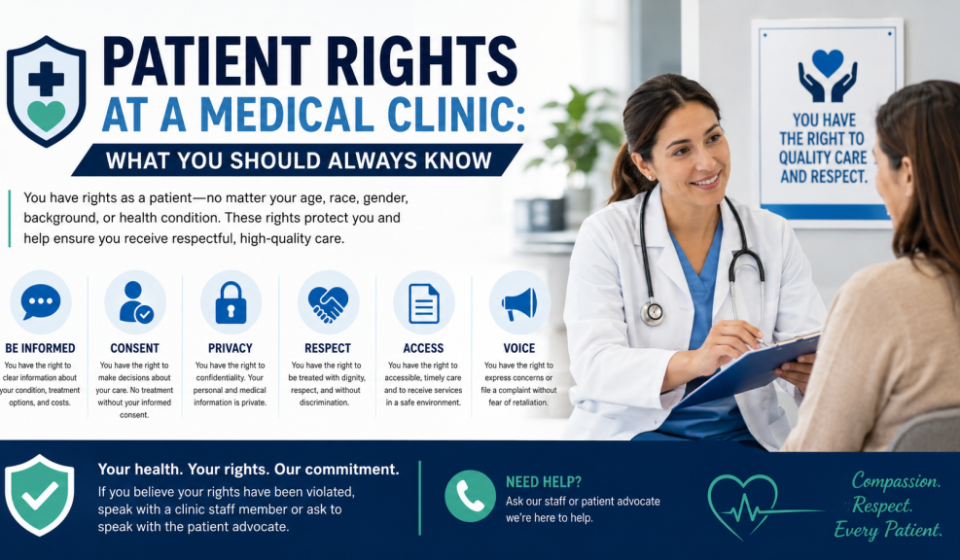

Learn about patient rights at a medical clinic, including informed consent, privacy, access to medical records, and quality healthcare. A simple guide for Indian patients to understand and protect their healthcare rights.
Visiting a medical clinic is something most of us do at some point in life. Whether it’s for a routine check-up, treatment for an illness, or preventive care, every patient deserves to be treated with dignity, respect, and fairness.
However, many people in India are unaware that they have specific rights as patients. Understanding these rights can help you make informed healthcare decisions, communicate effectively with doctors, and ensure you receive proper medical care.
In this article, we’ll explore the most important patient rights at a medical clinic and why they matter.
Why Patient Rights Matter
Patient rights are designed to protect individuals receiving healthcare services. They ensure that patients are treated ethically and receive accurate information about their health and treatment options.
For example, imagine a patient named Ramesh from Ahmedabad who visits a clinic for a surgical procedure. Before the treatment, the doctor explains the risks, benefits, and alternatives. This allows Ramesh to make an informed decision. This is a practical example of patient rights in action.
When patients understand their rights, they become active participants in their healthcare journey.
1. The Right to Respect and Dignity
Every patient has the right to be treated with respect regardless of age, gender, religion, financial status, or medical condition.
Healthcare professionals should:
- Speak politely and professionally.
- Respect cultural and personal beliefs.
- Avoid discrimination.
- Maintain patient dignity during examinations and treatments.
A good clinic creates a welcoming environment where patients feel comfortable discussing their health concerns.
2. The Right to Information
Patients have the right to receive clear and understandable information about:
- Their medical condition.
- Diagnosis.
- Recommended treatments.
- Potential risks and benefits.
- Expected outcomes.
Medical terminology can sometimes be confusing. Patients should never hesitate to ask questions if they don’t understand something.
For instance, if a doctor prescribes a new medication, you have the right to know why it’s needed, how to take it, and any possible side effects.
3. The Right to Informed Consent
Before any major medical procedure, treatment, or surgery, healthcare providers must obtain informed consent from the patient.
Informed consent means:
- The treatment is explained clearly.
- Risks and benefits are discussed.
- Alternatives are presented.
- The patient voluntarily agrees to proceed.
This ensures that patients are not forced into medical decisions without understanding the implications.
4. The Right to Privacy and Confidentiality
Medical information is personal and sensitive. Clinics must protect patient confidentiality.
This includes:
- Secure storage of medical records.
- Private consultations.
- Protection of personal health information.
For example, details about your diagnosis should not be shared with others without your permission, except when legally required.
5. The Right to Access Medical Records
Patients have the right to access their medical records and reports.
These records may include:
- Test results.
- Prescriptions.
- Treatment history.
- Discharge summaries.
Having access to records is especially useful when seeking a second opinion or continuing treatment at another healthcare facility.
6. The Right to Choose Your Healthcare Provider
Patients generally have the freedom to choose their doctor or clinic whenever possible.
Many people seek second opinions before undergoing major procedures. This is completely acceptable and often encouraged for better decision-making.
For example, if a patient is advised to undergo surgery, consulting another specialist can provide additional clarity and confidence.
7. The Right to Safe and Quality Care
Every patient deserves healthcare services that meet accepted medical standards.
Clinics should:
- Maintain clean facilities.
- Follow infection control practices.
- Use qualified healthcare professionals.
- Ensure proper diagnosis and treatment procedures.
Quality healthcare reduces risks and improves patient outcomes.
8. The Right to Emergency Care
In emergency situations, patients should receive timely medical attention without unnecessary delays.
While certain advanced treatments may require referral to larger hospitals, clinics should provide immediate assistance and stabilization whenever possible.
Quick action during emergencies can save lives.
9. The Right to Ask Questions
Patients should feel comfortable discussing their concerns with healthcare providers.
You can ask questions such as:
- What is causing my symptoms?
- Are there alternative treatments?
- What side effects should I expect?
- How long will recovery take?
Open communication often leads to better treatment outcomes and greater patient satisfaction.
10. The Right to File Complaints
If patients experience poor treatment, negligence, or unethical behavior, they have the right to raise concerns.
Most clinics and healthcare organizations have complaint procedures to address patient grievances.
Providing feedback also helps improve healthcare services for everyone.
Responsibilities That Come with Patient Rights
While patients have important rights, they also have responsibilities, including:
- Providing accurate medical information.
- Following treatment instructions.
- Respecting healthcare staff.
- Attending scheduled appointments.
- Asking questions when unsure.
A cooperative relationship between patients and healthcare providers leads to better healthcare experiences.
How Indian Patients Can Protect Their Rights
Here are a few practical tips:
- Keep copies of medical records and reports.
- Read consent forms carefully before signing.
- Ask questions whenever you need clarification.
- Seek a second opinion when appropriate.
- Choose reputable clinics with qualified healthcare professionals.
- Report any unethical practices through proper channels.
Being informed is one of the best ways to protect your health and healthcare rights.
Sources
https://l1nq.com/bqzfhhu
https://l1nq.com/pu2p5pl
Conclusion
Understanding patient rights is essential for receiving safe, respectful, and effective healthcare. Whether you are visiting a clinic for a routine check-up or a specialized treatment, you have the right to information, privacy, informed consent, quality care, and respectful treatment.
Patients who understand their rights are better equipped to make informed decisions and actively participate in their healthcare journey. At the same time, maintaining open communication and mutual respect with healthcare providers helps create a positive healthcare experience for everyone involved.
Frequently Asked Questions (FAQs)
1. What are the basic rights of a patient at a medical clinic?
Patients have the right to respect, privacy, informed consent, access to medical records, quality healthcare, and clear information about their treatment.
2. Can I ask for a second opinion from another doctor?
Yes. Patients have the right to seek a second opinion before making important medical decisions.
3. Can a clinic share my medical information without permission?
Generally, no. Patient information must remain confidential unless disclosure is legally required or authorized by the patient.
4. Do I have the right to see my medical records?
Yes. Patients can request access to their medical records, test reports, prescriptions, and treatment history.
5. What should I do if I feel my rights were violated?
You can raise the issue with the clinic administration, file a formal complaint, or approach the appropriate healthcare regulatory authority if necessary.