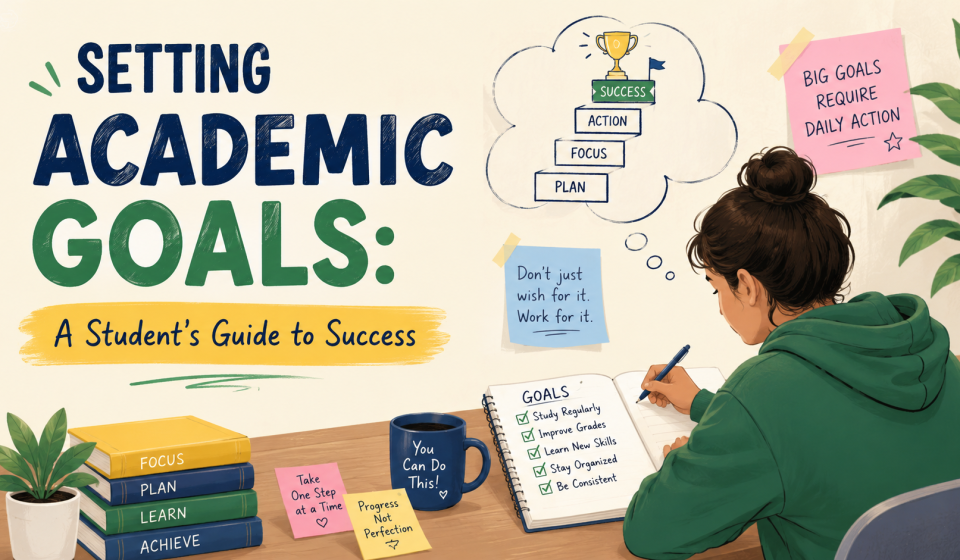

Learn how to set effective academic goals, improve study habits, stay motivated, and achieve academic success with this comprehensive student guide.
Academic success does not happen by chance. It is the result of clear planning, consistent effort, and well-defined goals. Whether you are a high school student, college learner, or pursuing higher education, setting academic goals can help you stay focused, motivated, and organized throughout your educational journey.
Academic goals provide direction and purpose. They help students identify what they want to achieve and create a roadmap for reaching those objectives. Without goals, students may struggle with time management, lose motivation, and find it difficult to measure progress.
In this guide, we will explore the importance of academic goals, how to set them effectively, and practical strategies to achieve long-term educational success.
What Are Academic Goals?
Academic goals are specific objectives students set to improve their educational performance and personal growth. These goals can focus on grades, skill development, study habits, attendance, or completing educational milestones.
Examples of academic goals include:
- Achieving a specific GPA by the end of the semester.
- Improving performance in a challenging subject.
- Completing assignments before deadlines.
- Reading a certain number of books each month.
- Developing better time-management skills.
- Preparing for competitive exams.
Academic goals give students a clear sense of purpose and help them stay committed to their studies.
Why Academic Goal Setting Is Important
Setting academic goals offers numerous benefits that contribute to both short-term and long-term success.
Provides Direction
Goals help students understand where they want to go and what steps they need to take to get there. This sense of direction reduces confusion and increases focus.
Increases Motivation
When students have clear objectives, they are more likely to stay motivated. Goals create a sense of purpose that encourages consistent effort.
Improves Time Management
Students who set goals are more likely to prioritize tasks and use their time effectively. This helps reduce procrastination and improve productivity.
Builds Confidence
Achieving goals, even small ones, boosts self-confidence and encourages students to take on greater challenges.
Tracks Progress
Goals make it easier to measure achievements and identify areas that need improvement.
Types of Academic Goals
Academic goals can be categorized into different types depending on the time frame and purpose.
Short-Term Academic Goals
Short-term goals are objectives that can be achieved within a few days, weeks, or months.
Examples:
- Completing homework on time every day.
- Improving test scores in a particular subject.
- Attending all classes during the semester.
Long-Term Academic Goals
Long-term goals require a longer commitment and may take several months or years to achieve.
Examples:
- Graduating with honors.
- Earning a college degree.
- Gaining admission to a top university.
- Building expertise in a specific field.
Skill-Based Goals
These goals focus on improving abilities that contribute to academic success.
Examples:
- Enhancing note-taking skills.
- Improving critical thinking.
- Strengthening writing and communication abilities.
How to Set Effective Academic Goals
Creating effective goals requires careful planning. One of the most widely recommended approaches is using the SMART goal framework.
Specific Goals
Goals should be clear and well-defined.
Instead of:
“I want to do better in math.”
Use:
“I want to improve my math grade from B to A by the end of the semester.”
Measurable Goals
A measurable goal allows students to track progress.
Example:
“I will study for two hours daily and complete all weekly assignments.”
Achievable Goals
Goals should be realistic based on available resources and abilities.
Setting impossible goals can lead to frustration and discouragement.
Relevant Goals
Academic goals should align with educational aspirations and career objectives.
For example, a student interested in engineering may focus on improving mathematics and science performance.
Time-Bound Goals
Every goal should have a deadline.
Example:
“I will complete my research project within the next four weeks.”
Steps to Achieve Academic Goals
Setting goals is only the first step. Success depends on consistent action.
Create a Study Plan
Develop a structured schedule that allocates time for studying, assignments, revision, and breaks.
A study plan helps students stay organized and reduces last-minute stress.
Break Goals Into Smaller Tasks
Large goals can feel overwhelming. Dividing them into smaller tasks makes them more manageable.
For example:
Goal: Improve science grade.
Tasks:
- Review class notes daily.
- Complete practice exercises.
- Attend extra tutoring sessions.
- Take weekly practice tests.
Monitor Progress Regularly
Review goals weekly or monthly to assess progress.
Ask yourself:
- Am I meeting my milestones?
- What challenges am I facing?
- What adjustments are needed?
Regular evaluation helps maintain momentum.
Stay Consistent
Consistency is more important than occasional bursts of effort.
Even studying for a short period every day can produce better results than cramming before exams.
Seek Help When Needed
Students should not hesitate to seek assistance from teachers, tutors, classmates, or academic advisors when they encounter difficulties.
Common Challenges in Academic Goal Setting
Many students face obstacles while pursuing their goals.
Lack of Motivation
Motivation can fluctuate over time. Students can stay motivated by reminding themselves of the benefits and rewards associated with achieving their goals.
Poor Time Management
Balancing academics, extracurricular activities, and personal commitments can be challenging.
Using planners, calendars, and productivity apps can improve time management.
Procrastination
Procrastination often delays progress.
Strategies to overcome procrastination include:
- Setting smaller deadlines.
- Eliminating distractions.
- Using productivity techniques like the Pomodoro Method.
Fear of Failure
Fear of making mistakes can prevent students from taking action.
Remember that setbacks are learning opportunities and an important part of growth.
Tips for Staying Motivated Throughout the Academic Year
Maintaining motivation requires continuous effort.
Celebrate Small Achievements
Recognize progress and reward yourself when you reach milestones.
Maintain a Positive Mindset
Focus on progress rather than perfection. Every step forward contributes to long-term success.
Surround Yourself With Supportive People
Positive friends, mentors, teachers, and family members can provide encouragement during challenging times.
Visualize Success
Imagine achieving your academic goals and the opportunities they can create for your future.
Visualization can strengthen commitment and determination.
The Role of Parents and Teachers in Academic Goal Achievement
Parents and teachers play a significant role in supporting students.
Parents can:
- Encourage positive study habits.
- Provide emotional support.
- Help create a productive learning environment.
Teachers can:
- Offer guidance and feedback.
- Help students identify strengths and weaknesses.
- Recommend effective learning strategies.
Collaboration between students, parents, and educators creates a strong support system for academic success.
Benefits of Achieving Academic Goals
Successfully reaching academic goals provides several long-term advantages.
- Improved academic performance.
- Greater self-discipline.
- Enhanced confidence and self-esteem.
- Better career opportunities.
- Stronger problem-solving skills.
- Increased readiness for future educational challenges.
Students who consistently set and achieve goals often develop habits that benefit them throughout their personal and professional lives.
Sources
https://l1nq.com/qdqmqwr
https://l1nq.com/k7s6o99
Conclusion
Setting academic goals is one of the most effective ways for students to achieve success. Clear goals provide direction, improve motivation, enhance time management, and help track progress. By creating SMART goals, developing structured study plans, staying consistent, and regularly evaluating performance, students can overcome challenges and maximize their potential.
Academic success is not about being perfect; it is about making steady progress toward meaningful objectives. With determination, discipline, and the right strategies, every student can achieve their educational goals and build a successful future.
Frequently Asked Questions (FAQs)
What are academic goals?
Academic goals are specific objectives that students set to improve their educational performance, skills, and overall learning outcomes.
Why is setting academic goals important?
Setting academic goals provides direction, increases motivation, improves time management, and helps students measure progress effectively.
What is a SMART academic goal?
A SMART academic goal is Specific, Measurable, Achievable, Relevant, and Time-Bound, making it easier to plan and achieve.
How can students stay motivated to achieve academic goals?
Students can stay motivated by celebrating small achievements, maintaining a positive mindset, tracking progress, and seeking support from teachers and family members.
What are examples of short-term academic goals?
Examples include completing assignments on time, improving test scores, attending classes regularly, and studying consistently each day.