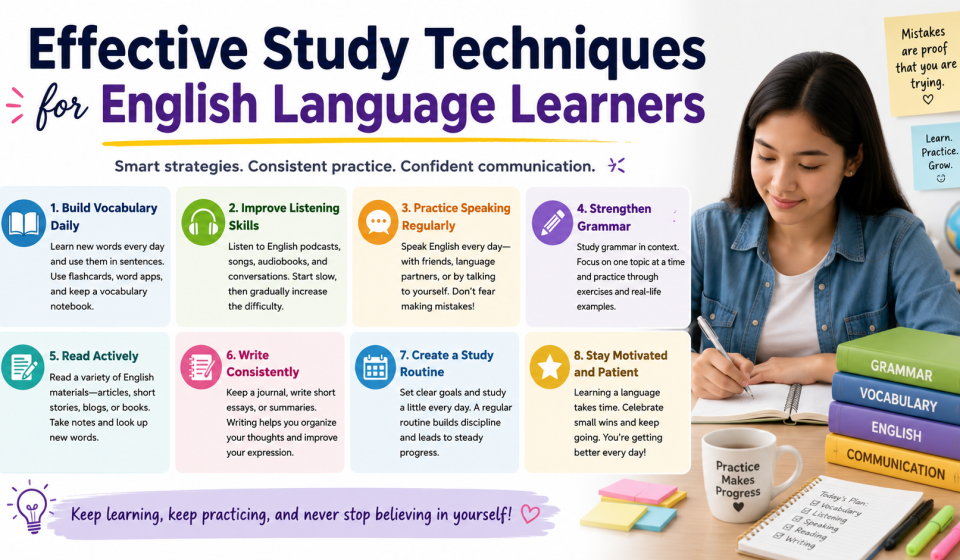

Discover effective study techniques for English language learners. Learn practical strategies to improve vocabulary, grammar, speaking, listening, reading, and writing skills for faster language mastery.
Learning English has become more important than ever in today’s interconnected world. Whether you are a student preparing for higher education, a professional aiming for better career opportunities, or someone who wants to communicate confidently with people from different countries, strong English skills can open many doors.
However, learning a new language is not always easy. Many English language learners struggle with vocabulary, grammar, pronunciation, and confidence while speaking. The good news is that success does not depend solely on talent. It depends on using effective study techniques and practicing consistently.
Imagine two students studying English. One spends hours memorizing grammar rules but rarely uses the language in real-life situations. The other practices speaking, listens to English content daily, and actively uses new vocabulary. Over time, the second student is likely to become more fluent and confident. This example shows why using the right study methods matters.
In this article, we will explore practical and effective study techniques that can help English language learners improve their skills faster and make learning more enjoyable.
1. Set Clear and Achievable Goals
One of the biggest mistakes language learners make is studying without a clear purpose. Setting specific goals helps maintain focus and motivation.
For example, instead of saying, “I want to improve my English,” set goals such as:
- Learn 10 new words every day.
- Read one English article daily.
- Watch an English video for 20 minutes each day.
- Speak English for 15 minutes with a friend.
Breaking large goals into smaller tasks makes learning feel manageable and helps track progress effectively.
2. Build Vocabulary Every Day
Vocabulary is the foundation of language learning. The more words you know, the easier it becomes to understand and communicate.
Some effective ways to improve vocabulary include:
Keep a Vocabulary Notebook
Write down new words along with their meanings, pronunciation, and example sentences.
Use Flashcards
Flashcards help learners memorize words quickly. Digital apps can make this process even easier.
Learn Words in Context
Instead of memorizing isolated words, learn them through sentences and real-life situations. This helps improve understanding and retention.
For instance, if you learn the word “confident,” create a sentence like: “I feel confident when I speak English regularly.”
3. Practice Active Reading
Reading is one of the most effective ways to improve vocabulary, grammar, and comprehension skills.
Start with materials that match your current level, such as:
- News articles
- Blogs
- Children’s books
- Short stories
- Educational websites
While reading, highlight unfamiliar words and try to understand them from context before checking a dictionary.
Active reading means engaging with the content rather than simply reading passively. Ask questions, summarize paragraphs, and identify key ideas to improve understanding.
4. Improve Listening Skills Through Daily Exposure
Many learners understand written English better than spoken English. This is because spoken language often includes different accents, faster speech, and informal expressions.
To improve listening skills:
- Listen to English podcasts.
- Watch English movies and TV shows.
- Follow educational YouTube channels.
- Listen to English songs.
Initially, using subtitles can be helpful. As your listening skills improve, gradually reduce dependence on subtitles.
For example, many learners find that watching a favorite English series regularly helps them understand natural conversations more effectively.
5. Practice Speaking Without Fear
Speaking is often the most challenging part of learning English because many learners worry about making mistakes.
However, mistakes are an essential part of learning. Every fluent speaker once made errors while learning.
Ways to improve speaking include:
Talk to Yourself
Describe your daily activities in English.
Join Language Exchange Groups
Practice conversations with other learners or native speakers.
Record Your Voice
Listening to your recordings can help identify pronunciation issues.
Think in English
Try forming thoughts directly in English rather than translating from your native language.
The more frequently you speak, the more confident you become.
6. Strengthen Grammar Through Practice
Grammar provides the structure needed for effective communication. However, focusing only on grammar rules can become boring and ineffective.
Instead:
- Learn one grammar concept at a time.
- Practice through writing exercises.
- Use grammar in conversations.
- Read examples of correct sentence structures.
For example, after learning the present perfect tense, write five sentences using it in your daily life.
Practical application helps grammar become natural rather than something you constantly think about.
7. Develop Strong Writing Skills
Writing improves vocabulary, grammar, and overall language accuracy.
Simple writing activities include:
- Maintaining a daily journal.
- Writing short essays.
- Creating social media posts in English.
- Summarizing articles or videos.
A student preparing for exams can benefit greatly from writing short paragraphs daily because it helps organize thoughts and improves sentence construction.
Try reviewing your writing and correcting mistakes regularly. This process accelerates learning significantly.
8. Use Technology to Support Learning
Technology offers numerous resources for English learners.
Useful tools include:
- Language learning apps
- Online dictionaries
- Grammar checkers
- Vocabulary-building applications
- Educational websites
Interactive tools make studying more engaging and allow learners to practice anytime and anywhere.
For example, spending just 15 minutes daily on a language-learning app can reinforce vocabulary and grammar concepts effectively.
9. Create an English Learning Environment
One of the best ways to learn English faster is to surround yourself with the language.
You can:
- Change your phone language to English.
- Follow English-speaking social media accounts.
- Read English news daily.
- Listen to English content during travel.
- Watch English videos regularly.
This constant exposure helps your brain become familiar with common words, phrases, and sentence patterns.
Over time, understanding English becomes more natural and less effortful.
10. Review and Revise Regularly
Many learners forget information simply because they do not review it.
Regular revision strengthens memory and improves long-term retention.
A simple revision strategy includes:
- Reviewing vocabulary weekly.
- Revisiting grammar notes.
- Practicing old exercises.
- Re-reading previous writing samples.
For example, reviewing words learned during the week every Sunday can dramatically improve vocabulary retention.
Consistency is more important than studying for long hours occasionally.
11. Learn Through Real-Life Situations
Language learning becomes more meaningful when connected to everyday experiences.
Practical activities include:
- Ordering food in English.
- Writing emails in English.
- Reading product instructions.
- Watching interviews.
- Participating in online discussions.
Using English in real situations helps learners understand how the language works beyond textbooks.
This practical approach also boosts confidence and communication skills.
12. Stay Motivated and Be Patient
Language learning is a long-term process. Progress may sometimes feel slow, but every small improvement matters.
Celebrate achievements such as:
- Learning new vocabulary.
- Completing a book.
- Understanding a movie without subtitles.
- Holding a conversation in English.
Maintaining a positive mindset is essential. Instead of focusing on mistakes, focus on continuous improvement.
Remember that even fluent speakers continue learning new words and expressions throughout their lives.
Sources
https://l1nq.com/lo063wr
https://l1nq.com/rf3fkkf
Conclusion
Learning English is a journey that requires patience, consistency, and the right study techniques. While there is no single method that works for everyone, combining different approaches such as active reading, regular listening practice, vocabulary building, speaking exercises, and goal setting can significantly improve language skills. The key is to make English a part of your daily routine rather than treating it as just another subject to study.
English language learners who stay motivated, practice regularly, and embrace mistakes as learning opportunities often achieve better results. Whether you are a student preparing for exams, a professional looking to improve communication skills, or someone learning English for personal growth, these study techniques can help you build confidence and fluency over time. Remember, small daily efforts can lead to remarkable progress in the long run.
Frequently Asked Questions (FAQs)
1. What is the most effective way to learn English quickly?
The most effective method is consistent daily practice involving reading, listening, speaking, and writing activities.
2. How much time should I spend studying English every day?
Studying for 30 to 60 minutes daily is often more effective than studying for several hours occasionally.
3. How can I improve my English vocabulary?
Read regularly, maintain a vocabulary notebook, use flashcards, and practice using new words in conversations.
4. Is watching English movies useful for learning?
Yes. Movies improve listening skills, pronunciation, and understanding of everyday expressions and conversations.
5. How can I become more confident while speaking English?
Practice speaking regularly, join conversation groups, record your voice, and remember that making mistakes is a normal part of learning.