How to Prepare for College Interviews: The Ultimate Guide to Impress Admissions Committees and Secure Your Dream College

A strong interview performance can significantly enhance a student’s chances of securing admission, especially in highly competitive colleges.
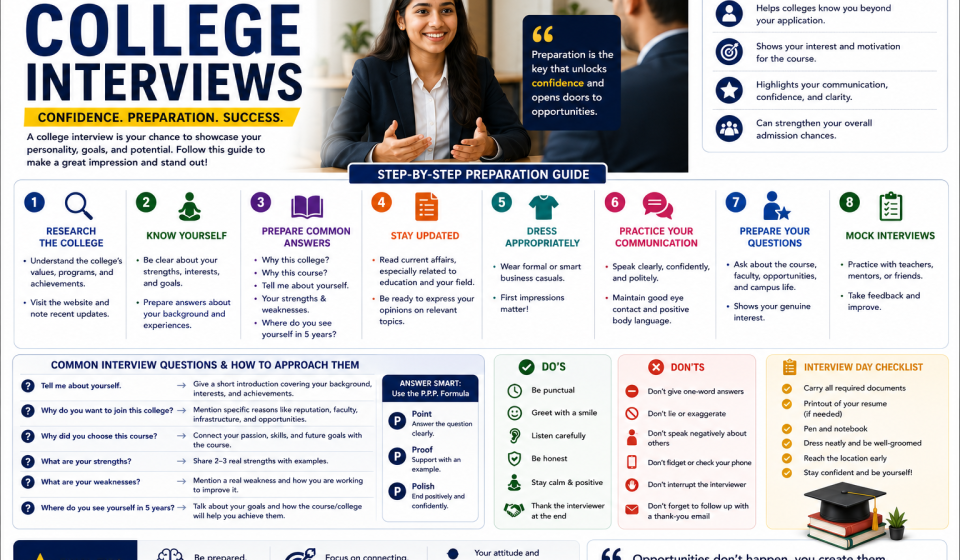
College interviews are an important part of the admission process for many universities and professional institutions. While academic scores, entrance exam results, extracurricular activities, and application essays play a significant role in admissions, interviews provide colleges with an opportunity to understand the applicant beyond grades and achievements. Through interviews, admission officers assess a student’s personality, communication skills, confidence, motivation, goals, and overall suitability for the institution. Many students feel nervous when facing college interviews because they are unsure about what questions may be asked or how they should present themselves. However, successful interview preparation is not about memorizing answers. It involves understanding yourself, researching the institution, improving communication skills, practicing common questions, and developing confidence. With proper preparation and the right mindset, students can turn college interviews into an opportunity to showcase their strengths and make a positive impression. This comprehensive guide explains everything students need to know about preparing for college interviews and maximizing their admission chances.
Why College Interviews Matter
College interviews help admission officers evaluate qualities that may not be visible in academic records.
Interviewers often assess:
- Communication skills
- Confidence
- Critical thinking
- Leadership potential
- Academic interests
- Career aspirations
- Personality traits
- Motivation for joining the institution
A strong interview can strengthen an application and distinguish a candidate from other applicants.
Types of College Interviews
Understanding the interview format helps students prepare effectively.
Traditional One-on-One Interview
The student interacts directly with an admission officer or faculty member.
Panel Interview
Multiple interviewers assess the candidate simultaneously.
Alumni Interview
Former students evaluate applicants on behalf of the institution.
Virtual Interview
Conducted through video conferencing platforms.
Group Interview
Several candidates participate together in discussions and activities.
Each format requires slightly different preparation strategies.
Research the College Thoroughly
One of the most important preparation steps is understanding the institution.
Research:
- College history
- Academic programs
- Faculty achievements
- Campus facilities
- Student activities
- Placement records
- Values and mission
Interviewers often ask why you want to join their institution, and detailed knowledge demonstrates genuine interest.
Understand Your Application
Review every part of your application before the interview.
This includes:
- Academic records
- Personal statement
- Essays
- Achievements
- Extracurricular activities
Interview questions frequently relate to information provided in your application.
Know Your Strengths and Weaknesses
Students should develop a clear understanding of their abilities and areas for improvement.
Questions may include:
- What are your greatest strengths?
- What is your biggest weakness?
Provide honest and balanced answers while emphasizing personal growth and self-awareness.
Prepare Your Personal Introduction
A common opening question is:
“Tell us about yourself.”
A strong response should include:
- Educational background
- Interests
- Achievements
- Career goals
Keep the introduction concise, engaging, and relevant.
Be Clear About Your Career Goals
Admission officers often want to understand your future plans.
Questions may include:
- What career do you want to pursue?
- Why have you chosen this field?
Explain your motivations and demonstrate thoughtful planning.
Understand Why You Chose Your Course
Students should be prepared to explain:
- Why they selected a particular subject
- How the course aligns with their interests
- How it supports their career objectives
A clear rationale reflects maturity and commitment.
Practice Common College Interview Questions
Some frequently asked questions include:
Personal Questions
- Tell me about yourself.
- What are your hobbies?
- What motivates you?
Academic Questions
- What is your favorite subject?
- Which academic achievement are you most proud of?
College-Specific Questions
- Why do you want to attend this college?
- Why should we select you?
Future-Oriented Questions
- Where do you see yourself in ten years?
- What are your career aspirations?
Practicing responses improves confidence and clarity.
Develop Strong Communication Skills
Effective communication is essential during interviews.
Focus on:
- Clear speech
- Proper pronunciation
- Logical responses
- Active listening
Avoid speaking too quickly or using excessive filler words.
Improve Body Language
Non-verbal communication significantly influences first impressions.
Positive body language includes:
- Maintaining eye contact
- Smiling naturally
- Sitting upright
- Using appropriate gestures
Avoid:
- Slouching
- Crossing arms
- Excessive fidgeting
Confident body language reflects professionalism and self-assurance.
Conduct Mock Interviews
Mock interviews help students gain practical experience.
Benefits include:
- Reduced anxiety
- Improved responses
- Constructive feedback
- Increased confidence
Teachers, mentors, friends, or family members can assist with mock interview practice.
Learn to Handle Difficult Questions
Interviewers sometimes ask challenging questions to assess critical thinking.
Examples include:
- Describe a failure and what you learned from it.
- Tell us about a challenge you faced.
Focus on lessons learned, resilience, and personal growth rather than negative experiences alone.
Stay Updated on Current Affairs
Many colleges appreciate students who are aware of current events.
Stay informed about:
- National developments
- Global issues
- Technological advancements
- Educational trends
Current affairs knowledge demonstrates intellectual curiosity.
Highlight Extracurricular Activities
Participation outside academics can strengthen your profile.
Discuss:
- Sports achievements
- Leadership roles
- Volunteer work
- Competitions
- Clubs and societies
Extracurricular involvement showcases well-rounded development.
Demonstrate Leadership Qualities
Colleges often value leadership potential.
Examples may include:
- Leading school projects
- Organizing events
- Team captain roles
- Community initiatives
Provide specific examples of leadership experiences.
Show Genuine Enthusiasm
Passion and enthusiasm can leave a lasting impression.
Express excitement about:
- Learning opportunities
- Academic interests
- Campus experiences
- Career aspirations
Authenticity is often more effective than rehearsed responses.
Dress Professionally
Appropriate attire creates a positive first impression.
Recommended attire:
For Boys
- Formal shirt
- Trousers
- Polished shoes
For Girls
- Formal attire
- Simple and professional appearance
Dress neatly and comfortably.
Arrive Early
Punctuality demonstrates responsibility and professionalism.
For in-person interviews:
- Arrive at least 15–20 minutes early.
For online interviews:
- Log in early
- Test equipment
- Check internet connectivity
Preparation reduces unnecessary stress.
Tips for Virtual College Interviews
Virtual interviews require additional preparation.
Ensure:
- Stable internet connection
- Quiet environment
- Professional background
- Functioning camera and microphone
Maintain eye contact by looking at the camera rather than the screen.
Ask Thoughtful Questions
Many interviewers invite students to ask questions.
Good examples include:
- What opportunities are available for undergraduate research?
- How does the college support internships?
- What student organizations are most active on campus?
Thoughtful questions demonstrate genuine interest.
Manage Interview Anxiety
Feeling nervous is completely normal.
Strategies include:
- Deep breathing
- Positive visualization
- Thorough preparation
- Mock practice sessions
Confidence grows through preparation and experience.
Common Mistakes to Avoid
Students should avoid:
- Memorized responses
- Lack of preparation
- Negative comments about others
- Arriving late
- Poor body language
- Interrupting interviewers
- Overconfidence
Professionalism and authenticity are key.
What Interviewers Look For
Admission committees often evaluate:
- Academic readiness
- Communication skills
- Intellectual curiosity
- Leadership potential
- Character
- Motivation
- Cultural fit
Students should aim to present a balanced and authentic profile.
Follow Up After the Interview
If appropriate, students may send a brief thank-you message expressing appreciation for the opportunity.
A polite follow-up reinforces professionalism and gratitude.
Benefits of Strong Interview Performance
A successful interview can:
- Strengthen your application
- Improve admission chances
- Create a memorable impression
- Demonstrate maturity
- Showcase personal qualities
Interview success often results from preparation rather than natural talent alone.
Source Links
https://www.collegeboard.org
https://www.commonapp.org
https://www.princetonreview.com
https://www.shiksha.com
https://www.indeed.com
https://www.coursera.org
Conclusion
College interviews provide students with a valuable opportunity to showcase their personality, ambitions, communication skills, and readiness for higher education. While interviews may seem intimidating, thorough preparation can significantly improve performance and confidence. Students should research the institution, understand their application, practice common questions, develop strong communication skills, and present themselves professionally. Authenticity, enthusiasm, self-awareness, and preparation are often the qualities that leave the strongest impressions on admission committees. By following a structured preparation strategy, students can confidently approach interviews and increase their chances of securing admission to their dream college.
FAQ
1- How important are college interviews in the admission process?
College interviews help institutions evaluate personal qualities, communication skills, and motivation, making them an important component of many admission decisions.
2- What is the most common college interview question?
One of the most common questions is “Tell us about yourself.”
3- How should I answer questions about my weaknesses?
Be honest about an area for improvement and explain the steps you are taking to overcome it.
4- What should I wear to a college interview?
Students should wear clean, professional, and appropriate formal or semi-formal attire.
5- How can I reduce nervousness before an interview?
Practice mock interviews, prepare thoroughly, use relaxation techniques, and maintain a positive mindset.
6- Should I memorize answers before the interview?
No. It is better to understand key points and respond naturally rather than memorizing scripts.
7- Is it okay to ask questions during the interview?
Yes. Asking thoughtful questions demonstrates genuine interest in the institution.
8- What qualities do interviewers usually look for?
Interviewers typically assess communication skills, confidence, academic interest, leadership potential, motivation, and overall personality.