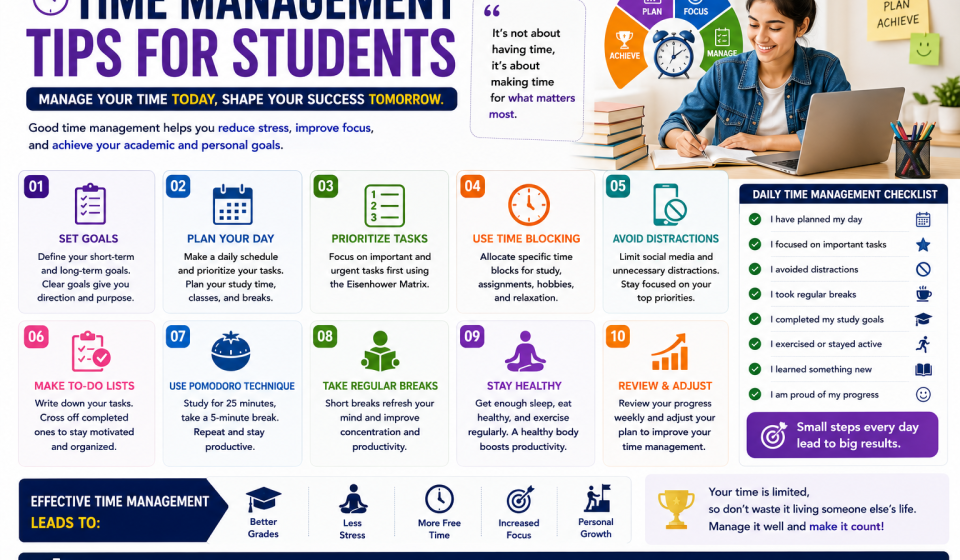
Time Management Tips for Students: The Ultimate Guide to Better Productivity, Academic Success, and Stress-Free Learning

Learning how to manage time efficiently enables students to stay organized, improve productivity, and achieve their goals with greater
Time management is one of the most important skills every student should develop to achieve academic success and maintain a balanced lifestyle. In today’s fast-paced educational environment, students often juggle multiple responsibilities, including attending classes, completing assignments, preparing for examinations, participating in extracurricular activities, managing social commitments, and sometimes even working part-time jobs. Without effective time management, these responsibilities can quickly become overwhelming, leading to stress, missed deadlines, poor academic performance, and burnout.confidence.Successful students understand that time is a valuable resource that cannot be replaced. Effective time management is not about working harder; it is about working smarter by prioritizing tasks, setting realistic goals, eliminating distractions, and maintaining consistency. Developing strong time management habits during student life not only improves academic outcomes but also prepares individuals for future professional and personal responsibilities. This comprehensive guide explores practical time management tips for students, common challenges, productivity techniques, and strategies to maximize efficiency while maintaining a healthy work-life balance.
What is Time Management?
Time management refers to the process of planning, organizing, and controlling how time is spent on various activities. It involves making conscious decisions about task prioritization, scheduling, and productivity.
Effective time management helps students:
Complete assignments on time
Reduce stress levels
Improve concentration
Increase productivity
Maintain balance between academics and personal life
Achieve long-term goals
Students who manage time effectively often perform better academically and experience greater satisfaction.
Why Time Management is Important for Students
Time management directly impacts academic performance and personal well-being.
Benefits include:
Better grades
Reduced procrastination
Lower stress levels
Improved focus
Greater confidence
Enhanced productivity
Balanced lifestyle
Stronger self-discipline
Developing this skill early creates long-term advantages in education and career development.
Common Time Management Challenges Faced by Students
Many students struggle with time management due to various factors.
Common challenges include:
Procrastination
Social media distractions
Poor planning
Lack of motivation
Overcommitment
Unclear goals
Multitasking
Unexpected interruptions
Recognizing these challenges is the first step toward overcoming them.
Set Clear Goals
Goal setting provides direction and motivation.
Students should establish:
Short-term goals
Weekly objectives
Semester targets
Long-term career goals
Examples:
Improving grades
Completing assignments early
Learning new skills
Preparing for competitive exams
Clearly defined goals help students focus their efforts effectively.
Prioritize Tasks Using the Importance Matrix
Not all tasks are equally important.
Students can categorize tasks into four groups:
Urgent and important
Important but not urgent
Urgent but less important
Neither urgent nor important
Focusing on high-priority tasks improves productivity and prevents last-minute stress.
Create a Daily Schedule
A structured daily schedule helps students stay organized.
Include:
Class timings
Study sessions
Assignment deadlines
Break periods
Exercise
Personal activities
A realistic schedule improves consistency and efficiency.
Use a Planner or Calendar
Digital and physical planners help students track responsibilities.
Benefits include:
Better organization
Deadline reminders
Reduced forgetfulness
Improved planning
Popular tools include:
Google Calendar
Microsoft Outlook
Notion
Trello
Traditional planners
Consistent scheduling improves time management significantly.
Avoid Procrastination
Procrastination is one of the biggest obstacles to productivity.
Common causes:
Fear of failure
Lack of motivation
Perfectionism
Poor planning
Overwhelm
Strategies to Overcome Procrastination
Start tasks immediately.
Break large projects into smaller steps.
Set deadlines.
Eliminate distractions.
Reward progress.
Taking small actions consistently helps build momentum.
Break Tasks into Smaller Steps
Large assignments often feel overwhelming.
Breaking tasks into manageable parts makes them easier to complete.
For example:
Research
Outline
First draft
Editing
Final submission
This approach improves focus and reduces anxiety.
Follow the Pomodoro Technique
The Pomodoro Technique is a popular productivity method.
Process:
Study for 25 minutes.
Take a 5-minute break.
Repeat four cycles.
Take a longer break.
Benefits:
Improved concentration
Reduced mental fatigue
Better productivity
Increased motivation
Many students find this method highly effective.
Eliminate Distractions
Distractions significantly reduce productivity.
Common distractions include:
Social media
Mobile phones
Television
Gaming
Unnecessary conversations
Ways to Minimize Distractions
Turn off notifications.
Use website blockers.
Create a dedicated study space.
Maintain a clean workspace.
Focus on one task at a time.
A distraction-free environment supports deeper concentration.
Learn to Say No
Students often overcommit to activities and responsibilities.
It is important to:
Protect study time
Avoid excessive commitments
Focus on priorities
Maintain balance
Learning to decline unnecessary obligations preserves valuable time.
Develop Strong Study Habits
Consistent study routines improve efficiency.
Effective habits include:
Daily revision
Active learning
Note-taking
Practice testing
Regular review sessions
Strong study habits reduce last-minute cramming.
Manage Academic Work Effectively
Students should:
Start assignments early.
Review syllabus requirements.
Monitor deadlines.
Seek clarification when needed.
Organized academic planning prevents unnecessary stress.
Balance Academics and Extracurricular Activities
Extracurricular involvement contributes to personal development but should not interfere with academic responsibilities.
Strategies include:
Setting priorities
Maintaining schedules
Allocating dedicated study time
Avoiding overscheduling
Balance promotes overall success and well-being.
Use Technology Wisely
Technology can either enhance or hinder productivity.
Helpful tools include:
Task management apps
Calendar applications
Online study platforms
Focus timers
Note-taking software
Students should use technology strategically to support learning.
Practice Self-Discipline
Self-discipline is essential for effective time management.
Ways to strengthen discipline:
Follow routines consistently.
Avoid unnecessary distractions.
Maintain accountability.
Set realistic expectations.
Discipline helps students stay committed to their goals.
Maintain a Healthy Lifestyle
Physical and mental health influence productivity.
Important habits include:
Regular exercise
Healthy eating
Adequate sleep
Hydration
Stress management
Healthy students are often more focused and productive.
Get Enough Sleep
Sleep plays a critical role in learning and memory.
Benefits of sufficient sleep:
Improved concentration
Better retention
Enhanced mood
Higher productivity
Students should aim for consistent sleep schedules whenever possible.
Learn Stress Management Techniques
Stress can negatively affect productivity.
Effective stress management methods include:
Meditation
Deep breathing
Exercise
Journaling
Time management
Relaxation techniques
Managing stress improves overall performance.
Avoid Multitasking
Many students believe multitasking improves efficiency.
In reality, multitasking often:
Reduces focus
Increases mistakes
Lowers productivity
Single-tasking allows for better concentration and quality work.
Review and Reflect Regularly
Students should evaluate their progress periodically.
Questions to consider:
What worked well?
What caused delays?
Which habits improved productivity?
What can be improved?
Regular reflection encourages continuous improvement.
Time Management During Exam Preparation
Examinations require strategic planning.
Effective exam strategies include:
Creating study schedules
Prioritizing difficult subjects
Taking practice tests
Reviewing regularly
Maintaining healthy routines
Consistent preparation reduces exam-related stress.
Time Management for Online Learning
Online education presents unique challenges.
Tips include:
Creating a dedicated study space
Following structured schedules
Avoiding digital distractions
Participating actively
Tracking deadlines
Strong self-management skills are especially important in virtual learning environments.
Benefits of Effective Time Management
Students who manage time effectively often experience:
Higher academic achievement
Greater confidence
Reduced anxiety
Better work-life balance
Improved decision-making
Enhanced productivity
Long-term success
These benefits extend beyond education into professional and personal life.
Building Lifelong Time Management Skills
Time management is not only important during college or school years. It remains a valuable skill throughout life. Professionals, entrepreneurs, managers, and leaders all rely on effective time management to achieve goals and maintain productivity. Students who develop strong organizational habits today build a foundation for future success in careers, relationships, and personal growth.
Source
https://www.coursera.org/articles/time-management
https://www.indeed.com/career-advice
https://www.verywellmind.com
Conclusion
Time management is one of the most valuable skills students can develop for academic achievement, personal growth, and future career success. By setting clear goals, prioritizing responsibilities, creating schedules, eliminating distractions, and maintaining healthy habits, students can significantly improve productivity while reducing stress. Effective time management allows individuals to make the most of their available time, achieve better results, and maintain a balanced lifestyle. With consistent practice and self-discipline, students can develop habits that support success not only during their educational journey but throughout their lives.
FAQ
1. Why is time management important for students?
Time management helps students stay organized, meet deadlines, reduce stress, improve productivity, and achieve better academic results.
2. What is the best time management technique for students?
The Pomodoro Technique, goal setting, task prioritization, and daily scheduling are among the most effective methods.
3. How can students avoid procrastination?
Students can overcome procrastination by breaking tasks into smaller steps, setting deadlines, eliminating distractions, and taking immediate action.
4. Does time management improve academic performance?
Yes, effective time management helps students study consistently, complete assignments on time, and perform better in examinations.
5. How can students balance studies and extracurricular activities?
Creating schedules, setting priorities, and allocating dedicated time for both academics and activities helps maintain balance.
6. What are common time management mistakes?
Common mistakes include procrastination, poor planning, multitasking, overcommitting, and failing to prioritize tasks.
7. Can technology help with time management?
Yes, digital calendars, task management apps, focus timers, and productivity tools can improve organization and efficiency.
8. How does sleep affect time management?
Adequate sleep improves concentration, memory, decision-making, and productivity, making time management more effective.