How to Choose the Right University: The Complete Guide for Students to Make the Best Academic and Career Decision

A well-informed university decision can provide access to excellent academic resources, industry exposure, internships, research opportunities, and a supportive learning environment.
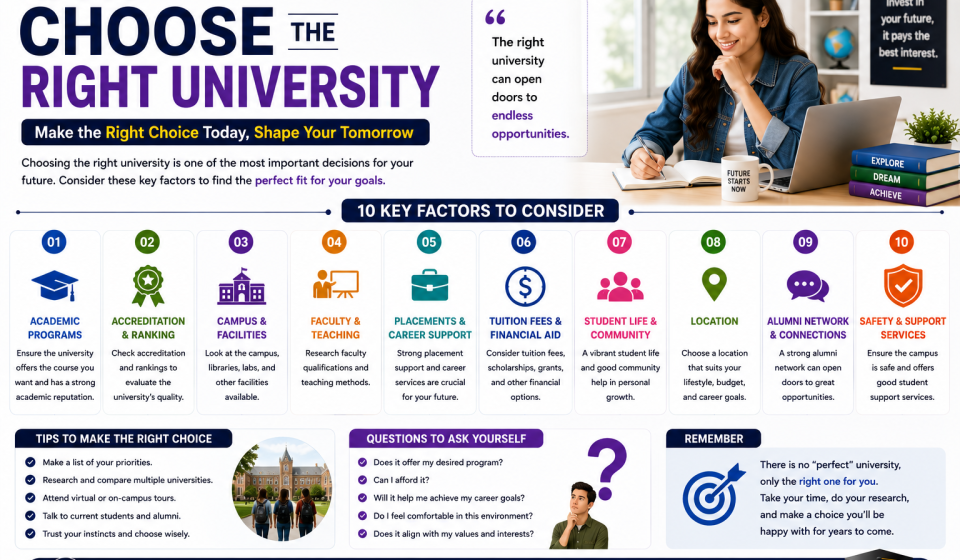
Choosing the right university is one of the most important decisions a student will make in their academic journey. The university you select can influence your education quality, career opportunities, personal development, professional network, and overall life experiences. With thousands of universities offering a wide variety of programs, facilities, and learning environments, making the right choice can often feel overwhelming. Many students focus only on rankings or popularity, but selecting a university requires careful consideration of multiple factors that align with individual goals, interests, financial situations, and future career aspirations.On the other hand, choosing a university without proper research may lead to dissatisfaction, unnecessary expenses, and limited career growth. Whether students are planning to pursue higher education in their home country or abroad, understanding the key factors involved in university selection is essential. This comprehensive guide explains how to choose the right university and highlights the most important considerations students should evaluate before making a final decision.
Why Choosing the Right University Matters
A university is much more than a place where students earn a degree. It serves as a foundation for personal growth, professional development, and lifelong learning.
Benefits of selecting the right university include:
Quality education
Better career opportunities
Industry exposure
Strong professional networks
Personal development
Research opportunities
Higher employability
Global recognition
Making an informed decision can significantly impact future success.
Understand Your Career Goals
Before researching universities, students should clearly identify their academic and career objectives.
Important questions include:
What career do I want to pursue?
Which subjects interest me most?
Do I want to work in a specific industry?
Am I interested in research or professional practice?
Would I like to study abroad?
Understanding career goals helps narrow university options effectively.
Identify Your Preferred Course
Choosing the right course is often more important than choosing a famous university.
Students should evaluate:
Course curriculum
Specializations
Industry relevance
Practical learning opportunities
Future career demand
Selecting a course aligned with personal interests and professional ambitions increases long-term satisfaction.
Check University Accreditation
Accreditation ensures that a university meets established academic standards.
Benefits of accredited institutions include:
Recognized degrees
Employer acceptance
Eligibility for higher education
Improved academic quality
Students should always verify accreditation before applying.
Evaluate Academic Reputation
Academic reputation reflects the quality of teaching, research, and educational outcomes.
Factors to consider:
Faculty expertise
Research output
Industry partnerships
Graduate success rates
Academic achievements
A strong reputation often enhances employment opportunities.
Consider University Rankings Carefully
Rankings can provide useful information but should not be the sole deciding factor.
Popular Ranking Systems:
QS World University Rankings
Times Higher Education Rankings
Academic Ranking of World Universities
Students should evaluate rankings alongside other important factors.
Examine Faculty Quality
Faculty members significantly influence learning experiences.
Look for:
Educational qualifications
Industry experience
Research contributions
Teaching effectiveness
Mentorship opportunities
Experienced faculty can provide valuable academic and professional guidance.
Analyze Course Curriculum
The curriculum determines what students will learn throughout their studies.
Important considerations include:
Updated course content
Industry relevance
Practical applications
Research opportunities
Internships
Capstone projects
A modern curriculum helps students remain competitive in the job market.
Research Internship Opportunities
Internships provide practical experience and professional exposure.
Benefits include:
Industry knowledge
Skill development
Networking opportunities
Employment prospects
Universities with strong internship programs often improve graduate outcomes.
Evaluate Placement and Career Services
Career support plays a vital role in student success.
Look for:
Placement records
Employer partnerships
Career counseling
Resume workshops
Interview preparation
Job fairs
Strong placement services can improve employment opportunities significantly.
Consider Tuition Fees and Costs
Education costs vary considerably among institutions.
Expenses may include:
Tuition fees
Accommodation
Books
Transportation
Health insurance
Personal expenses
Students should evaluate affordability carefully.
Explore Scholarship Opportunities
Scholarships can reduce financial burdens substantially.
Common Scholarship Types:
Merit-based scholarships
Need-based scholarships
Sports scholarships
Research scholarships
International student scholarships
Financial aid opportunities should be considered during university selection.
Location Matters
University location can affect lifestyle, expenses, and career opportunities.
Factors include:
Climate
Cost of living
Safety
Transportation
Cultural environment
Employment opportunities
Students should choose environments where they can thrive academically and personally.
Campus Facilities and Infrastructure
Modern facilities enhance the learning experience.
Important facilities include:
Libraries
Laboratories
Computer centers
Research facilities
Sports complexes
Student activity centers
Quality infrastructure supports academic and extracurricular development.
Student Life and Campus Culture
University experiences extend beyond academics.
Consider:
Student organizations
Clubs and societies
Cultural activities
Sports programs
Volunteer opportunities
Diversity and inclusion
A vibrant campus environment contributes to personal growth.
Evaluate Research Opportunities
Research opportunities are particularly important for students interested in advanced studies.
Benefits include:
Critical thinking development
Innovation experience
Academic publications
Graduate school preparation
Professional networking
Research-focused universities often provide valuable learning experiences.
Industry Connections and Partnerships
Strong industry relationships benefit students significantly.
Advantages include:
Internships
Guest lectures
Industry projects
Recruitment opportunities
Professional networking
Universities with extensive industry connections often improve career outcomes.
Check Alumni Success
Alumni achievements provide insights into university effectiveness.
Research:
Career accomplishments
Industry positions
Entrepreneurial success
Graduate school admissions
Strong alumni networks offer mentorship and networking opportunities.
Consider Class Size
Class size influences learning experiences.
Smaller classes often provide:
Personalized attention
Greater interaction
Improved mentorship
Enhanced engagement
Students should determine which learning environment suits them best.
International Opportunities
Global exposure can enrich education significantly.
Look for:
Student exchange programs
International partnerships
Study abroad opportunities
Global internships
Multicultural environments
International experiences develop valuable global competencies.
Assess Technology and Innovation
Modern universities increasingly integrate technology into education.
Features may include:
Online learning platforms
Virtual laboratories
Digital libraries
Technology-enabled classrooms
Innovation centers
Technology-rich environments support modern learning needs.
Understand Admission Requirements
Students should review:
Academic eligibility
Entrance examinations
Application deadlines
Required documents
Language proficiency requirements
Understanding requirements helps ensure successful applications.
Visit the Campus if Possible
Campus visits provide valuable firsthand experiences.
Observe:
Classrooms
Facilities
Student interactions
Campus atmosphere
Support services
Direct experiences often reveal insights unavailable online.
Read Student Reviews and Feedback
Current and former students can provide realistic perspectives.
Areas to explore:
Academic quality
Faculty support
Campus life
Career services
Student satisfaction
Balanced feedback supports informed decision-making.
Compare Multiple Universities
Students should create a comparison list including:
Programs offered
Costs
Rankings
Facilities
Placement records
Location
Scholarships
Comparisons simplify final decision-making.
Common Mistakes to Avoid
Choosing solely based on rankings
Ignoring financial considerations
Following friends blindly
Neglecting career goals
Overlooking accreditation
Failing to research thoroughly
Avoiding these mistakes improves university selection outcomes.
Importance of Long-Term Planning
University selection should align with long-term objectives.
Consider:
Career aspirations
Postgraduate education plans
Professional certifications
International opportunities
Industry requirements
Strategic planning supports future success.
Future Trends in Higher Education
Higher education continues to evolve with advancements in technology, online learning, artificial intelligence, interdisciplinary programs, and industry collaboration. Universities increasingly focus on practical learning, employability, innovation, and global engagement. Students who choose institutions that embrace these trends can benefit from modern educational experiences and stronger career opportunities in an increasingly competitive global economy.
Source
https://www.topuniversities.com
https://www.timeshighereducation.com
https://www.educationusa.state.gov
https://www.ucas.com
Conclusion
Choosing the right university is a major decision that can shape academic experiences, career opportunities, and personal growth for years to come. Students should carefully evaluate factors such as academic quality, course offerings, faculty expertise, placement records, costs, scholarships, campus facilities, and career support services before making a final choice. Rather than focusing solely on rankings or popularity, students should select institutions that align with their goals, interests, learning preferences, and financial circumstances. With thorough research and thoughtful planning, students can choose a university that provides a strong foundation for future success and lifelong achievement.
FAQ
1. What is the most important factor when choosing a university?
The most important factor is whether the university offers the right course and opportunities that align with your career goals.
2. Should university rankings be the main deciding factor?
No, rankings are useful but should be considered alongside academic quality, costs, placements, faculty, and personal preferences.
3. How important are placement opportunities?
Placement opportunities are extremely important because they can significantly influence career prospects after graduation.
4. Why should students check accreditation?
Accreditation ensures that the university meets recognized educational standards and that employers and institutions will accept the degree.
5. How can scholarships affect university selection?
Scholarships can reduce educational costs substantially and make high-quality institutions more affordable.
6. Is campus location important?
Yes, location affects living expenses, lifestyle, internship opportunities, climate, and overall student experience.
7. Should students visit campuses before enrolling?
Whenever possible, visiting campuses provides valuable insights into facilities, culture, and learning environments.
8. How many universities should students compare before making a decision?
Students should ideally compare multiple institutions based on academics, costs, facilities, placements, and career opportunities before choosing one.