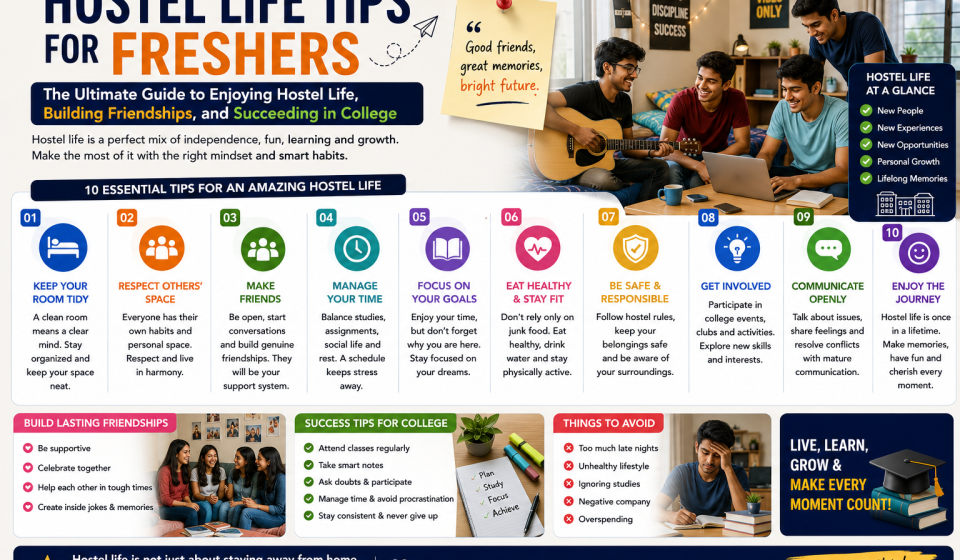
Hostel Life Tips for Freshers: The Ultimate Guide to Enjoying Hostel Life, Building Friendships, and Succeeding in College

However, hostel life also offers valuable opportunities to learn life skills, build lasting friendships, and become more self-reliant.
Starting college is an exciting milestone, and for many students, it also means moving into a hostel for the first time. Hostel life is a unique experience that combines independence, responsibility, friendship, and personal growth. For freshers, living away from home can feel both exciting and challenging. Adjusting to a new environment, sharing rooms with strangers, managing daily routines, and balancing academics with social life require patience and adaptability.The transition from home to hostel can initially be overwhelming, especially for students who have never lived independently. Homesickness, time management issues, roommate adjustments, and academic pressure are common challenges faced by freshers. Fortunately, with the right mindset and preparation, students can quickly adapt and make the most of their hostel experience. This comprehensive guide provides practical hostel life tips for freshers, helping students navigate challenges, stay organized, maintain well-being, and create unforgettable memories during their college years.
Understanding Hostel Life
Hostel life is much more than simply staying in a dormitory or shared accommodation. It is an environment where students learn to live independently while interacting with people from diverse backgrounds.
Hostel life helps students develop:
Independence
Responsibility
Communication skills
Time management
Adaptability
Problem-solving abilities
These qualities contribute significantly to personal and professional growth.
Why Hostel Life Is Important
Living in a hostel offers experiences that classroom education alone cannot provide.
Benefits include:
Learning self-discipline
Building lifelong friendships
Developing social skills
Understanding diversity
Improving decision-making abilities
Managing responsibilities independently
Many students consider hostel life one of the most memorable parts of their educational journey.
Be Open to New Experiences
Freshers often feel nervous about entering an unfamiliar environment.
Helpful approaches include:
Maintaining a positive attitude
Being willing to meet new people
Participating in hostel activities
Exploring campus facilities
Accepting cultural differences
An open mindset makes adjustment easier and more enjoyable.
Make Friends Early
Friendships play an important role in creating a comfortable hostel experience.
Ways to build friendships:
Introduce yourself to roommates
Join group activities
Participate in events
Attend orientation programs
Be approachable and respectful
Strong friendships provide emotional support and make hostel life more enjoyable.
Learn to Manage Homesickness
Homesickness is a common experience among freshers.
Symptoms may include:
Missing family
Feeling lonely
Emotional discomfort
Lack of motivation
Tips to Overcome Homesickness
Stay connected with family.
Build new friendships.
Keep yourself engaged.
Participate in activities.
Focus on personal growth.
Most students gradually adapt and become comfortable in their new environment.
Respect Your Roommates
Roommates often become an important part of hostel life.
Good roommate relationships require:
Mutual respect
Communication
Understanding
Compromise
Patience
Positive roommate interactions create a peaceful living environment.
Maintain Personal Hygiene
Good hygiene is essential in shared accommodations.
Important habits include:
Regular bathing
Keeping clothes clean
Maintaining room cleanliness
Practicing proper sanitation
Organizing personal belongings
Clean environments contribute to better health and comfort.
Keep Your Room Organized
A well-organized room improves productivity and reduces stress.
Organization tips:
Use storage solutions.
Arrange study materials properly.
Avoid clutter.
Clean regularly.
Create designated spaces for belongings.
A tidy room supports academic focus and mental well-being.
Develop a Daily Routine
A structured routine helps students balance responsibilities effectively.
Include:
Study time
Classes
Meals
Exercise
Recreation
Sleep
Consistent routines improve discipline and productivity.
Manage Your Finances Wisely
Financial management is an important life skill for hostel students.
Tips include:
Create a budget.
Track expenses.
Avoid unnecessary spending.
Save for emergencies.
Use resources responsibly.
Learning financial discipline benefits students throughout life.
Prioritize Academic Responsibilities
While hostel life offers numerous social opportunities, academics should remain a priority.
Strategies include:
Attending classes regularly
Completing assignments on time
Creating study schedules
Avoiding excessive distractions
Seeking academic support when needed
Strong academic habits contribute to long-term success.
Improve Time Management Skills
Hostel life requires balancing multiple responsibilities.
Effective time management involves:
Planning ahead
Prioritizing tasks
Avoiding procrastination
Setting goals
Using calendars and planners
These skills improve both academic and personal outcomes.
Participate in Hostel Activities
Hostels often organize:
Sports events
Cultural programs
Competitions
Festivals
Workshops
Participation helps students build confidence, friendships, and leadership skills.
Learn Basic Life Skills
Hostel life provides opportunities to develop practical skills.
Examples include:
Laundry management
Room cleaning
Cooking basics
Budgeting
Problem-solving
These skills promote independence and self-reliance.
Stay Healthy
Health should always be a priority.
Healthy habits include:
Eating nutritious meals
Drinking sufficient water
Exercising regularly
Maintaining sleep schedules
Managing stress
Good health supports academic performance and overall well-being.
Eat Balanced Meals
Nutrition directly affects energy levels and concentration.
Students should:
Eat regular meals.
Include fruits and vegetables.
Limit junk food consumption.
Maintain hydration.
Balanced diets support physical and mental health.
Get Adequate Sleep
Sleep is essential for learning and recovery.
Benefits of quality sleep include:
Improved memory
Better concentration
Enhanced mood
Increased productivity
Students should aim for consistent sleep routines.
Use Technology Responsibly
Technology offers many benefits but can also become a distraction.
Responsible use includes:
Limiting excessive screen time
Avoiding social media addiction
Using educational resources
Maintaining digital balance
Effective technology management improves productivity.
Build Communication Skills
Hostel life provides daily opportunities to improve communication.
Benefits include:
Better relationships
Conflict resolution
Networking
Leadership development
Professional readiness
Strong communication skills are valuable in every aspect of life.
Learn Conflict Resolution
Disagreements may occasionally occur among hostel residents.
Effective conflict resolution involves:
Listening carefully
Remaining calm
Communicating respectfully
Seeking compromise
Avoiding unnecessary arguments
Conflict management helps maintain positive relationships.
Respect Diversity
Hostels often bring together students from different cultures, regions, and backgrounds.
Benefits of diversity include:
Broader perspectives
Cultural understanding
Improved social skills
Personal growth
Respecting differences creates a harmonious environment.
Stay Safe and Secure
Personal safety is important in any residential environment.
Safety tips include:
Lock valuable belongings
Follow hostel rules
Avoid risky situations
Keep emergency contacts accessible
Report concerns promptly
Responsible behavior contributes to a secure environment.
Build a Support Network
A support network can include:
Friends
Roommates
Seniors
Faculty members
Counselors
Support systems help students navigate challenges effectively.
Maintain a Positive Attitude
Positive thinking improves resilience and adaptability.
Benefits include:
Reduced stress
Better relationships
Greater confidence
Improved problem-solving
Positive attitudes contribute significantly to successful hostel experiences.
Avoid Peer Pressure
Students may encounter situations involving peer pressure.
Strategies include:
Staying true to personal values
Making independent decisions
Choosing positive influences
Setting clear boundaries
Responsible choices support long-term well-being.
Take Advantage of Learning Opportunities
Hostel environments provide countless opportunities for personal development.
Students can:
Learn from peers
Develop leadership skills
Improve communication
Gain cultural awareness
Expand professional networks
Every interaction can contribute to growth.
Create a Balance Between Social Life and Studies
One of the biggest challenges for freshers is balancing social activities and academics.
Effective balance requires:
Prioritization
Discipline
Planning
Self-awareness
Students who maintain balance often enjoy both academic success and memorable experiences.
Benefits of Hostel Life Beyond College
The lessons learned in hostels often remain valuable throughout life.
Students develop:
Independence
Leadership
Adaptability
Emotional resilience
Social intelligence
These qualities contribute to future career and personal success.
Future Value of Hostel Experiences
Hostel life prepares students for real-world challenges by teaching responsibility, cooperation, adaptability, and self-management. The experiences gained through hostel living often shape confidence, maturity, and interpersonal skills that remain valuable in professional and personal life. Students who embrace hostel life positively can create lasting memories, meaningful friendships, and strong foundations for future success.
Source
https://www.indeed.com/career-advice
https://www.coursera.org
https://www.verywellmind.com
Conclusion
Hostel life is an exciting and transformative chapter in a student’s educational journey. While the transition may involve challenges such as homesickness, roommate adjustments, and increased responsibilities, it also offers tremendous opportunities for personal growth, independence, and lifelong friendships. By maintaining a positive attitude, managing time effectively, prioritizing academics, respecting others, and embracing new experiences, freshers can make the most of hostel life. The skills, memories, and relationships developed during this period often become some of the most valuable assets students carry into their future careers and personal lives.
FAQ
1. What is the biggest challenge for hostel freshers?
Homesickness is often the most common challenge faced by students living away from home for the first time.
2. How can freshers adjust quickly to hostel life?
Building friendships, maintaining routines, participating in activities, and staying positive can help students adjust more quickly.
3. How should students manage their finances in hostels?
Creating budgets, tracking expenses, and avoiding unnecessary spending are effective financial management strategies.
4. Is hostel life good for personal development?
Yes, hostel life helps students develop independence, communication skills, leadership abilities, and self-confidence.
5. How can students maintain good relationships with roommates?
Respect, communication, understanding, and cooperation are essential for healthy roommate relationships.
6. What should students do if they feel homesick?
Staying connected with family, making friends, and participating in activities can help overcome homesickness.
7. How important is time management in hostel life?
Time management is crucial for balancing academics, social activities, personal responsibilities, and self-care.
8. What are the long-term benefits of hostel life?
Hostel life develops independence, resilience, social skills, adaptability, and leadership qualities that support future success.