Complete Guide to Student Loans: Everything Students Need to Know About Education Loans, Eligibility, Repayment, and Financial Planning

Higher education is one of the most valuable investments a student can make for a successful future. However, with rising tuition fees, accommodation costs, study materials, and other educational expenses, many students and families find it challenging to finance higher education entirely through savings.
Student loans, also known as education loans, have become an important financial tool that helps students pursue their academic goals without being limited by immediate financial constraints. Whether studying within the country or abroad, education loans provide financial support that allows students to focus on learning and career development.
Student loans have enabled millions of students worldwide to access quality education, professional training, and advanced degree programs. However, borrowing money for education is a significant financial decision that requires careful planning and understanding. Students should be aware of loan eligibility requirements, interest rates, repayment structures, loan terms, and financial responsibilities before applying. This complete guide to student loans explains everything students need to know about education loans, including types of loans, application procedures, repayment strategies, benefits, challenges, and tips for responsible borrowing.
What Is a Student Loan?
A student loan is a financial product specifically designed to help students pay for educational expenses.
These expenses may include:
Tuition fees
Accommodation
Books and study materials
Laboratory fees
Travel expenses
Technology requirements
Living expenses
Student loans are generally repaid after the completion of education according to agreed terms and conditions.
Why Student Loans Are Important
Education costs continue to increase globally, making financial assistance necessary for many students.
Benefits of student loans include:
Access to higher education
Reduced immediate financial burden
Opportunity to attend preferred institutions
Funding for domestic and international studies
Support for professional courses
Career advancement opportunities
Student loans help bridge the gap between educational aspirations and financial limitations.
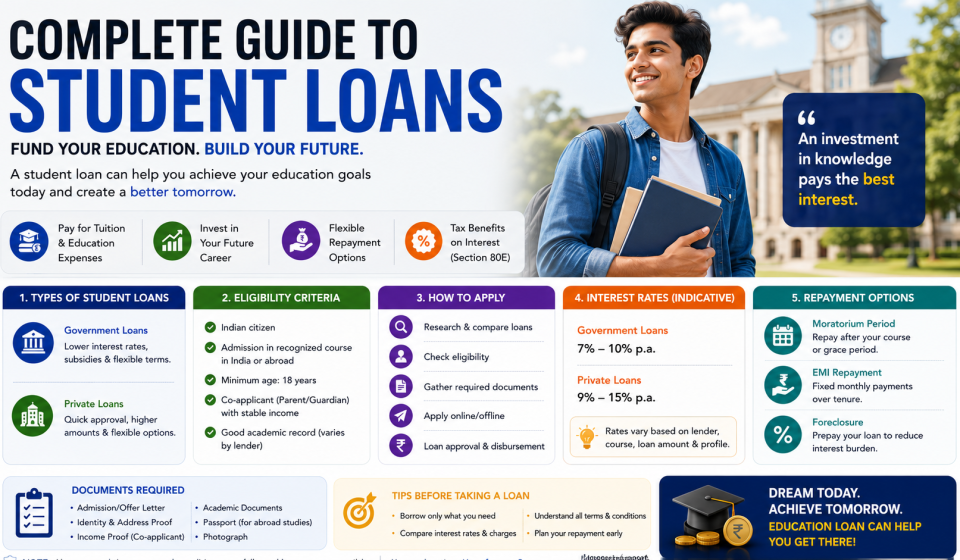
Types of Student Loans
Undergraduate Education Loans
These loans support students pursuing bachelor’s degree programs.
Popular Programs Include:
Engineering
Medicine
Business
Arts
Science
Commerce
Undergraduate loans often cover tuition and related academic expenses.
Postgraduate Education Loans
Postgraduate loans assist students pursuing advanced degrees.
Examples Include:
MBA
M.Tech
Master of Science
Master of Arts
Professional certifications
Advanced education often requires additional financial support.
Domestic Education Loans
These loans finance studies within a student’s home country.
Advantages:
Simpler application process
Lower travel-related expenses
Familiar educational systems
Many banks and financial institutions offer domestic education loans.
International Education Loans
International student loans support overseas education.
Covered Expenses Often Include:
Tuition fees
Accommodation
Travel costs
Health insurance
Living expenses
These loans typically involve larger borrowing amounts.
Eligibility Criteria for Student Loans
Eligibility requirements vary among lenders.
Common requirements include:
Confirmed admission to a recognized institution
Academic qualifications
Citizenship requirements
Age eligibility
Co-applicant or guarantor
Financial assessment
Meeting eligibility criteria improves approval chances.
Documents Required for Education Loans
Students generally need the following documents:
Admission letter
Academic transcripts
Identity proof
Address proof
Passport-sized photographs
Income documents
Bank statements
Collateral documents (if applicable)
Accurate documentation speeds up the approval process.
Understanding Loan Components
Principal Amount
The principal is the original amount borrowed.
Interest Rate
Interest represents the cost of borrowing funds.
Loan Tenure
Loan tenure refers to the repayment period.
Moratorium Period
A moratorium period allows students to postpone repayment until course completion or employment.
Understanding these components helps borrowers make informed decisions.
Secured vs Unsecured Student Loans
Secured Loans
Require collateral such as property or fixed deposits.
Benefits:
Lower interest rates
Higher loan amounts
Longer repayment periods
Unsecured Loans
Do not require collateral.
Advantages:
Faster processing
No asset requirement
Greater accessibility
Students should evaluate both options carefully.
How to Apply for a Student Loan
Step 1: Research Loan Options
Compare lenders based on:
Interest rates
Loan limits
Repayment flexibility
Processing fees
Customer service
Step 2: Gather Documents
Prepare all required documentation before applying.
Step 3: Submit Application
Applications may be completed online or through physical branches.
Step 4: Verification Process
Lenders evaluate:
Academic credentials
Admission details
Financial information
Repayment capacity
Step 5: Loan Approval and Disbursement
Approved funds are typically transferred directly to educational institutions or student accounts.
Factors Affecting Loan Approval
Academic performance
Institution reputation
Course selection
Future earning potential
Financial profile
Co-applicant strength
Strong applications improve approval prospects.
Education Loan Interest Rates
Interest rates vary depending on:
Loan type
Lender policies
Credit profile
Loan amount
Repayment terms
Students should compare multiple lenders before making decisions.
Government Education Loan Programs
Many governments support students through educational financing initiatives.
Benefits may include:
Subsidized interest rates
Flexible repayment plans
Loan guarantees
Financial assistance programs
Government schemes often make education more affordable.
Scholarships vs Student Loans
Scholarships
Do not require repayment.
Based on merit, need, sports, or achievements.
Student Loans
Require repayment with interest.
Provide larger funding amounts.
Many students combine scholarships and loans to reduce borrowing requirements.
Managing Student Loan Debt Responsibly
Responsible borrowing is essential.
Best practices include:
Borrow only necessary amounts
Understand repayment obligations
Track expenses carefully
Avoid unnecessary debt
Plan future finances
Financial discipline reduces long-term stress.
Loan Repayment Options
Standard Repayment Plans
Fixed monthly payments over a predetermined period.
Graduated Repayment Plans
Payments increase gradually over time.
Income-Based Repayment
Monthly payments depend on income levels.
Different lenders may offer various repayment structures.
Importance of Credit History
Credit history affects future borrowing opportunities.
Benefits of responsible repayment include:
Improved credit scores
Better loan eligibility
Lower interest rates
Financial credibility
Students should prioritize timely repayments.
Common Mistakes to Avoid
Borrowing more than required
Ignoring loan terms
Missing repayment deadlines
Failing to compare lenders
Overlooking interest calculations
Neglecting financial planning
Avoiding these mistakes helps maintain financial stability.
Education Loans for Studying Abroad
Students pursuing international education often require significant financial support.
Covered Expenses Include:
University fees
Accommodation
Travel costs
Visa expenses
Health insurance
Living expenses
Proper financial planning is especially important for overseas education.
Tips for Reducing Education Loan Burdens
Apply for scholarships
Choose affordable institutions
Work part-time if permitted
Create budgets
Make early repayments when possible
Avoid unnecessary expenses
Reducing borrowing needs can significantly lower financial obligations.
Benefits of Student Loans
Access to quality education
Flexible repayment options
Career advancement opportunities
Investment in future earning potential
Educational accessibility
Student loans can provide long-term returns through improved career prospects.
Challenges Associated with Student Loans
Debt obligations
Interest costs
Financial stress
Long repayment periods
Budgeting requirements
Understanding these challenges helps students prepare responsibly.
Financial Planning for Students
Good financial planning includes:
Budget creation
Expense tracking
Emergency savings
Debt management
Career planning
Financial literacy contributes to successful loan management.
Future Trends in Student Financing
Technology, digital banking, artificial intelligence, and alternative financing models are transforming student lending. Online loan applications, faster approvals, personalized repayment plans, and innovative funding solutions continue to improve access to education financing. As higher education evolves, students will benefit from more flexible and accessible financial support systems designed to meet diverse educational needs.
Source
https://www.sbi.co.in
https://www.hdfcbank.com
https://www.bankofbaroda.in
https://www.vidyalakshmi.co.in
Conclusion
Student loans play a vital role in making higher education accessible to students who may otherwise face financial barriers. By understanding loan types, eligibility requirements, application procedures, repayment options, and financial responsibilities, students can make informed borrowing decisions that support their educational goals. While education loans involve long-term commitments, they can provide valuable opportunities for academic achievement, professional development, and career growth. Responsible borrowing, careful financial planning, and disciplined repayment strategies help students maximize the benefits of education loans while minimizing financial risks.
FAQ
1. What is a student loan?
A student loan is a financial product designed to help students pay for educational expenses such as tuition, accommodation, and study materials.
2. Can student loans be used for studying abroad?
Yes, many lenders offer education loans specifically designed for international studies and related expenses.
3. Do student loans require collateral?
Some loans require collateral while others are unsecured and do not require assets as security.
4. When does student loan repayment begin?
Repayment often begins after course completion or after a specified moratorium period, depending on lender policies.
5. What documents are required for education loan applications?
Common documents include admission letters, academic records, identity proof, income documents, and financial statements.
6. Can scholarships reduce the need for student loans?
Yes, scholarships can significantly reduce borrowing requirements and overall education costs.
7. How can students manage loan repayment effectively?
Students should create budgets, make timely payments, track expenses, and avoid unnecessary debt.
8. Are education loans a good investment?
When used responsibly for quality education and career development, education loans can provide substantial long-term benefits.