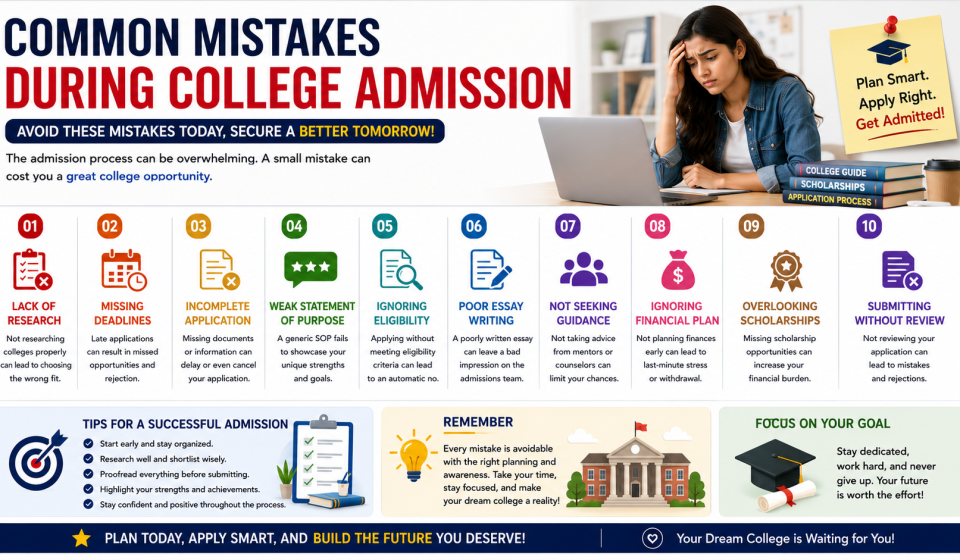
Common Mistakes During College Admission: A Complete Guide to Avoid Costly Errors and Secure Your Dream College

The excitement of applying to dream institutions often leads to rushed decisions, incomplete applications, and poor planning.
The college admission process is one of the most significant milestones in a student’s academic journey. It serves as the gateway to higher education and plays a crucial role in shaping future career opportunities. However, with increasing competition, multiple application requirements, entrance examinations, documentation procedures, and strict deadlines, many students unintentionally make mistakes that can negatively affect their admission prospects. Even highly qualified candidates may miss valuable opportunities due to avoidable errors during the application process. Understanding these common mistakes is essential for making informed decisions and maximizing the chances of securing admission to a preferred college or university. For many students and parents, college admissions can be stressful and confusing.From selecting unsuitable courses and missing deadlines to neglecting scholarship opportunities and failing to research institutions properly, numerous factors can impact admission outcomes. By recognizing and avoiding these common admission mistakes, students can navigate the process more effectively and improve their chances of academic success. This comprehensive guide explores the most frequent college admission mistakes and provides practical strategies to avoid them.
Why Understanding Admission Mistakes Is Important
Avoiding common admission errors helps students:
Increase admission chances
Reduce stress
Improve application quality
Save time and money
Access better opportunities
Make informed academic decisions
Proper planning and attention to detail significantly improve the admission experience.
Lack of Proper Research
One of the biggest mistakes students make is failing to research colleges thoroughly.
Important areas to research include:
Course offerings
Accreditation
Faculty quality
Placement records
Campus facilities
Location
Fees
Scholarship opportunities
Selecting a college without adequate research can lead to dissatisfaction later.
Choosing a College Based Only on Rankings
Many students focus exclusively on rankings while ignoring other critical factors.
Although rankings can provide useful information, students should also consider:
Course quality
Industry connections
Internship opportunities
Learning environment
Personal career goals
The best college for one student may not be the best choice for another.
Selecting the Wrong Course
Course selection is often more important than choosing a prestigious institution.
Mistakes include:
Following friends blindly
Ignoring personal interests
Choosing based solely on salary expectations
Following family pressure
Students should align course selection with their strengths, interests, and career aspirations.
Missing Application Deadlines
Deadline management is critical during admissions.
Consequences of missing deadlines include:
Application rejection
Loss of scholarship opportunities
Limited course options
Delayed admissions
Students should maintain detailed calendars and reminders for important dates.
Submitting Incomplete Applications
Incomplete applications are among the most common reasons for rejection.
Missing elements may include:
Academic transcripts
Identity documents
Photographs
Recommendation letters
Entrance examination scores
Personal statements
Students should verify application requirements carefully before submission.
Providing Incorrect Information
Errors in applications can create serious complications.
Examples include:
Incorrect personal details
Wrong academic records
Inaccurate contact information
Misreported examination scores
Students should review all information thoroughly before submitting applications.
Ignoring Eligibility Requirements
Every institution establishes specific eligibility criteria.
Students sometimes apply without checking:
Academic qualifications
Minimum grades
Entrance exam requirements
Subject prerequisites
Language proficiency standards
Failure to meet eligibility requirements can result in automatic rejection.
Neglecting Entrance Exam Preparation
Many colleges require entrance examination scores for admission.
Common mistakes include:
Late preparation
Lack of practice tests
Ignoring syllabus guidelines
Poor time management
Effective preparation improves admission prospects significantly.
Applying to Too Few Colleges
Some students focus entirely on a single institution.
Risks include:
Limited opportunities
Increased uncertainty
Potential admission delays
Applying to multiple suitable institutions creates backup options and reduces stress.
Applying to Too Many Colleges Without Strategy
While multiple applications are beneficial, excessive applications without research can waste time and money.
Students should focus on institutions that genuinely match their goals and qualifications.
Poor Personal Statements
Personal statements provide opportunities to showcase personality, achievements, and aspirations.
Common mistakes include:
Generic content
Poor structure
Lack of originality
Grammar errors
Exaggeration
Strong personal statements can strengthen applications significantly.
Ignoring Recommendation Letters
Recommendation letters often influence admission decisions.
Mistakes include:
Choosing inappropriate recommenders
Requesting letters too late
Providing insufficient information to recommenders
Students should select individuals who can genuinely highlight their strengths.
Lack of Financial Planning
Many students overlook financial considerations until after admission.
Important expenses include:
Tuition fees
Accommodation
Books
Transportation
Living costs
Proper financial planning prevents future difficulties.
Ignoring Scholarship Opportunities
Scholarships can significantly reduce educational expenses.
Common mistakes:
Failing to research scholarships
Missing scholarship deadlines
Submitting incomplete scholarship applications
Students should actively explore available financial aid options.
Not Visiting College Websites Regularly
Admission requirements and deadlines may change.
Students should frequently monitor official websites for:
Application updates
Document requirements
Exam schedules
Counseling procedures
Official sources provide the most accurate information.
Overlooking Accreditation
Accreditation ensures educational quality and degree recognition.
Consequences of ignoring accreditation may include:
Reduced employer acceptance
Limited higher education opportunities
Questionable academic standards
Students should verify accreditation status before applying.
Depending Entirely on Others
Parents, relatives, friends, and consultants can provide guidance, but students should actively participate in decision-making.
Independent research promotes informed choices and personal responsibility.
Ignoring Campus Culture
Academic quality is important, but campus environment also influences student experiences.
Students should evaluate:
Student diversity
Extracurricular opportunities
Campus facilities
Support services
Learning atmosphere
Positive environments contribute to overall satisfaction.
Weak Resume or Portfolio
Certain programs require portfolios or resumes.
Common errors include:
Incomplete information
Poor formatting
Lack of relevant achievements
Failure to highlight skills
Well-prepared documents improve application quality.
Poor Interview Preparation
Some colleges conduct admission interviews.
Mistakes include:
Lack of preparation
Insufficient knowledge about the institution
Poor communication skills
Inappropriate presentation
Practice and preparation improve interview performance.
Failing to Demonstrate Genuine Interest
Admissions officers appreciate applicants who demonstrate authentic interest.
Students should:
Research programs thoroughly
Explain motivations clearly
Highlight relevant experiences
Connect goals with chosen programs
Authenticity strengthens applications.
Ignoring Communication from Colleges
Students sometimes miss important updates due to:
Not checking emails regularly
Ignoring notifications
Providing incorrect contact information
Missing communications can affect admission outcomes.
Waiting Until the Last Minute
Last-minute applications often result in:
Errors
Incomplete documentation
Increased stress
Missed opportunities
Early preparation allows sufficient time for corrections and improvements.
Comparing Yourself Excessively with Others
Every student has unique goals, strengths, and circumstances.
Comparing admission journeys with peers can create unnecessary anxiety and poor decisions.
Students should focus on personal objectives and suitable opportunities.
Not Seeking Guidance When Needed
Admission processes can be complex.
Helpful sources include:
School counselors
Teachers
College advisors
Official university representatives
Professional guidance can clarify uncertainties and improve decision-making.
Underestimating the Importance of Extracurricular Activities
Many institutions value holistic development.
Relevant activities include:
Leadership roles
Volunteer work
Sports
Cultural participation
Community involvement
Extracurricular achievements strengthen applications.
Failing to Prepare for Counseling and Seat Allocation
In systems involving counseling procedures, mistakes may include:
Incorrect preference selection
Missing counseling sessions
Failing to submit required documents
Students should understand counseling processes thoroughly.
Importance of Strategic Admission Planning
Successful admissions require:
Research
Organization
Time management
Financial planning
Goal setting
Strategic planning reduces risks and improves outcomes.
Future Trends in College Admissions
The college admission landscape continues to evolve with digital applications, virtual interviews, holistic evaluations, artificial intelligence-driven assessments, and increased emphasis on skills and extracurricular achievements. Students who remain informed, organized, and proactive will be better positioned to navigate modern admission processes successfully and secure opportunities that align with their academic and career aspirations.
Source Links:
https://www.commonapp.org
https://www.collegeboard.org
https://www.topuniversities.com
https://www.ucas.com
Conclusion
The college admission process requires careful planning, research, and attention to detail. Many students lose valuable opportunities due to avoidable mistakes such as missing deadlines, selecting inappropriate courses, submitting incomplete applications, neglecting scholarships, and failing to research institutions thoroughly. By understanding these common admission errors and taking proactive steps to avoid them, students can improve their chances of securing admission to colleges that align with their goals and aspirations. Thoughtful preparation, informed decision-making, and consistent organization are the keys to a successful college admission journey.
FAQ
1. What is the most common college admission mistake?
Missing application deadlines is one of the most common and costly admission mistakes.
2. Why is researching colleges important?
Research helps students evaluate programs, costs, placements, facilities, accreditation, and overall suitability.
3. Should students apply to multiple colleges?
Yes, applying to multiple suitable institutions provides backup options and increases admission opportunities.
4. How important are personal statements?
Personal statements allow students to showcase achievements, goals, personality, and motivation, making them highly important.
5. Why should students check eligibility requirements carefully?
Failure to meet eligibility criteria can result in automatic rejection regardless of other qualifications.
6. Can scholarships affect college choices?
Yes, scholarships can significantly reduce educational costs and make certain institutions more affordable.
7. How can students avoid admission stress?
Early planning, organization, deadline tracking, and proper research help reduce stress throughout the process.
8. Are extracurricular activities important for admissions?
Many colleges consider extracurricular achievements as part of holistic admission evaluations.