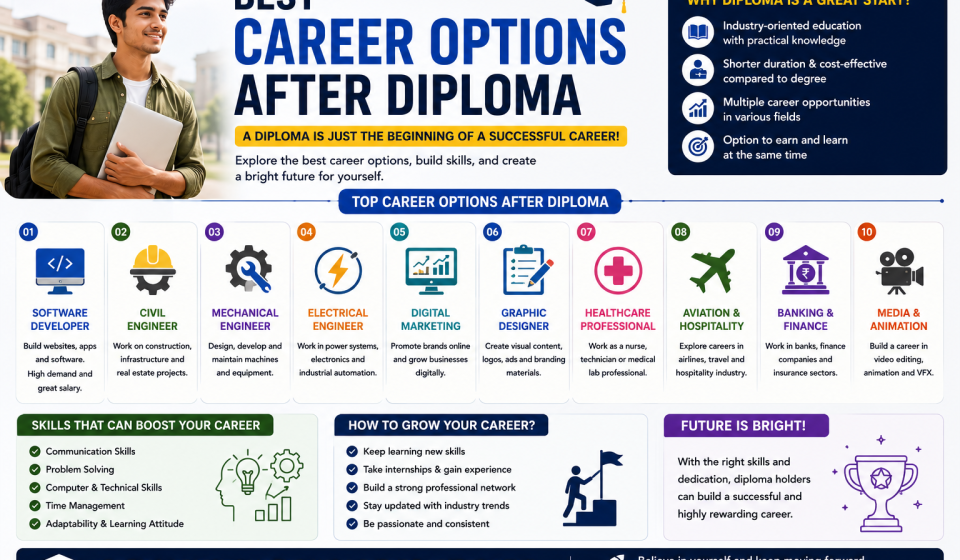
Best Career Options After Diploma: Complete Guide to High-Growth Jobs, Higher Education, and Future Career Opportunities

They can choose to start working immediately, pursue higher education, develop specialized skills, prepare for government jobs, or even launch their own businesses.
A diploma course is one of the most practical and career-focused educational pathways available to students today. Designed to provide specialized knowledge and industry-relevant skills within a shorter duration than traditional degree programs, diploma courses help students enter the workforce quickly and efficiently. Whether completed after the 10th grade, 12th grade, or graduation, diploma programs offer valuable opportunities across fields such as engineering, information technology, healthcare, management, design, hospitality, and many others. However, after completing a diploma, many students find themselves wondering about the best career options available and how to plan their future effectively.
The good news is that diploma holders today have numerous career opportunities in both the public and private sectors. The right path depends on individual interests, career goals, financial considerations, and industry demand. Understanding the available options helps students make informed decisions that maximize their earning potential and professional growth. This comprehensive guide explores the best career options after a diploma, helping students identify pathways that align with their ambitions and future aspirations.
What Is a Diploma Course?
A diploma is a specialized educational program that focuses on practical knowledge and skill development in a specific field.
Diploma courses are generally:
Shorter than degree programs
Industry-oriented
Skill-focused
Career-focused
Available across various disciplines
Students often pursue diploma courses to gain job-ready skills quickly.
Why Diploma Courses Are Popular
Diploma programs offer several advantages:
Shorter duration
Lower educational costs
Practical training
Early employment opportunities
Industry relevance
Skill development
These benefits make diploma courses attractive for many students.
Career Opportunities After Diploma
Diploma holders have multiple pathways available after completing their studies.
Major options include:
Employment
Higher education
Professional certifications
Government jobs
Entrepreneurship
Freelancing
Each option offers unique benefits and opportunities.
Pursue Higher Education
One of the most popular choices after a diploma is continuing education.
Benefits include:
Advanced qualifications
Better career opportunities
Higher earning potential
Professional growth
Expanded knowledge
Higher education often strengthens long-term career prospects.
Lateral Entry into Degree Programs
Many universities offer lateral entry admissions for diploma holders.
Advantages include:
Direct admission into the second year of degree programs
Reduced study duration
Career advancement opportunities
Examples include:
BTech
BE
BCA
BSc
BBA
Lateral entry provides an efficient route toward obtaining a bachelor’s degree.
Engineering Careers After Diploma
Engineering diplomas remain among the most sought-after qualifications.
Popular Specializations Include:
Mechanical Engineering
Civil Engineering
Electrical Engineering
Electronics Engineering
Computer Engineering
Automobile Engineering
Career opportunities are available in both private and government sectors.
Job Roles
Junior Engineer
Site Supervisor
CAD Technician
Maintenance Engineer
Production Technician
Quality Control Executive
Engineering careers offer strong growth potential.
Information Technology Careers
Technology continues to create significant employment opportunities.
Diploma holders can pursue careers in:
Software development
Web development
Technical support
Network administration
Cybersecurity
Data management
IT professionals remain in high demand globally.
Popular Job Roles
IT Support Executive
Web Developer
Software Tester
Network Technician
System Administrator
Technical Analyst
Technology careers provide excellent advancement opportunities.
Healthcare Careers After Diploma
Healthcare is one of the fastest-growing sectors worldwide.
Popular Diploma Fields Include:
Medical Laboratory Technology
Nursing
Radiology
Pharmacy
Physiotherapy Assistance
Healthcare Administration
Healthcare professionals contribute significantly to patient care and medical services.
Business and Management Careers
Students with business-related diplomas can pursue opportunities in:
Marketing
Sales
Human resources
Finance
Operations
Customer service
Business roles offer diverse career pathways across industries.
Job Positions
Sales Executive
Marketing Coordinator
HR Assistant
Business Development Executive
Operations Associate
Customer Relationship Executive
Management careers provide opportunities for leadership development.
Hospitality and Tourism Careers
The hospitality sector offers exciting career opportunities.
Popular Areas Include:
Hotels
Restaurants
Travel agencies
Event management
Airlines
Cruise services
Diploma holders can find employment in customer-facing and operational roles.
Graphic Design and Multimedia Careers
Creative industries continue to expand rapidly.
Career options include:
Graphic design
Animation
Video editing
UI/UX design
Digital content creation
Multimedia production
Creative professionals are increasingly valued in digital businesses.
Digital Marketing Careers
Digital marketing has emerged as one of the most promising career fields.
Specializations include:
Search Engine Optimization (SEO)
Social Media Marketing
Content Marketing
Email Marketing
Pay-Per-Click Advertising
Affiliate Marketing
Companies actively seek skilled digital marketing professionals.
Job Roles
Digital Marketing Executive
SEO Specialist
Content Creator
Social Media Manager
Marketing Analyst
Digital marketing offers flexibility and growth potential.
Government Jobs After Diploma
Government employment remains highly attractive for diploma holders.
Popular sectors include:
Railways
Public Works Departments
Defense organizations
Municipal corporations
Public sector enterprises
Government jobs often provide stability and attractive benefits.
Common Positions
Junior Engineer
Technician
Assistant
Clerk
Supervisor
Students may need to pass competitive examinations.
Public Sector Opportunities
Many public sector organizations recruit diploma holders.
Examples include:
Energy companies
Infrastructure corporations
Transportation authorities
Manufacturing enterprises
Public sector careers often offer structured growth opportunities.
Entrepreneurship After Diploma
Diploma holders can start their own businesses.
Potential areas include:
Technical services
Digital marketing agencies
Repair services
Consulting
Creative studios
Training centers
Entrepreneurship offers independence and earning potential.
Freelancing Opportunities
Freelancing allows individuals to work independently.
Popular freelancing fields include:
Graphic design
Programming
Content writing
Video editing
Digital marketing
Web development
Online platforms provide access to global clients.
Skill Development Courses
Additional certifications can improve employability.
Popular certifications include:
Cloud computing
Cybersecurity
Data analytics
Artificial Intelligence
Project management
Digital marketing
Continuous learning increases career competitiveness.
Careers in Artificial Intelligence
Artificial Intelligence is transforming industries worldwide.
Relevant opportunities include:
AI support roles
Machine learning assistance
Data annotation
Technical operations
Automation support
Specialized training can help diploma holders enter this growing field.
Data Analytics Careers
Organizations increasingly rely on data-driven decision-making.
Career options include:
Data Analyst
Business Intelligence Assistant
Reporting Specialist
Database Technician
Analytics careers offer strong future prospects.
Cybersecurity Careers
Cybersecurity professionals protect digital systems and information.
Job roles include:
Security Technician
Network Security Assistant
Technical Support Specialist
Cybersecurity careers continue to experience significant growth.
Careers in Renewable Energy
Sustainability initiatives are creating new opportunities.
Areas include:
Solar energy
Wind energy
Energy management
Environmental technology
Renewable energy professionals contribute to future development.
Benefits of Pursuing a Degree After Diploma
Higher educational qualifications often lead to:
Better job opportunities
Higher salaries
Leadership positions
Professional recognition
Career advancement
Many diploma holders choose degree programs to strengthen long-term prospects.
Choosing the Right Career Path
Students should evaluate:
Personal interests
Skills
Career goals
Industry demand
Financial considerations
Educational requirements
Careful planning supports informed decision-making.
Future Scope for Diploma Holders
The future remains promising for diploma graduates.
Reasons include:
Growing demand for skilled professionals
Technological advancement
Industrial expansion
Infrastructure development
Digital transformation
Employers increasingly value practical skills and specialized knowledge.
Importance of Soft Skills
Technical expertise should be complemented by:
Communication skills
Leadership abilities
Problem-solving skills
Teamwork
Adaptability
Soft skills significantly improve employability and career growth.
Building a Successful Career After Diploma
Success requires:
Continuous learning
Professional networking
Industry awareness
Skill development
Career planning
Adaptability to changing market trends
Students who invest in personal and professional growth often achieve better outcomes.
Future Trends and Emerging Opportunities
The future job market is being shaped by artificial intelligence, automation, digital transformation, sustainability, and advanced technologies. Diploma holders who continuously upgrade their skills and stay informed about industry developments can take advantage of emerging opportunities in technology, healthcare, renewable energy, business services, and entrepreneurship. With the right combination of practical skills, education, and determination, diploma graduates can build highly successful and rewarding careers.
Source
https://www.ncs.gov.in
https://www.skillindia.gov.in
https://www.coursera.org
https://www.indeed.com/career-advice
Conclusion
Completing a diploma opens the door to numerous career opportunities across multiple industries. Whether students choose to enter the workforce immediately, pursue higher education, prepare for government jobs, develop specialized skills, or start their own businesses, the possibilities are extensive. Success after a diploma depends on selecting a career path that aligns with individual interests, strengths, and market demand. By focusing on continuous learning, practical experience, and skill enhancement, diploma holders can achieve long-term professional growth and financial success in an increasingly competitive and dynamic job market.
FAQ
1. What are the best career options after a diploma?
Popular options include employment, higher education, government jobs, entrepreneurship, freelancing, and professional certifications.
2. Can diploma holders pursue degree programs?
Yes, many universities offer lateral entry admissions that allow diploma holders to join degree programs directly in the second year.
3. Are government jobs available for diploma holders?
Yes, various government departments and public sector organizations recruit diploma graduates for technical and administrative roles.
4. Which diploma field offers the highest career opportunities?
Engineering, Information Technology, Healthcare, Digital Marketing, and Business Management are among the most promising fields.
5. Can diploma holders start their own businesses?
Yes, many diploma graduates become successful entrepreneurs by utilizing their technical and professional skills.
6. Is higher education necessary after a diploma?
Not always. However, pursuing a degree can improve career opportunities, earning potential, and professional advancement.
7. What skills should diploma holders develop?
Technical expertise, communication skills, problem-solving abilities, leadership qualities, and digital competencies are highly valuable.
8. Is freelancing a good option after a diploma?
Yes, freelancing can provide flexibility, independent income opportunities, and access to global clients in various fields.