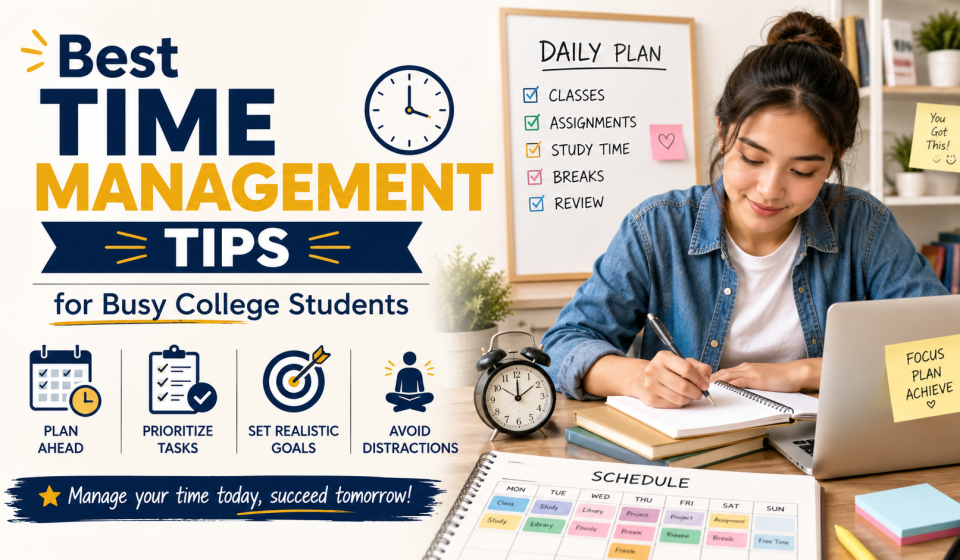

Discover the best time management tips for busy college students. Learn practical strategies to balance studies, assignments, exams, extracurricular activities, and personal life effectively.
College life is exciting, but it can also be overwhelming. Students often struggle to balance classes, assignments, exams, internships, extracurricular activities, social life, and personal responsibilities. With so many tasks competing for attention, effective time management becomes essential.
Many students feel that there are not enough hours in a day. However, the problem is often not the lack of time but how that time is used. Learning to manage time wisely can reduce stress, improve academic performance, and create a healthier work-life balance.
In this article, we will explore practical and proven time management tips that can help busy college students stay organized, productive, and successful.
Why Time Management Is Important for College Students
Time management is more than just creating a schedule. It is the ability to prioritize tasks, avoid distractions, and use available time efficiently.
Good time management helps students:
- Complete assignments on time
- Reduce last-minute stress
- Improve academic performance
- Maintain a healthy lifestyle
- Create time for hobbies and relaxation
- Develop professional skills for future careers
Students who manage their time effectively often feel more confident and in control of their daily lives.
1. Set Clear Academic and Personal Goals
One of the biggest reasons students waste time is the lack of clear goals. Without knowing what needs to be achieved, it becomes easy to procrastinate.
Start by setting:
Short-Term Goals
- Complete an assignment this week
- Study two chapters before Friday
- Improve attendance in a subject
Long-Term Goals
- Maintain a specific GPA
- Secure an internship
- Graduate with honors
When goals are clear, it becomes easier to plan daily activities and stay motivated.
2. Create a Weekly Schedule
A weekly schedule provides a clear picture of how your time is being spent.
Include:
- Class timings
- Study sessions
- Assignment deadlines
- Part-time jobs
- Exercise
- Personal activities
Using digital tools like Google Calendar or simple planners can help students visualize their commitments and avoid scheduling conflicts.
For example, if you know an exam is approaching next week, you can allocate extra study hours in advance instead of cramming at the last moment.
3. Prioritize Tasks Using the Eisenhower Matrix
Not all tasks are equally important. Some require immediate attention, while others can wait.
The Eisenhower Matrix divides tasks into four categories:
Urgent and Important
- Assignment due tomorrow
- Upcoming exam preparation
Important but Not Urgent
- Long-term projects
- Skill development courses
Urgent but Less Important
- Routine emails
- Minor administrative work
Neither Urgent nor Important
- Excessive social media browsing
- Unnecessary online distractions
Focus primarily on important tasks to maximize productivity.
4. Use the Time Blocking Technique
Time blocking involves assigning specific periods for specific tasks.
Example:
| Time | Activity |
|---|---|
| 8:00 AM – 10:00 AM | Attend Classes |
| 10:30 AM – 12:00 PM | Study Session |
| 12:00 PM – 1:00 PM | Lunch Break |
| 1:00 PM – 3:00 PM | Assignment Work |
| 4:00 PM – 5:00 PM | Exercise |
This method helps students stay focused and prevents multitasking, which often reduces efficiency.
5. Avoid Procrastination
Procrastination is one of the biggest enemies of productivity.
Students often delay tasks because:
- The work seems difficult
- They fear failure
- They feel overwhelmed
To overcome procrastination:
- Break large tasks into smaller steps
- Start with the easiest part
- Use a timer for focused work sessions
- Reward yourself after completing tasks
Remember, starting is often the hardest part.
6. Follow the Pomodoro Technique
The Pomodoro Technique is a popular productivity method.
How It Works:
- Work for 25 minutes
- Take a 5-minute break
- Repeat four times
- Take a longer 15–30 minute break
This technique helps maintain concentration while preventing mental fatigue.
Many students find it easier to study difficult subjects when using structured work intervals.
7. Limit Social Media Distractions
Social media platforms can consume hours without students realizing it.
A student may open Instagram or YouTube for five minutes and end up spending an hour scrolling.
To reduce distractions:
- Turn off unnecessary notifications
- Use app blockers during study time
- Keep your phone away while studying
- Schedule specific times for social media
Being intentional with technology can significantly improve productivity.
8. Learn to Say No
College students often take on too many responsibilities.
While extracurricular activities are valuable, overcommitting can lead to burnout.
Ask yourself:
- Is this activity helping me achieve my goals?
- Do I have enough time to do it properly?
If the answer is no, it may be better to decline politely.
Learning to say no is an important life skill that protects your time and energy.
9. Break Large Projects into Smaller Tasks
Large assignments can feel intimidating.
For example, a research paper due in three weeks may seem overwhelming.
Instead of thinking about the entire project, divide it into smaller tasks:
Week 1
- Select topic
- Conduct research
Week 2
- Create outline
- Write first draft
Week 3
- Edit and proofread
This approach makes projects more manageable and reduces stress.
10. Use Productivity Apps and Tools
Technology can help students stay organized.
Popular tools include:
- Google Calendar
- Microsoft To Do
- Notion
- Trello
- Todoist
These apps allow students to track deadlines, create task lists, and manage projects efficiently.
Choose a tool that fits your personal preferences and stick with it consistently.
11. Maintain a Healthy Lifestyle
Time management is closely connected to physical and mental health.
Students who sleep poorly or skip meals often struggle with concentration and productivity.
Healthy habits include:
- Getting 7–8 hours of sleep
- Eating balanced meals
- Drinking enough water
- Exercising regularly
A healthy body supports a productive mind.
12. Review Your Progress Regularly
At the end of each week, spend a few minutes reviewing your progress.
Ask yourself:
- What did I accomplish?
- Which tasks were delayed?
- What distractions affected my productivity?
- How can I improve next week?
Regular self-reflection helps students identify weaknesses and continuously improve their time management skills.
13. Avoid Multitasking
Many students believe multitasking increases productivity.
In reality, constantly switching between tasks can reduce focus and increase mistakes.
For example:
- Studying while watching videos
- Writing assignments while chatting online
Instead, focus on one task at a time. Single-tasking often leads to better quality work and faster completion.
14. Keep a Buffer for Unexpected Events
Life is unpredictable.
A sudden illness, family event, or technical issue can disrupt plans.
Always leave some buffer time in your schedule.
For example, finish assignments a day before the deadline whenever possible. This reduces pressure if unexpected problems arise.
15. Develop Consistent Daily Habits
Successful students often rely on habits rather than motivation.
Examples include:
- Reviewing notes every evening
- Planning the next day before sleeping
- Checking deadlines each morning
- Studying at the same time daily
Consistent habits reduce decision fatigue and improve long-term productivity.
Common Time Management Mistakes Students Should Avoid
Some common mistakes include:
- Waiting until the last minute
- Ignoring deadlines
- Overloading schedules
- Studying without breaks
- Spending excessive time on social media
- Not setting priorities
- Skipping sleep to study
Avoiding these mistakes can significantly improve academic success and personal well-being.
Sources
https://l1nq.com/bx0jisg
https://l1nq.com/rp5q7ps
Conclusion
Time management is one of the most valuable skills a college student can develop. While balancing academics, personal life, internships, and extracurricular activities may seem challenging, proper planning can make everything more manageable.
By setting clear goals, creating schedules, prioritizing tasks, avoiding distractions, and maintaining healthy habits, students can use their time more effectively. The key is consistency. Small improvements in daily routines can lead to significant long-term success.
Remember, successful students do not necessarily have more time than others—they simply use their time more wisely.
Frequently Asked Questions (FAQs)
1. What is the best time management technique for college students?
The Pomodoro Technique and time blocking are among the most effective methods because they improve focus and help students stay organized.
2. How many hours should a college student study daily?
It varies by course and workload, but most students benefit from 2–4 hours of focused study outside class each day.
3. How can students stop procrastinating?
Students can overcome procrastination by breaking tasks into smaller steps, setting deadlines, removing distractions, and starting with simple tasks.
4. Are productivity apps useful for time management?
Yes. Apps like Google Calendar, Notion, Todoist, and Trello help students organize schedules, track assignments, and manage deadlines effectively.
5. Why is time management important for academic success?
Good time management reduces stress, improves productivity, ensures timely completion of assignments, and helps students achieve better academic results.