
This brings an important question: CollegeRoam vs traditional learning — which is better for students? The answer is not always simple.
Education is changing faster than ever before. In the past, students mostly depended on classrooms, textbooks, teachers, and face-to-face lectures to complete their learning journey. Today, digital platforms are becoming an important part of education. Students now use online resources, learning apps, digital study materials, career platforms, and academic guidance websites to support their studies. CollegeRoam is one such student-focused platform that can help learners explore academic resources, study tips, career guidance, and skill-development opportunities. Traditional learning offers structure, discipline, teacher interaction, and classroom experience. CollegeRoam offers flexibility, easy access to resources, digital guidance, and self-paced learning. Both have strong benefits, and the best option often depends on the student’s goals, learning style, and academic needs.
What Is CollegeRoam?
CollegeRoam is a digital learning and student-support platform designed to help college students improve their academic journey. It can provide useful guidance related to study planning, academic success, career growth, scholarships, skill development, and student productivity.
Unlike a traditional classroom, CollegeRoam allows students to explore learning resources at their own pace. Students can use it whenever they need support, whether they are preparing for exams, searching for career advice, improving study habits, or looking for educational opportunities.
For modern students, CollegeRoam can act as a digital companion that supports learning beyond classroom walls.
What Is Traditional Learning?
Traditional learning refers to the classroom-based education system where students attend lectures, interact with teachers, follow a fixed timetable, complete assignments, and appear for exams. This method has been the foundation of education for many years.
Traditional learning gives students direct access to teachers, peer discussions, classroom discipline, practical activities, and institutional support. It also creates a structured environment where students follow a clear academic schedule.
For many learners, traditional education remains important because it builds routine, communication, discipline, and social interaction.
Flexibility: CollegeRoam Offers More Freedom
One of the biggest advantages of CollegeRoam is flexibility. Students can access resources anytime and from anywhere. They do not need to wait for a specific class or lecture to learn something new.
This flexibility is especially helpful for students with busy schedules. Many college students manage assignments, exams, internships, part-time jobs, and personal responsibilities. CollegeRoam allows them to learn at their own convenience.
Traditional learning, on the other hand, follows fixed schedules. While this structure is useful, it may not suit every student. Some learners prefer studying late at night, revising during weekends, or learning at their own speed. CollegeRoam supports this kind of personalized learning.
Structure and Discipline: Traditional Learning Has an Advantage
Traditional learning provides a strong academic structure. Students attend classes regularly, follow timetables, submit assignments, and receive teacher feedback. This structure helps students stay disciplined.
For students who struggle with self-motivation, traditional learning can be very helpful. The classroom environment encourages regular participation and keeps students accountable.
CollegeRoam gives flexibility, but students must manage their own time. If a student lacks discipline, they may not use the platform consistently. Therefore, traditional learning is better for students who need a fixed routine and direct supervision.
Access to Resources: CollegeRoam Makes Learning Easier
CollegeRoam can make educational resources easier to access. Students can explore study tips, academic guidance, career advice, scholarship information, and skill-development content in one place.
In traditional learning, students often depend on classroom notes, textbooks, and teacher explanations. While these are valuable, they may not always cover every student’s needs. CollegeRoam can provide additional support outside the classroom.
For example, if a student needs help with time management, exam preparation, or career planning, CollegeRoam can offer useful guidance. This makes it a strong support tool for modern learners.
Teacher Interaction: Traditional Learning Is Stronger
One area where traditional learning performs better is direct teacher interaction. Students can ask questions, participate in discussions, receive immediate feedback, and build relationships with teachers.
Face-to-face interaction helps students understand difficult topics more clearly. Teachers can also observe student behavior and identify learning problems.
CollegeRoam may provide guidance and resources, but it may not fully replace the personal support of a teacher. For subjects that require deep explanation, practical work, or live discussion, traditional learning is still very important.
Personalized Learning: CollegeRoam Supports Individual Needs
Every student learns differently. Some students understand concepts quickly, while others need more time. Some prefer reading, while others prefer examples, guides, or practical tips.
CollegeRoam supports personalized learning because students can choose what they want to explore. They can focus on study skills, career planning, scholarships, exam tips, or skill development based on their needs.
Traditional classrooms usually follow the same pace for all students. This can be challenging for learners who need extra time or advanced resources. CollegeRoam allows students to fill learning gaps and grow at their own speed.
Social Learning: Traditional Classrooms Build Connections
College life is not only about studying. It is also about communication, teamwork, friendships, group projects, and social development. Traditional learning offers strong opportunities for social interaction.
Students learn from classmates, participate in group discussions, attend events, and develop communication skills. These experiences are important for personal growth.
CollegeRoam is useful for digital learning, but it may not provide the same level of face-to-face social connection. Therefore, traditional learning is better for students who value classroom relationships and peer learning.
Career Guidance: CollegeRoam Can Be More Practical
Many students feel that traditional learning focuses heavily on academic subjects but may not always provide enough practical career guidance. CollegeRoam can help bridge this gap by offering content related to careers, internships, skills, job trends, and future opportunities.
Students can use CollegeRoam to understand what employers expect, which skills are important, and how to prepare for professional life. This makes the platform useful beyond academic learning.
Traditional colleges may provide career support, but the quality and availability can vary. CollegeRoam gives students additional access to career-focused information.
Skill Development: CollegeRoam Supports Future Readiness
Today’s job market demands more than degrees. Students need digital literacy, communication, problem-solving, leadership, teamwork, and critical thinking skills.
CollegeRoam can help students become aware of these skills and guide them toward improvement. Students can explore content that helps them prepare for internships, interviews, online learning, and career growth.
Traditional learning also supports skill development through classroom projects and activities, but it may not always focus deeply on modern career skills. Combining CollegeRoam with traditional learning can help students become more future-ready.
Exam Preparation: Both Can Be Useful
When it comes to exam preparation, both CollegeRoam and traditional learning have benefits. Traditional learning provides syllabus-based teaching, classroom notes, teacher explanations, and academic evaluation.
CollegeRoam can support exam preparation by offering study strategies, revision tips, productivity methods, and time management guidance. Students can use it to improve their preparation style.
The best approach is to use traditional learning for subject understanding and CollegeRoam for planning, revision, and study improvement.
Cost and Accessibility
Traditional learning can sometimes involve high costs, including tuition fees, transportation, books, hostel expenses, and other college-related charges. CollegeRoam, as a digital platform, can be more accessible for students looking for quick guidance and online resources.
However, traditional learning provides formal education, degrees, campus experience, and institutional support, which digital platforms alone cannot fully replace.
CollegeRoam is useful as a support platform, while traditional learning remains important for formal academic qualifications.
Which Is Better for Students?
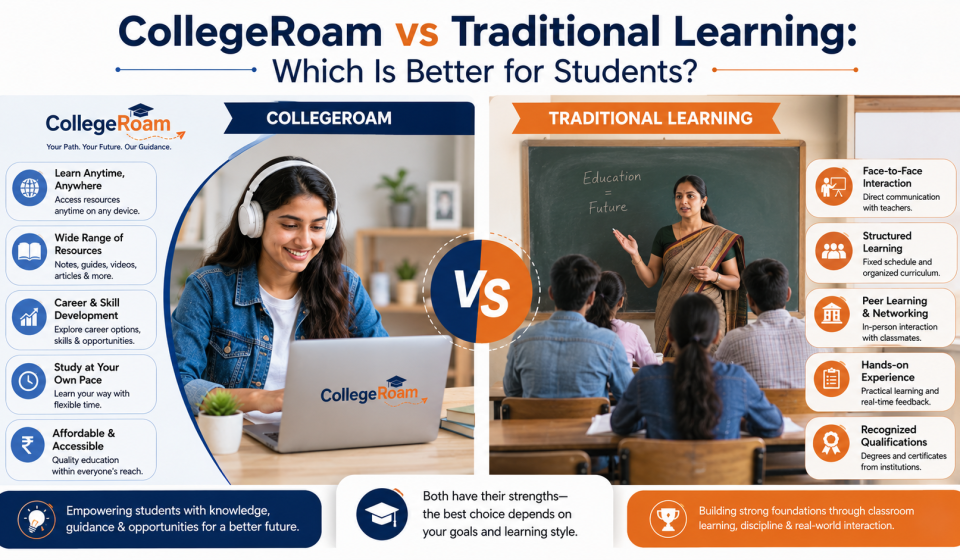
The answer depends on student needs. CollegeRoam is better for students who want flexibility, extra resources, career guidance, self-paced learning, and digital support. Traditional learning is better for students who need classroom structure, teacher interaction, peer learning, practical experience, and formal education.
Instead of choosing only one, students can benefit most by combining both. Traditional learning can provide the foundation, while CollegeRoam can provide extra support, guidance, and flexibility.
This blended approach can help students perform better academically and prepare more effectively for the future.
Best Way to Combine CollegeRoam and Traditional Learning
Students can attend regular classes and use CollegeRoam for additional learning support. After classroom lectures, they can explore study tips, revision strategies, career guidance, or skill-development content on CollegeRoam.
They can also use CollegeRoam to plan weekly goals, manage time, prepare for exams, and explore future opportunities. This combination creates a stronger and more balanced learning experience.
In modern education, the smartest students are those who use both classroom learning and digital tools effectively.
source
https://l1nq.com/nzotq85
https://l1nq.com/9ah4xtz
https://sl1nk.com/z3up7ie
Conclusion
CollegeRoam vs traditional learning is not about choosing one and rejecting the other. Both have unique strengths. Traditional learning provides structure, discipline, teacher interaction, social development, and formal education. CollegeRoam provides flexibility, easy access to resources, personalized guidance, career support, and digital learning convenience.
For most students, the best option is a combination of both. Traditional learning helps build academic foundations, while CollegeRoam supports smarter learning, skill development, exam preparation, and career readiness.
In today’s competitive education environment, students need more than one learning method. By using CollegeRoam along with traditional classroom learning, students can create a more complete, flexible, and future-ready academic journey.
FAQs
1. What is CollegeRoam?
CollegeRoam is a student-focused digital platform that can help learners with academic guidance, study tips, career support, scholarships, and skill-development resources.
2. What is traditional learning?
Traditional learning is classroom-based education where students attend lectures, interact with teachers, follow a fixed schedule, and complete academic activities.
3. Is CollegeRoam better than traditional learning?
CollegeRoam is better for flexibility, digital resources, and career guidance, while traditional learning is better for structure, teacher interaction, and classroom experience.
4. Can CollegeRoam replace traditional learning?
CollegeRoam can support learning, but it may not fully replace traditional education because classroom learning provides formal teaching, social interaction, and institutional support.
5. How can students use CollegeRoam with traditional learning?
Students can attend regular classes and use CollegeRoam for study planning, exam tips, career guidance, scholarships, and skill development.