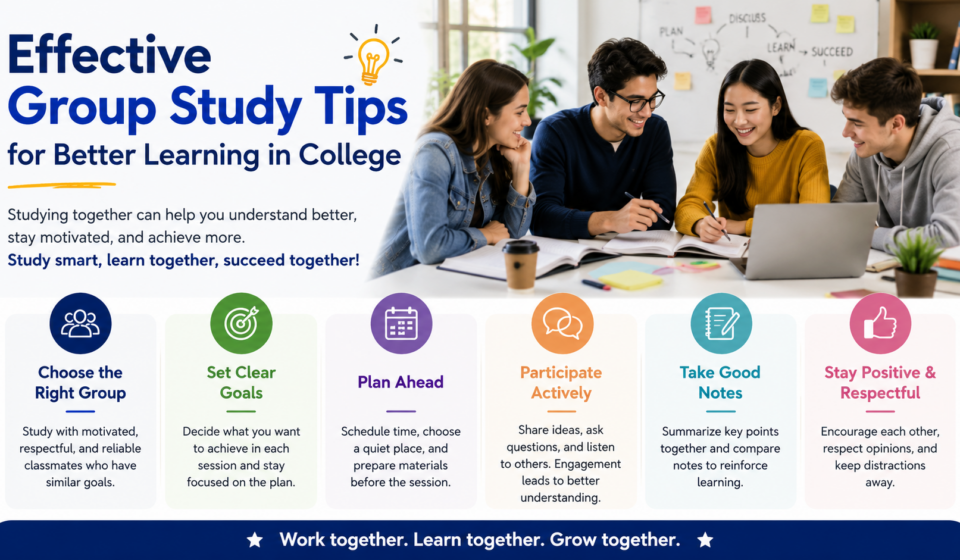

College life can be exciting, challenging, and sometimes overwhelming. Between lectures, assignments, projects, and exams, students often look for ways to improve their learning and manage academic pressure. One proven method that helps many students succeed is group study.
What Is Group Study and Why Is It Important?
Group study refers to students learning together to understand concepts, review materials, complete assignments, and prepare for exams. Unlike studying alone, group learning encourages collaboration and shared knowledge.
College courses often involve difficult topics that may be easier to understand through discussion. When students explain concepts to one another, they reinforce their own understanding and gain different perspectives.
Group study is important because it:
- Encourages active learning
- Builds teamwork and communication skills
- Improves motivation and accountability
- Helps solve academic problems faster
- Creates a supportive learning environment
For many college students, study groups can reduce stress and make challenging subjects feel more manageable.
Benefits of Group Study for College Students
A well-organized study group offers several academic and personal advantages.
Improved Understanding
Different students understand concepts differently. One student may explain a topic in a simpler or more relatable way than a textbook or lecture.
Better Memory Retention
Teaching and discussing information helps improve long-term memory. Students often remember material better after explaining it to others.
Increased Motivation
Studying alone can sometimes lead to procrastination. A study group creates accountability because members depend on each other to participate and prepare.
Development of Soft Skills
Group study builds communication, leadership, listening, and problem-solving skills. These abilities are valuable not only in college but also in future careers.
Reduced Academic Stress
College exams and deadlines can be stressful. Working with peers provides emotional support and boosts confidence.
How to Build an Effective Study Group
Not every study group is productive. Choosing the right members is essential.
Keep the Group Small
A group of 3–5 students often works best. Large groups may become distracting and difficult to manage.
Choose Committed Members
Select classmates who are serious about studying and willing to contribute.
Include Different Strengths
A diverse group can be beneficial. Some students may excel in problem-solving while others are strong in note-taking or explanations.
Establish Ground Rules
Set expectations regarding:
- Attendance
- Participation
- Respectful communication
- Study goals
- Time management
Clear rules prevent misunderstandings and improve productivity.
Setting Clear Goals for Group Study Sessions
Many study groups fail because they lack direction.
Before each session, establish clear objectives.
Examples include:
- Reviewing one chapter
- Solving practice questions
- Preparing for an exam
- Completing project research
- Clarifying difficult concepts
Having a goal keeps the group focused and helps measure progress.
It is also helpful to assign roles such as:
- Discussion leader
- Timekeeper
- Note organizer
- Question creator
Defined responsibilities make sessions more efficient.
Choosing the Right Study Environment
The study environment affects concentration and learning quality.
Choose a location that supports focus and collaboration.
Good study spaces include:
- Library study rooms
- Quiet campus areas
- College learning centers
- Online meeting platforms for virtual study
Avoid noisy environments with frequent distractions.
Students should also ensure the space has:
- Comfortable seating
- Stable internet connection
- Charging facilities
- Adequate lighting
A productive environment encourages better engagement.
Best Group Study Techniques for Better Learning
Using effective study methods can improve results.
Active Discussion
Instead of silently reading, discuss key concepts and ask questions.
Discussion encourages critical thinking and deeper understanding.
Teach Each Other
One of the strongest learning methods is teaching.
Ask each student to explain a topic to the group. Teaching highlights knowledge gaps and improves confidence.
Practice Problems Together
Subjects like mathematics, science, accounting, and engineering benefit from collaborative problem-solving.
Compare approaches and discuss solutions.
Quiz Sessions
Create short quizzes or flashcards.
Testing each other strengthens recall and identifies weak areas.
Use Visual Learning Tools
Whiteboards, diagrams, mind maps, and flowcharts make complex ideas easier to understand.
Visual learning often improves memory retention.
Using Technology to Improve Group Study
Modern technology makes collaboration easier than ever.
College students can use digital tools to stay connected and organized.
Helpful study tools include:
- Video conferencing platforms
- Shared documents
- Online flashcards
- Digital note-sharing apps
- Project management tools
Technology allows students to study together even when they cannot meet in person.
However, avoid excessive phone use or unrelated online activity during study sessions.
Common Group Study Mistakes to Avoid
Even motivated groups can become ineffective if they develop poor habits.
Too Much Socializing
Friendly conversation is natural, but excessive chatting reduces productivity.
Lack of Preparation
Students should review material before attending.
Unprepared members slow down progress.
Dominating Discussions
Everyone should have equal opportunities to contribute.
A balanced discussion encourages learning.
No Agenda
Studying without a plan often leads to wasted time.
Always create a study outline.
Relying Only on Group Study
Study groups are helpful but should not replace personal study.
Independent learning remains essential.
How to Stay Focused and Productive During Group Study
Maintaining focus is crucial.
Consider these strategies:
- Use time blocks such as the Pomodoro method
- Take short scheduled breaks
- Turn off notifications
- Keep snacks and water available
- Set deadlines for tasks
Rewarding progress can also maintain motivation.
Small achievements help keep the group engaged and positive.
Balancing Group Study and Independent Learning
While collaboration has many benefits, students should combine it with solo study.
Independent study allows time for:
- Personal reflection
- Reviewing weak areas
- Reading in detail
- Practicing independently
A balanced approach often produces the best academic results.
Use group sessions for discussion and clarification while reserving private study for deeper concentration.
Source
https://l1nq.com/de7yz85
https://l1nq.com/qcvvsyr
Conclusion
Group study can be a powerful learning tool when planned and managed effectively. It improves understanding, encourages accountability, and makes academic challenges less stressful. However, success depends on choosing the right members, setting goals, maintaining focus, and balancing teamwork with independent learning.
By applying these effective group study tips for better learning in college, students can create productive study sessions that strengthen academic performance and build valuable life skills. With proper organization and commitment, group study becomes more than a study method—it becomes a pathway to long-term success.
FAQs
1. Is group study better than studying alone?
Both methods have benefits. Group study encourages discussion and collaboration, while solo study supports deep focus and personal review.
2. How many students should be in a study group?
A study group of 3–5 members is generally most effective.
3. How long should a group study session last?
Most productive sessions last 1–3 hours with short breaks.
4. What subjects are best for group study?
Group study works well for subjects involving discussion, problem-solving, and exam preparation.
5. How can we avoid distractions during group study?
Set clear goals, limit phone use, choose a quiet environment, and follow a structured study plan.