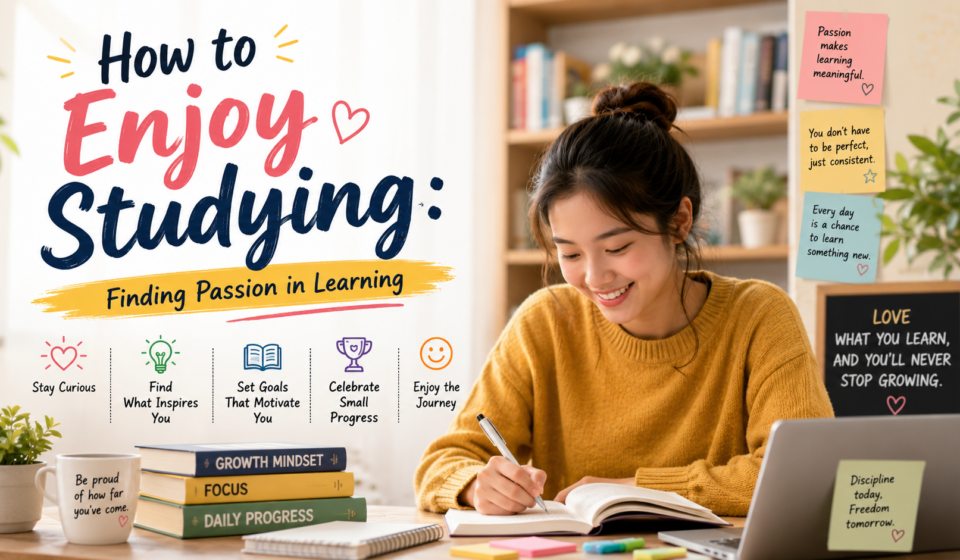

Discover practical ways to enjoy studying and develop a real passion for learning. Improve focus, motivation, memory, and productivity with these powerful study habits and mindset tips.
Studying is often seen as a stressful and boring task by many students. Long hours, difficult subjects, pressure to perform well, and constant distractions can make learning feel exhausting. However, studying does not always have to be painful. When approached with the right mindset and techniques, learning can become exciting, meaningful, and even enjoyable.
The secret lies in discovering your passion for learning rather than studying only for marks or exams. Passion transforms education from a burden into an opportunity for growth and self-improvement. Whether you are a school student, college learner, or someone learning new skills online, enjoying the process can improve both your happiness and academic performance.
In this article, you will learn practical strategies to make studying more enjoyable, increase motivation, and build a lifelong love for learning.
Understand Why Learning Matters
Before enjoying studies, it is important to understand why education matters in your life. Many students study only because they are told to do so by teachers or parents. This creates pressure instead of curiosity.
Learning becomes enjoyable when you connect it with your goals, dreams, and interests. Knowledge helps you grow personally, professionally, and socially. Every subject teaches skills that improve thinking, creativity, and problem-solving abilities.
Instead of asking, “Why do I have to study?” ask yourself:
- How can this knowledge help me in the future?
- What useful skill am I developing?
- How will learning improve my life?
When studying has meaning, motivation naturally increases.
Create a Positive Study Environment
Your surroundings directly affect your mood and concentration. A messy, noisy, or uncomfortable place can make studying frustrating.
To enjoy studying more:
Keep Your Study Space Clean
A clean desk reduces distractions and helps your brain focus better.
Use Good Lighting
Natural light or bright lighting improves alertness and reduces eye strain.
Add Motivation Around You
Decorate your study area with quotes, plants, or inspiring images.
Minimize Distractions
Keep your phone away or use focus apps while studying.
A peaceful environment makes learning feel less stressful and more enjoyable.
Study Topics That Spark Curiosity
Curiosity is one of the biggest drivers of learning. Instead of memorizing information blindly, try to explore topics deeply.
For example:
- If studying history, imagine living in that time period.
- If learning science, connect theories with real-life examples.
- If studying literature, analyze emotions and characters creatively.
When you become curious, studying feels like exploration instead of work.
You can also watch documentaries, educational videos, podcasts, or interactive lessons related to your subjects. These methods make learning more engaging and easier to understand.
Set Small and Achievable Goals
Large study goals often feel overwhelming. Breaking tasks into smaller steps makes studying easier and more rewarding.
Instead of saying:
“I will study the whole chapter today.”
Try:
- Read 5 pages
- Complete 10 math problems
- Learn 5 new vocabulary words
Small achievements create a sense of progress and motivation. Every completed goal gives your brain a feeling of success, encouraging you to continue.
Use Active Learning Techniques
Passive reading can quickly become boring. Active learning keeps your brain engaged and improves memory retention.
Here are some effective active learning methods:
Take Notes in Your Own Words
Writing concepts in simple language improves understanding.
Teach Someone Else
Explaining topics helps you remember information better.
Use Mind Maps
Visual learning techniques make studying more interesting.
Practice With Questions
Solving quizzes and exercises strengthens knowledge.
Use Flashcards
Flashcards are excellent for quick revision and memorization.
Interactive learning methods make studying dynamic and enjoyable.
Build a Consistent Study Routine
Studying becomes easier when it becomes a habit. A proper routine reduces procrastination and mental resistance.
Choose a study schedule that matches your energy levels:
- Study difficult subjects when your mind feels fresh.
- Take short breaks after every 45–60 minutes.
- Include relaxation and hobbies in your daily schedule.
Consistency creates discipline without making studying feel forced.
Reward Yourself After Studying
Rewards help train your brain to associate studying with positive feelings.
After completing study goals, reward yourself with:
- Watching a favorite show
- Eating a snack
- Listening to music
- Playing games for a short time
- Going for a walk
These small rewards improve motivation and reduce burnout.
Stop Comparing Yourself With Others
Comparison is one of the biggest reasons students lose confidence and enjoyment in learning.
Every student learns differently:
- Some learn visually
- Some understand through practice
- Others learn by listening or discussing
Focus on your own progress instead of competing constantly with others. Learning is a personal journey, not a race.
Celebrate improvement, even if it is small.
Make Learning Fun and Creative
Creativity can transform boring subjects into exciting experiences.
Try these ideas:
Gamify Your Learning
Turn study sessions into challenges or games.
Use Colorful Notes
Highlight important points using different colors.
Study With Friends
Group discussions can make learning interactive and enjoyable.
Watch Educational Animations
Visual explanations simplify difficult topics.
Use Real-Life Applications
Connect concepts with everyday situations.
Creative learning increases engagement and reduces boredom.
Focus on Progress, Not Perfection
Many students become stressed because they expect perfect results. Fear of failure can destroy motivation.
Remember:
- Mistakes are part of learning
- Improvement takes time
- No one understands everything immediately
Instead of aiming for perfection, focus on continuous progress. Learning should be about growth, not pressure.
A positive mindset helps you enjoy the process more.
Take Care of Your Physical and Mental Health
Your brain performs best when your body is healthy.
Sleep Properly
Lack of sleep reduces memory and concentration.
Eat Healthy Foods
Nutritious meals improve brain function and energy.
Exercise Regularly
Physical activity reduces stress and improves focus.
Practice Relaxation Techniques
Meditation and deep breathing can calm your mind before studying.
Mental and physical wellness are essential for productive learning.
Discover Your Learning Style
Every person has a unique learning method. Understanding your learning style can make studying easier and more enjoyable.
Visual Learners
Learn better through diagrams, charts, and videos.
Auditory Learners
Understand concepts through listening and discussions.
Reading/Writing Learners
Prefer notes, books, and written explanations.
Kinesthetic Learners
Learn effectively through hands-on practice.
Experiment with different methods to find what works best for you.
Stay Inspired by Lifelong Learners
Reading about successful people can motivate you to enjoy learning more.
Many innovators and leaders became successful because they loved learning:
- Albert Einstein
- Leonardo da Vinci
- Marie Curie
- A. P. J. Abdul Kalam
These individuals viewed learning as a lifelong adventure, not just an academic requirement.
Avoid Multitasking While Studying
Many students try to study while using social media, watching videos, or chatting with friends. Multitasking reduces concentration and increases study time.
To stay focused:
- Turn off notifications
- Use focus timers
- Study one topic at a time
- Keep unnecessary tabs closed
Deep focus makes studying faster and less frustrating.
Learn to Enjoy the Process
Most students only focus on results like marks, grades, or exams. But true satisfaction comes from enjoying the journey of learning itself.
Appreciate:
- The excitement of discovering new ideas
- The confidence gained through knowledge
- The personal growth from overcoming challenges
When learning becomes meaningful, studying stops feeling like a burden.
Use Technology Wisely
Technology can either distract you or help you learn effectively.
Helpful learning tools include:
- Educational YouTube channels
- Online courses
- Learning apps
- Productivity tools
- Digital flashcards
Using modern resources can make studying interactive and enjoyable.
Sources
Conclusion
Enjoying studying is not about forcing yourself to love every subject instantly. It is about changing your mindset, discovering curiosity, and creating healthy learning habits. When you focus on growth instead of pressure, studying becomes more meaningful and rewarding.
Passion for learning develops gradually through consistency, creativity, and self-awareness. By building positive routines, exploring subjects deeply, and celebrating small achievements, anyone can transform their study experience.
Remember that education is not only about exams or grades. It is a powerful tool that helps you understand the world, improve yourself, and achieve your dreams. Once you begin enjoying the process of learning, studying becomes far easier and more fulfilling.
FAQs
How can I make studying less boring?
You can make studying less boring by using interactive learning methods such as videos, mind maps, flashcards, group discussions, and real-life examples.
Why do I lose motivation while studying?
Lack of motivation often happens because of stress, distractions, unrealistic expectations, or studying without clear goals and purpose.
What is the best way to enjoy learning?
The best way is to stay curious, study topics deeply, use creative learning techniques, and connect knowledge with your personal interests and future goals.
How many hours should I study daily?
Quality matters more than quantity. Consistent focused study sessions of 2–5 hours with proper breaks are often more effective than long exhausting sessions.
Can anyone develop a passion for learning?
Yes. Passion for learning develops over time through curiosity, positive habits, consistent effort, and meaningful educational experiences.