Resume Writing Tips for Freshers: The Ultimate Guide to Creating a Professional Resume That Gets You Hired

For freshers entering the job market, a well-written resume is one of the most important tools for securing interviews and launching a successful career.
A resume serves as a professional introduction that highlights a candidate’s education, skills, achievements, projects, internships, and potential value to employers. Since fresh graduates often have limited work experience, creating an effective resume can feel challenging. However, a thoughtfully structured resume can showcase strengths, demonstrate readiness for professional roles, and help candidates stand out in a competitive job market.
Recruiters often spend only a few seconds reviewing each resume before deciding whether to move forward with a candidate. This means freshers must present their qualifications clearly, professionally, and strategically. A strong resume not only communicates academic accomplishments and technical skills but also reflects professionalism, attention to detail, and career readiness. Understanding how to write an impressive resume is essential for students and graduates seeking internships, entry-level jobs, campus placements, and professional opportunities. This comprehensive guide explains resume writing tips for freshers, helping candidates create resumes that attract employers and improve hiring prospects.
What Is a Resume?
A resume is a formal document that summarizes a candidate’s:
Educational qualifications
Skills
Projects
Internships
Achievements
Certifications
Career objectives
Employers use resumes to evaluate candidates during recruitment processes.
Why a Strong Resume Matters
A professionally written resume helps:
Create positive first impressions
Highlight strengths effectively
Increase interview opportunities
Demonstrate professionalism
Improve employability
A strong resume can significantly influence hiring decisions.
Understand the Purpose of Your Resume
The primary purpose of a resume is to convince recruiters that you are suitable for a position.
Your resume should:
Showcase relevant qualifications
Highlight strengths
Demonstrate potential
Support career goals
Every section should contribute to this objective.
Choose the Right Resume Format
Freshers typically benefit from a chronological or functional resume format.
Chronological Format
Focuses on:
Education
Projects
Internships
Achievements
This format is suitable for most graduates.
Functional Format
Emphasizes:
Skills
Competencies
Capabilities
Useful when work experience is limited.
Choose the format that best presents your strengths.
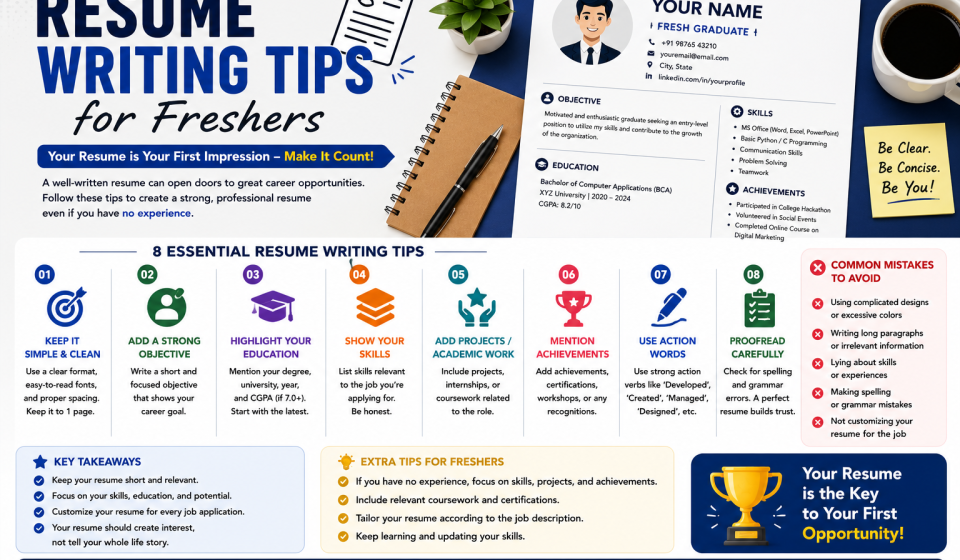
Keep the Resume Professional
Professional presentation is essential.
Guidelines include:
Simple design
Consistent formatting
Clear headings
Readable fonts
Appropriate spacing
Avoid excessive graphics or unnecessary decorations.
Write a Strong Career Objective
The career objective appears near the top of the resume.
A good objective should:
Be concise
Reflect career goals
Highlight enthusiasm
Align with the desired position
Example:
“Motivated computer science graduate seeking an entry-level software development position where technical skills and problem-solving abilities can contribute to organizational success.”
Include Accurate Contact Information
Essential contact details include:
Full name
Phone number
Professional email address
City and state
LinkedIn profile (optional)
Ensure all information is accurate and updated.
Highlight Educational Qualifications
Education is often the strongest section for freshers.
Include:
Degree name
Institution name
Graduation year
Academic performance
Relevant coursework
Present information in reverse chronological order.
Showcase Relevant Skills
Employers seek both technical and soft skills.
Technical Skills
Programming languages
Software tools
Data analysis
Design applications
Industry-specific competencies
Soft Skills
Communication
Leadership
Teamwork
Problem-solving
Adaptability
List skills relevant to the target position.
Include Academic Projects
Projects demonstrate practical application of knowledge.
Project descriptions should include:
Project title
Objectives
Technologies used
Key contributions
Results achieved
Strong projects help compensate for limited work experience.
Mention Internships
Internships provide valuable professional exposure.
Include:
Organization name
Duration
Responsibilities
Achievements
Skills developed
Internship experience enhances credibility and employability.
Add Certifications
Professional certifications demonstrate commitment to learning.
Examples include:
Digital marketing certifications
Programming certifications
Data analytics certifications
Cloud computing certifications
Project management certifications
Certifications strengthen resumes significantly.
Highlight Achievements
Achievements differentiate candidates from competitors.
Examples include:
Academic awards
Competition victories
Leadership accomplishments
Scholarships
Recognition programs
Quantify achievements whenever possible.
Include Extracurricular Activities
Extracurricular involvement demonstrates well-rounded development.
Activities may include:
Student clubs
Sports
Volunteer work
Cultural events
Leadership positions
Employers often value active participation beyond academics.
Emphasize Leadership Experience
Leadership experience indicates initiative and responsibility.
Examples include:
Student council roles
Event coordination
Team leadership
Club management
Leadership skills are attractive to employers.
Use Action-Oriented Language
Strong action verbs create a positive impression.
Examples include:
Developed
Managed
Organized
Designed
Analyzed
Implemented
Created
Action-oriented language improves resume impact.
Tailor the Resume for Each Job
Avoid sending identical resumes for every application.
Customize:
Skills section
Objective statement
Project descriptions
Keywords
Job-specific tailoring increases relevance and effectiveness.
Use Keywords Strategically
Many organizations use Applicant Tracking Systems (ATS).
Include keywords from:
Job descriptions
Industry terminology
Required skills
Relevant qualifications
Keyword optimization improves visibility.
Keep the Resume Concise
Freshers generally require one-page resumes.
Advantages include:
Improved readability
Focused content
Professional presentation
Recruiters appreciate concise documents.
Avoid Common Resume Mistakes
Frequent mistakes include:
Spelling errors
Grammar mistakes
Incorrect information
Poor formatting
Unprofessional email addresses
Irrelevant content
Careful review prevents these issues.
Proofread Thoroughly
Proofreading is essential.
Review for:
Grammar
Spelling
Formatting consistency
Accuracy
Professional presentation
Multiple reviews improve quality.
Include Volunteer Experience
Volunteer work demonstrates:
Commitment
Responsibility
Community involvement
Leadership
Teamwork
Volunteer experiences can strengthen applications significantly.
Create a Strong LinkedIn Profile
LinkedIn complements your resume.
Benefits include:
Professional networking
Recruiter visibility
Personal branding
Career opportunities
Ensure consistency between LinkedIn and resume information.
Demonstrate Problem-Solving Skills
Employers value candidates who can solve challenges effectively.
Showcase problem-solving through:
Projects
Competitions
Academic achievements
Internships
Specific examples increase credibility.
Quantify Achievements Whenever Possible
Numbers create stronger impact.
Examples:
Led a team of 10 students
Increased event participation by 30%
Completed project within 2 weeks
Quantifiable results improve resume effectiveness.
Maintain Professional Formatting
Formatting best practices include:
Consistent fonts
Uniform spacing
Clear section headings
Bullet points
Proper alignment
Professional formatting improves readability.
Use Resume Templates Carefully
Templates can provide structure but should remain professional.
Choose templates that are:
Simple
Clean
Readable
ATS-friendly
Avoid overly complex designs.
Importance of Soft Skills on a Resume
Employers increasingly value:
Communication
Adaptability
Leadership
Critical thinking
Collaboration
Soft skills complement technical expertise.
Resume Tips for Campus Placements
For campus recruitment:
Highlight academic achievements
Include relevant projects
Mention internships
Show leadership experience
Demonstrate enthusiasm
Campus recruiters often evaluate potential alongside experience.
Preparing for Applicant Tracking Systems
ATS software scans resumes before human review.
ATS-friendly resumes should:
Use standard headings
Include keywords
Avoid complex graphics
Maintain clear formatting
ATS optimization improves visibility.
Building a Personal Brand Through Your Resume
A resume should communicate:
Professional identity
Career goals
Strengths
Unique value proposition
Consistent branding creates stronger impressions.
Future Trends in Resume Writing
Resume writing continues to evolve alongside technological advancements and changing hiring practices. Artificial intelligence, applicant tracking systems, skills-based hiring, digital portfolios, and online professional branding are becoming increasingly important. Employers are placing greater emphasis on practical skills, project experience, adaptability, and continuous learning. Freshers who create modern, well-structured resumes and actively develop relevant competencies will improve their chances of securing interviews and building successful careers in competitive job markets.
Source
https://www.indeed.com/career-advice
https://www.linkedin.com
https://www.coursera.org
https://www.topresume.com
Conclusion
A well-crafted resume is one of the most powerful tools available to freshers entering the professional world. By presenting educational achievements, skills, projects, internships, certifications, and accomplishments effectively, candidates can demonstrate their potential and attract employer attention. Success in resume writing requires clarity, professionalism, customization, and attention to detail. Freshers who invest time in creating strong resumes, continuously improving their skills, and maintaining professional profiles can significantly enhance their employability and increase their chances of securing rewarding career opportunities.
FAQ
1. How long should a fresher’s resume be?
Most fresher resumes should be limited to one page for maximum clarity and readability.
2. What is the most important section for freshers?
Education, skills, projects, and internships are typically the most important sections.
3. Should freshers include internships on their resumes?
Yes, internships provide valuable practical experience and strengthen job applications.
4. Are certifications important for freshers?
Yes, certifications demonstrate additional skills, learning initiative, and professional development.
5. How can freshers make their resumes stand out?
By highlighting projects, achievements, relevant skills, internships, certifications, and leadership experiences.
6. Should resumes be customized for each job?
Yes, tailoring resumes to specific job requirements improves relevance and interview opportunities.
7. What common mistakes should freshers avoid?
Spelling errors, grammar mistakes, poor formatting, inaccurate information, and irrelevant content should be avoided.
8. Why are keywords important in resumes?
Keywords help resumes pass Applicant Tracking Systems and improve visibility during recruitment.